THE CLASSIC COLLECTION✦Saïd the fishermanCLASSIC FREE BOOKS
Saïd the fisherman
Marmaduke William Pickthall
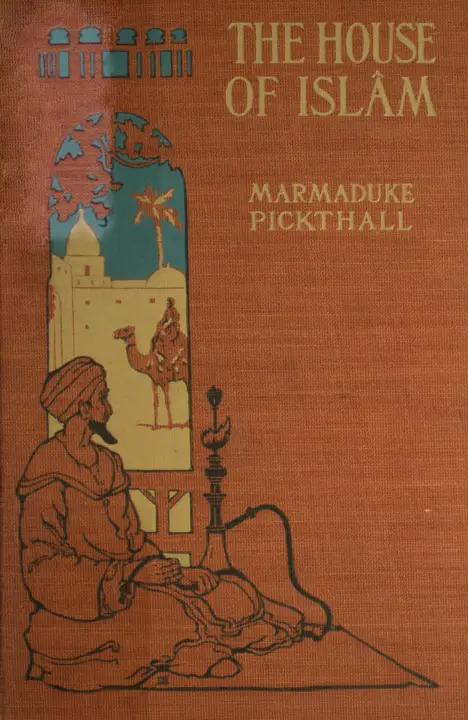
THE CLASSIC COLLECTION · 1906
"The House of Islâm" by Marmaduke William Pickthall is a historical account written in the early 20th century. The book explores the socio-political dynamics of the Ottoman Empire through the story of characters like Milhem Bey and Shems-ud-dīn, as they navigate issues of loyalty, honor, and religious identity within a diverse populace. At the start of the narrative, we meet Milhem Bey, who reflects on his newfound position of limited authority after years of servitude. As he embarks on a journey to oversee a settlement of Georgian and Circassian exiles in the Sultan's dominion, the complexities of his new role unfold. Meanwhile, the narrative introduces his brother, Shems-ud-dīn, a religious man deeply connected to his faith. Their relationship and contrasting aspirations set the stage for a deeper exploration of duty, familial bonds, and the moral challenges posed by governance in a land rich with diverse beliefs and traditions. The opening sets a tone of introspection and cultural examination, inviting readers into both personal and political realms.
Introduction adapted from the source catalogue; source summaries may be automatically generated.
Free to read · English · 65,374 words · No account needed
MAKE TIME FOR A GOOD BOOK
On by default. Untick to stop anonymous reading totals. Each page counts after 10 seconds in view. How this works.
Anonymous counting is on unless you have switched it off.
“Now I know why thou wast loath to have me journey with thee. And I confess here, before all these men, that I did wrong not to be ruled by thee then, that I did wrong in cleaving to thee. For great grief is come upon me. My brother, once the best of men, has sinned most heinously, and I am witness of his crime.”
“Said I not he was a saint?” said Hassan triumphantly, from somewhere in
the background.
Milhem frowned, stroking his close beard, then smiled indulgently.
“What dost thou know of statecraft? Go, O my brother! and when thou art recovered I will speak with thee,” he said, with some compassion and much dignity.
“I go,” said Shems-ud-dìn curtly, and stepped forth once more into the
sunlight.
That night, as he sat with Hassan in the house, the latter mocked at his
grave looks.
“Art still vexed about thy brother’s little stratagem? Let not that trouble thee. It is war, thou understandest. The Bedû will take vengeance for this, and we, in turn, shall avenge their vengeance, and so it will go on—in sh’ Allah—till the last day.”
“My thought is not of war,” said Shems-ud-dìn. “Know, O Hassan, that I love once more!” And he related his adventure with the old sheykh’s daughter. “O her eyes! O her straight white nose! O the fullness of her cheeks, her chin!... Now tell me, what character does she bear?”
“Thou wouldst not wed her, surely?”
“I love—that is enough. My life flows out to her. There is but one
beloved!”
“Ma sh’ Allah!” murmured Hassan, in the utmost consternation. “She is a girl like another. There is nothing told of her. A virgin has no form, no color, no fire, save that one gives to her. For me she is nothing; for thee, much. As for character, she has none, which means she is a young girl.... But reflect, O my dear! When thou returnest to Istanbûl——”
“I shall not return.”
“Ma sh’ Allah!” muttered Hassan again, and he kept silence a great while, munching his long mustache. At length he said, “I must inform thy brother, my lord the Bey, of this thy decision.”
“Tell him,” said Shems-ud-dìn.
On the morrow he was roused betimes by Hassan’s hand on his shoulder.
“Arise, O my soul, and come with me to my lord the Bey. I have seen him
already.”
It was a gray dawn threatening rain. In silence they repaired to the house which Milhem had occupied since the approach of winter. The great man sat upon his bed to receive them.
Your reading position is saved on this browser. Take it to another device with a library code. Reading pages adapt to text, rather than matching a printed edition.
BEHIND THE BOOK
This eBook is for the use of anyone anywhere in the United States and most other parts of the world at no cost and with almost no restrictions whatsoever. You may copy it, give it away or re-use it under the terms of the Project Gutenberg License included with this eBook or online at www.gutenberg.org. If you are not located in the United States, you will have to check the laws of the country where you are located before using this eBook. Read the source licence.
The original source file, including credits and licence, is retained by this library. Request an original-format copy at no charge. Please include the book title and Project Gutenberg identifier #63654.
KEEP YOUR CURIOSITY GOING
Cécile Tormay

Moritz Busch
Coulson Kernahan
John L. Ransom

Maurice Baring
Frances Wright