THE CLASSIC COLLECTION✦Saïd the fishermanCLASSIC FREE BOOKS
Saïd the fisherman
Marmaduke William Pickthall
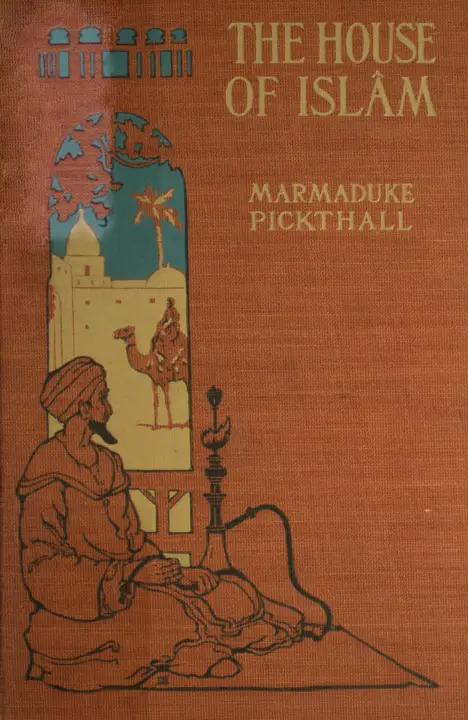
THE CLASSIC COLLECTION · 1906
"The House of Islâm" by Marmaduke William Pickthall is a historical account written in the early 20th century. The book explores the socio-political dynamics of the Ottoman Empire through the story of characters like Milhem Bey and Shems-ud-dīn, as they navigate issues of loyalty, honor, and religious identity within a diverse populace. At the start of the narrative, we meet Milhem Bey, who reflects on his newfound position of limited authority after years of servitude. As he embarks on a journey to oversee a settlement of Georgian and Circassian exiles in the Sultan's dominion, the complexities of his new role unfold. Meanwhile, the narrative introduces his brother, Shems-ud-dīn, a religious man deeply connected to his faith. Their relationship and contrasting aspirations set the stage for a deeper exploration of duty, familial bonds, and the moral challenges posed by governance in a land rich with diverse beliefs and traditions. The opening sets a tone of introspection and cultural examination, inviting readers into both personal and political realms.
Introduction adapted from the source catalogue; source summaries may be automatically generated.
Free to read · English · 65,374 words · No account needed
MAKE TIME FOR A GOOD BOOK
On by default. Untick to stop anonymous reading totals. Each page counts after 10 seconds in view. How this works.
Anonymous counting is on unless you have switched it off.
Nesìb’s limp fingers closed upon the knife, and in gazing down at it his face straightened. He seemed attracted by its flashing brilliance. But presently, when Ali thought him comforted, his face knit once more to weeping, and, with a moan, “I cannot stab with it, but only throw it at a venture,” he pushed it from him.
“O Allah, look on him. O Lord, punish the miscreants who have made him thus,” cried Ali, beside himself.
He caught up the knife and held it close under the eyes of Nesìb, who had turned his face to the sunlight, but saw nothing through the rain of grief.
“See, I hold this knife—I, Ali, thy sworn brother. The knife is thine, I am thy right arm. I abide here with thee; I watch the alley. Whichever comes, the black or his master, I slay with this knife, the knife of Nesìb; with this arm, the arm of Nesìb; in the name of Nesìb, under Allah. So shall thy wrongs be avenged. Art content, O my eyes?”
Nesìb nodded, speechless. He grew calmer after that. For minutes together he watched the sunny lane with scarce a sob; but then the grief which gnawed his vitals would again assert itself, and Ali would break forth again in imprecations, and renew his oath of vengeance.
“See, I pull off my boots,” he said. “There shall be no warning, no betraying footstep. The dog shall fall suddenly as by the hand of Allah.”
He dragged off the homemade boots of goatskin, which he wore for riding, and set them before Nesìb to perfect assurance.
“Hush! One approaches. I hear the voice of slippers.”
Peeping cautiously out, Ali drew back quickly.
“It is the black. He hastens. He has heard of the tumult. Let us hide behind the stall a moment. Quick, I help thee. Y’Allah! He is acquainted with the sherbet seller.”
“I would fain see him,” whispered Nesìb, stifling a sob.
The footsteps paused before the entry, the negro looking for his old acquaintance, but they quickly went on. Ali stole forth, crouching, swift and noiseless as a leopard to the spring.
The Thief heard a gurgled cry, then three long groans, ere Ali crept back out of the sunshine, and placed in his hands the dagger, warm and wet.
Still sobbing a little, reminiscently, Nesìb took the dagger and surveyed it lovingly, stroking and fondling it in his lap.
“It is finished. Art content, O beloved?”
Your reading position is saved on this browser. Take it to another device with a library code. Reading pages adapt to text, rather than matching a printed edition.
BEHIND THE BOOK
This eBook is for the use of anyone anywhere in the United States and most other parts of the world at no cost and with almost no restrictions whatsoever. You may copy it, give it away or re-use it under the terms of the Project Gutenberg License included with this eBook or online at www.gutenberg.org. If you are not located in the United States, you will have to check the laws of the country where you are located before using this eBook. Read the source licence.
The original source file, including credits and licence, is retained by this library. Request an original-format copy at no charge. Please include the book title and Project Gutenberg identifier #63654.
KEEP YOUR CURIOSITY GOING
Cécile Tormay

Moritz Busch
Coulson Kernahan
John L. Ransom

Maurice Baring
Frances Wright