THE CLASSIC COLLECTION✦Saïd the fishermanCLASSIC FREE BOOKS
Saïd the fisherman
Marmaduke William Pickthall
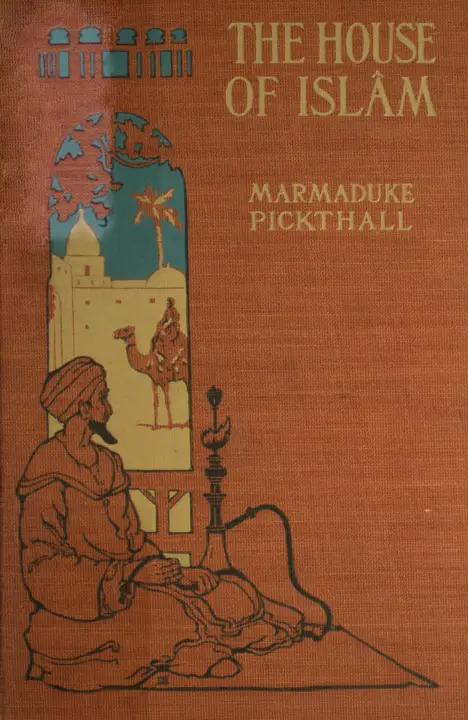
THE CLASSIC COLLECTION · 1906
"The House of Islâm" by Marmaduke William Pickthall is a historical account written in the early 20th century. The book explores the socio-political dynamics of the Ottoman Empire through the story of characters like Milhem Bey and Shems-ud-dīn, as they navigate issues of loyalty, honor, and religious identity within a diverse populace. At the start of the narrative, we meet Milhem Bey, who reflects on his newfound position of limited authority after years of servitude. As he embarks on a journey to oversee a settlement of Georgian and Circassian exiles in the Sultan's dominion, the complexities of his new role unfold. Meanwhile, the narrative introduces his brother, Shems-ud-dīn, a religious man deeply connected to his faith. Their relationship and contrasting aspirations set the stage for a deeper exploration of duty, familial bonds, and the moral challenges posed by governance in a land rich with diverse beliefs and traditions. The opening sets a tone of introspection and cultural examination, inviting readers into both personal and political realms.
Introduction adapted from the source catalogue; source summaries may be automatically generated.
Free to read · English · 65,374 words · No account needed
MAKE TIME FOR A GOOD BOOK
On by default. Untick to stop anonymous reading totals. Each page counts after 10 seconds in view. How this works.
Anonymous counting is on unless you have switched it off.
“Save but the life! but the life alone!” he cried; and the infidel, though something loath, consented.
Abd-ur-Rahman, Shibli, Hassan—all old friends forsook him. Only that simple one, who believed in him, still clung to him with reverence. The aged Chief of the Learned, all wise men, remonstrated with him. He saw their mouths open and shut, he felt their disapproval; but his mind made nothing of what they said.
“Save but the life!” he cried in their defiance.
He sat in a chamber of the Frank’s house and waited, his soul racked with suspense. The chair on which he sat proved an instrument of torture, crushing both his feet.
Suddenly, a man moved in the room with him, supporting something with
both hands.
“The life is saved, O sheykh, the life only. See it here before thee.”
The speaker turned, revealing the earth-hued face, the eyes of flame, of that same jinni who had beguiled him at the first. His laugh had the rattle of dry bones as he repeated: “Behold what it is, the life only!”
Then he looked and saw two wooden boxes united by a thin cord, which writhed and twisted between them like a living worm. The tops of the boxes also seemed alive, for they rose and fell regularly like the breast of a sleeper. He stared terror-stricken, fixed to that accursed chair. He saw his poor disciple approach the life and lift both hands in admiration of the rare contrivance. He realized the stupendous mockery of the hope, inspired by devils, which had led him on through sin after sin—for this.
Then, as he glowered upon that fruit of evil, the pulse of the barren life grew faint and fainter, the cord more languid in its twistings. In dread lest even that should escape him, by a mighty effort he wrenched himself free of the chair. Men seized him, wrestled with him, but he broke away, crying:
“O Allah, mercy! It is the life.”
There came a shock, a flood of darkness. The stars shone above him, among them the waning moon, late risen, like a flower’s curled petal. Some one bent over him, grasping his shoulder. A woman’s wail came from below, in the house.
“Allah witness, Zeyd and I have striven hard to wake thee, O my master. It is now too late. Thou hearest that voice of woe, the voice of Fatmeh. Peace to the beloved. She is but now dead.”
“Praise be to Allah! What is the hour?”
“It nears the dawn, O my master.”
Your reading position is saved on this browser. Take it to another device with a library code. Reading pages adapt to text, rather than matching a printed edition.
BEHIND THE BOOK
This eBook is for the use of anyone anywhere in the United States and most other parts of the world at no cost and with almost no restrictions whatsoever. You may copy it, give it away or re-use it under the terms of the Project Gutenberg License included with this eBook or online at www.gutenberg.org. If you are not located in the United States, you will have to check the laws of the country where you are located before using this eBook. Read the source licence.
The original source file, including credits and licence, is retained by this library. Request an original-format copy at no charge. Please include the book title and Project Gutenberg identifier #63654.
KEEP YOUR CURIOSITY GOING
Cécile Tormay

Moritz Busch
Coulson Kernahan
John L. Ransom

Maurice Baring
Frances Wright