THE CLASSIC COLLECTION✦Saïd the fishermanCLASSIC FREE BOOKS
Saïd the fisherman
Marmaduke William Pickthall
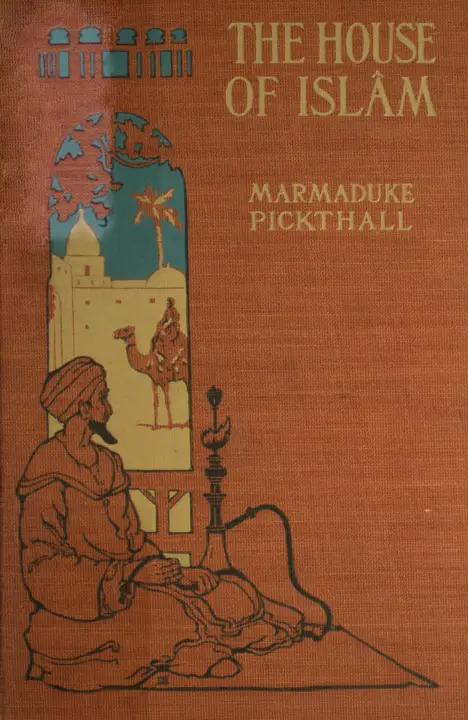
THE CLASSIC COLLECTION · 1906
"The House of Islâm" by Marmaduke William Pickthall is a historical account written in the early 20th century. The book explores the socio-political dynamics of the Ottoman Empire through the story of characters like Milhem Bey and Shems-ud-dīn, as they navigate issues of loyalty, honor, and religious identity within a diverse populace. At the start of the narrative, we meet Milhem Bey, who reflects on his newfound position of limited authority after years of servitude. As he embarks on a journey to oversee a settlement of Georgian and Circassian exiles in the Sultan's dominion, the complexities of his new role unfold. Meanwhile, the narrative introduces his brother, Shems-ud-dīn, a religious man deeply connected to his faith. Their relationship and contrasting aspirations set the stage for a deeper exploration of duty, familial bonds, and the moral challenges posed by governance in a land rich with diverse beliefs and traditions. The opening sets a tone of introspection and cultural examination, inviting readers into both personal and political realms.
Introduction adapted from the source catalogue; source summaries may be automatically generated.
Free to read · English · 65,374 words · No account needed
MAKE TIME FOR A GOOD BOOK
On by default. Untick to stop anonymous reading totals. Each page counts after 10 seconds in view. How this works.
Anonymous counting is on unless you have switched it off.
“It will serve, perhaps,” said Muhammed, with a shrug. “Come, follow me.” But he continued to grumble in an undertone.
Though the gate was left ostentatiously open behind them, Shibli felt imprisoned. Too late, he repented of his rashness in aspiring to vie with brave men. As they followed the soldier across the yard, he kept close to Hassan Agha for protection.
Their guide unlocked a heavy door. He struck a match and, shielding the flame with his hand, showed them steps leading down to a vault.
“Deign to enter. Ennoble these Frankish matches.”
“May thy house be destroyed! We need more light than those provide,” objected Hassan testily.
“Cut thy life!” retorted Muhammed in anger. “Didst think I would carry a lantern hither through the common yard, to show any man our business who may happen to be awake and looking out? By Allah, you expect much, and give mighty little!”
“Aha, is it the smallness of the gift, my brother? Thou shalt have more, much more, when we come forth with the rifles.”
Mollified by this assurance, Muhammed said more civilly:
“On the right, a few paces from the foot of the stair, you will find a lantern hanging by the wall. Be careful to strike no match in the armory itself, for there is much gunpowder.”
“Shibli, stay without and watch,” ordered Hassan.
“No, no! Let me enter. For the love of Allah, let me enter with you,” cried the youth, panic-stricken at the prospect of being left alone.
“No, it were a sin for thee.”
“Enter none the less,” whispered Muhammed. “It is a dungeon worth seeing. The walls, the roofs, the pillars, are of the rarest workmanship. I will keep watch instead of thee.”
Shibli required no urging to fulfill his one desire. He slipped in after the Circassians, and the soldier, as if for a precaution, closed the door behind him.
He felt his way down eight stone steps till he found hard-trodden earth
beneath his feet.
Presently, amid the darkness ahead of him, there broke a storm of curses. A match was struck, forming a cocoon of light in the distance. Hassan cried in a terrible voice:
“Here is no lantern—no armory. And the door is shut upon us. We are trapped, entombed. May Allah slay me where I stand if I slay not ten men for this trick upon us.”
Shibli crouched at the foot of the steps, annihilated, a drumming in his ears. All at once the door above opened, and shrouded figures entered from the lesser darkness. It shut again ere Hassan and the rest could come at it.
Your reading position is saved on this browser. Take it to another device with a library code. Reading pages adapt to text, rather than matching a printed edition.
BEHIND THE BOOK
This eBook is for the use of anyone anywhere in the United States and most other parts of the world at no cost and with almost no restrictions whatsoever. You may copy it, give it away or re-use it under the terms of the Project Gutenberg License included with this eBook or online at www.gutenberg.org. If you are not located in the United States, you will have to check the laws of the country where you are located before using this eBook. Read the source licence.
The original source file, including credits and licence, is retained by this library. Request an original-format copy at no charge. Please include the book title and Project Gutenberg identifier #63654.
KEEP YOUR CURIOSITY GOING
Cécile Tormay

Moritz Busch
Coulson Kernahan
John L. Ransom

Maurice Baring
Frances Wright