THE CLASSIC COLLECTION✦The flame-gatherersCLASSIC FREE BOOKS
The flame-gatherers
Margaret Horton Potter
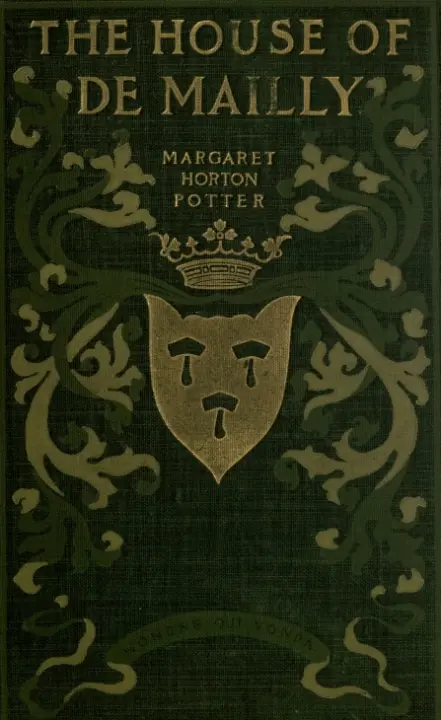
THE CLASSIC COLLECTION · 1901
"The House of de Mailly: A Romance" by Margaret Horton Potter is a historical novel written in the early 20th century. Set in the 18th-century French court during the reign of Louis XV, it explores themes of love, rivalry, and power dynamics among the nobility. The main character, Claude de Mailly, navigates the complexities of court life and his infatuation with his cousin, the Duchess de Châteauroux, who is also the king's favorite, creating tension between personal desires and the royal expectations of the time. The opening of the narrative introduces us to a rainy evening in January 1744, where Claude de Mailly and the Duc de Richelieu make their way to a gathering at the Café Procope. Here, they engage in witty banter while discussing courtly affairs and the attraction that Claude feels for the Duchess. This scene paints a vibrant picture of court life, foreshadowing the emotional turmoil that will unfold as Claude's affection for the Duchess clashes with the King's interest in her. The interactions reveal the tensions that arise from love and loyalty in a world where appearances and royal favor dictate social standing, providing a glimpse into the complex relationships that will drive the plot forward.
Introduction adapted from the source catalogue; source summaries may be automatically generated.
Free to read · English · 147,771 words · No account needed
MAKE TIME FOR A GOOD BOOK
On by default. Untick to stop anonymous reading totals. Each page counts after 10 seconds in view. How this works.
Anonymous counting is on unless you have switched it off.
The slaves scurried away to the kitchen again as the sound of deep masculine voices was heard in the library. The guests entered the breakfast-room side by side, and the four ladies rose to greet them; Madam Trevor first, with her daughters just behind her, and Deborah, with suddenly eager eyes, a little to one side.
Dr. Charles Carroll, father of "Mr. Carroll, of Carrollton," foremost Whig and Catholic in Annapolis, always in disfavor with the Governor officially, and excellent friends with him of a Saturday night, forty-five years old, wealthy, bluff, a little gray under his bag-wig, booted, spurred, fresh of color, and bright of eye, greeted his old friend and mentor, Madam Trevor, with hearty good-humor. Beside him was Benedict Calvert, a son of the Lord Proprietary, but Protestant bred; Whig by preference, slender, handsome, unusually dignified, and quite unaffected. After the various salutations the entire party reseated themselves at table, and the guests, hungry after their early canter, helped themselves without stint to the freshly cooked food brought in for them. The doctor had placed himself, as usual, by Deborah, who was all attention now; while Mr. Calvert, with a sympathetic smile of understanding and good-comradeship, was by Lucy, with his hostess on the other side.
"And now, madam, young ladies, Sir Charles, and our host," cried the doctor, in a hearty voice, "we are about to repay your hospitality with news, excellent news, for every one of you!"
"Ah! Let us hear it, doctor!" cried Vincent, while the others
murmured assent.
"Well, then, for the ladies first! The Baltimore is in port, after a bad voyage. She sailed from Portsmouth on the 20th of February. I was on the south piers as she came to anchor. Her cargo--or part of it--is all for feminine ears to hear. She has with her the last fashions from home, and the material to reproduce them. There are paduasoys and lutestrings, and satins and laces, and damasks and silverware, and cheynay and glass, and ribbons and combs, and shoe-buckles and silk stockings, and most wonderful garters, I'm told; and--"
"Nay, now, doctor, 'tis far enough!" cried Sir Charles; and the
gentlemen laughed.
"Well, then, there are those things, and more. And on the morrow, at ten of the morning, there is to be a public sale on the docks off Hanover Street, where he who has the wherewithal may buy. And I am bidden to ask you all to ride in and spend what moneys you can wrest from Vincent's hands, and, after, to come to my house, where Mistresses Letitia and Frances will serve you with a fair widower's dinner. How now--what think you of my first news, damsels?"
Your reading position is saved on this browser. Take it to another device with a library code. Reading pages adapt to text, rather than matching a printed edition.
Margaret Horton Potter
Margaret Horton Potter
Margaret Horton Potter
BEHIND THE BOOK
This eBook is for the use of anyone anywhere in the United States and most other parts of the world at no cost and with almost no restrictions whatsoever. You may copy it, give it away or re-use it under the terms of the Project Gutenberg License included with this eBook or online at www.gutenberg.org. If you are not located in the United States, you will have to check the laws of the country where you are located before using this eBook. Read the source licence.
The original source file, including credits and licence, is retained by this library. Request an original-format copy at no charge. Please include the book title and Project Gutenberg identifier #73165.
KEEP YOUR CURIOSITY GOING
Cécile Tormay

Moritz Busch
Coulson Kernahan
John L. Ransom

Maurice Baring
Frances Wright