THE CLASSIC COLLECTION✦The flame-gatherersCLASSIC FREE BOOKS
The flame-gatherers
Margaret Horton Potter
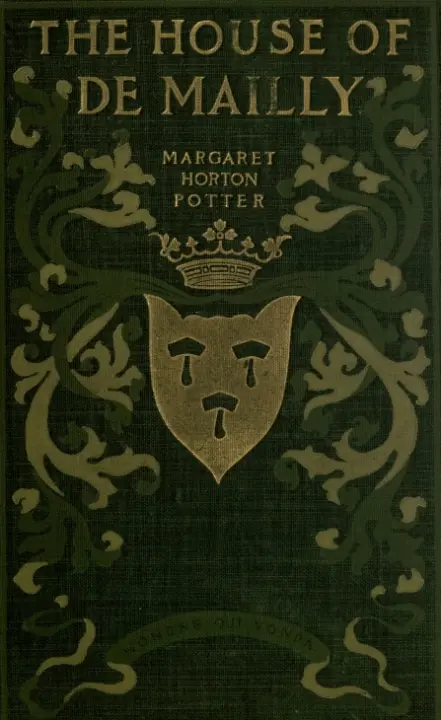
THE CLASSIC COLLECTION · 1901
"The House of de Mailly: A Romance" by Margaret Horton Potter is a historical novel written in the early 20th century. Set in the 18th-century French court during the reign of Louis XV, it explores themes of love, rivalry, and power dynamics among the nobility. The main character, Claude de Mailly, navigates the complexities of court life and his infatuation with his cousin, the Duchess de Châteauroux, who is also the king's favorite, creating tension between personal desires and the royal expectations of the time. The opening of the narrative introduces us to a rainy evening in January 1744, where Claude de Mailly and the Duc de Richelieu make their way to a gathering at the Café Procope. Here, they engage in witty banter while discussing courtly affairs and the attraction that Claude feels for the Duchess. This scene paints a vibrant picture of court life, foreshadowing the emotional turmoil that will unfold as Claude's affection for the Duchess clashes with the King's interest in her. The interactions reveal the tensions that arise from love and loyalty in a world where appearances and royal favor dictate social standing, providing a glimpse into the complex relationships that will drive the plot forward.
Introduction adapted from the source catalogue; source summaries may be automatically generated.
Free to read · English · 147,771 words · No account needed
MAKE TIME FOR A GOOD BOOK
On by default. Untick to stop anonymous reading totals. Each page counts after 10 seconds in view. How this works.
Anonymous counting is on unless you have switched it off.
True, Deborah lacked French verve. Nor did she possess French deceitfulness. But, as Louis de Richelieu had disastrously discovered, she was neither heavy nor stupid. During the days that followed the death of Mme. de Châteauroux, while the King lived in retirement, the Countess de Mailly existed dully, as in a dream. It seemed as though the night that followed the return from Choisy had blunted her sensibility. She could not understand her apparent want of feeling; and Claude was no more surprised at her than was she at herself. They had never afterwards discussed the incidents of that night, though both had intended to open the subject--some time. Yet, had Claude questioned her again as to her discovery, and the manner of it, Deborah could not be sure that she would have told him. They seemed now to be growing always further apart. Claude, unhappy and lonely, went his own way. Deborah permitted herself to be tossed, unresistingly, on the waves of circumstances. Only two things she dreaded. One was the sight of that cabinet in the wall, wherein still stood the row of bottles and the white box. The second was the return of Richelieu to Versailles. How would the great Duke meet her, and how was she to treat him upon that inevitable return? A difficult question, this last. And yet Deborah need not have worried upon it, for it was Richelieu himself who would determine the affair; and, though it seemed impossible that he should ever reap as he had sown, yet the two weeks that he spent away from Versailles were two which, in later years, he never permitted himself to contemplate in memory.
Richelieu, after gaining a surprised and peevish permission from his King, left Versailles at six o'clock on the morning of December 9th. He was perfectly aware of the comment which this conduct would excite; but for once he was beyond the dread of gossip. He could not remain in that palace. His insouciance--his nerve--had left him. He departed in search of it. The impedimenta which accompanied him were not ostentatious. He went post, in a series of coaches, his valet in front, his travelling-coffer behind, he alone in the body. In this way, by dull stages, they reached Chalons-sur-Marne. Here he had intended to remain for a little, when he chanced to remember that Mme. de Châteauroux had written him from here, after her flight from Metz. It seemed that France had been created to remind him of her. He hurried on to Vitry, and there sought rest. Quiet enough were the long, frozen days passed incognito at a village inn. Monsieur le Duc would have fared infinitely better at one of his three châteaux. He could now almost smile at himself for not having gone to them. But when he left Versailles it seemed that he was a man who must hide, and that to go to one of his own estates would have meant to remain there for life--exiled by some sudden order of Louis. Truly, had any one prophesied to him six months before what an absolutely paralyzing shock his nervous system was to undergo, he--well acquainted with that blasé structure--would have laughed at it as an impossibility. But this present species of accident--necessary accident--had not been foreseen. He forbade himself now, rigidly, to consider the matter, or to encourage memory in any form. But memory would come back, sometimes, in the form of some one of whom he must beware. Mme. de Mailly--what to do concerning her? She knew--had surmised--everything. But she had no proof. Court gossip was well checked; for the Duke had stayed long enough at the palace to make sure of that. Mme. de Mailly, were she wise, would, for her own sake, say nothing. Was she wise? If not--he was ruined--unless--he could ruin her. A counter-accusation might certainly be possible, however undesirable it would prove. After carefully balancing the matter for many nights, his Grace decided upon a middle course. If Deborah kept her silence, she might take her course with the King, unhindered--secretly helped, perhaps, by her former champion. Richelieu would advance no other candidate, and the de Mailly might be very sure of the post. Then, when she was installed, would it be so difficult to ingratiate himself once more, he who, out of good-will to her, by her own methods, had forever disembarrassed her of her only rival? Ah, Richelieu was a diplomat--a true French diplomat! But he had studied France only, and was moving along well-known ways. The American colonies were his unknown world.
Your reading position is saved on this browser. Take it to another device with a library code. Reading pages adapt to text, rather than matching a printed edition.
Margaret Horton Potter
Margaret Horton Potter
Margaret Horton Potter
BEHIND THE BOOK
This eBook is for the use of anyone anywhere in the United States and most other parts of the world at no cost and with almost no restrictions whatsoever. You may copy it, give it away or re-use it under the terms of the Project Gutenberg License included with this eBook or online at www.gutenberg.org. If you are not located in the United States, you will have to check the laws of the country where you are located before using this eBook. Read the source licence.
The original source file, including credits and licence, is retained by this library. Request an original-format copy at no charge. Please include the book title and Project Gutenberg identifier #73165.
KEEP YOUR CURIOSITY GOING
Cécile Tormay

Moritz Busch
Coulson Kernahan
John L. Ransom

Maurice Baring
Frances Wright