THE CLASSIC COLLECTION✦The flame-gatherersCLASSIC FREE BOOKS
The flame-gatherers
Margaret Horton Potter
THE CLASSIC COLLECTION · 1901
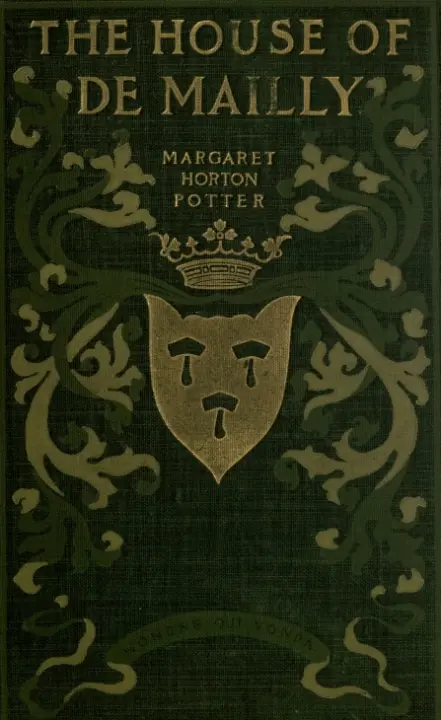
"The House of de Mailly: A Romance" by Margaret Horton Potter is a historical novel written in the early 20th century. Set in the 18th-century French court during the reign of Louis XV, it explores themes of love, rivalry, and power dynamics among the nobility. The main character, Claude de Mailly, navigates the complexities of court life and his infatuation with his cousin, the Duchess de Châteauroux, who is also the king's favorite, creating tension between personal desires and the royal expectations of the time. The opening of the narrative introduces us to a rainy evening in January 1744, where Claude de Mailly and the Duc de Richelieu make their way to a gathering at the Café Procope. Here, they engage in witty banter while discussing courtly affairs and the attraction that Claude feels for the Duchess. This scene paints a vibrant picture of court life, foreshadowing the emotional turmoil that will unfold as Claude's affection for the Duchess clashes with the King's interest in her. The interactions reveal the tensions that arise from love and loyalty in a world where appearances and royal favor dictate social standing, providing a glimpse into the complex relationships that will drive the plot forward.
Introduction adapted from the source catalogue; source summaries may be automatically generated.
Free to read · English · 147,771 words · No account needed
MAKE TIME FOR A GOOD BOOK
On by default. Untick to stop anonymous reading totals. Each page counts after 10 seconds in view. How this works.
Anonymous counting is on unless you have switched it off.
Richelieu was silent, and his face looked drawn. This sensation of helplessness was very new to him. He seemed to hesitate. Then, after a few moments he said, slowly: "No, I shall wait. One thing--will you do me a favor?"
"What is that? There are few enough in my power now."
"To-morrow evening, when you return from Paris, show me the list."
"Monsieur, I cannot seek you. If we should meet--by chance--"
Richelieu bowed. "Certainly. It is all I ask. If we should meet by
chance."
"In that case, I will do so. At any rate, I will--tell you."
"My thanks are yours."
Both bowed. Thereupon d'Argenson would have turned away, but
Richelieu suddenly held out his right hand. "It is no ordinary
affair," he said.
The young Count frankly accepted the offer. Their hands clasped firmly for an instant, and the moment of brotherhood did both good.
"Do you go, now, to the salon of her Majesty?"
"I had thought not, to-night; but I have changed my mind."
"I will come with you."
"And to-morrow morning," added the Duke, as they left the room together--"to-morrow morning, after mass, I shall go to the Œil-de-B[ce]uf and remain there till you return in the evening."
"Why do that? You will gain nothing there."
"I shall gain atmosphere. It reeks of the Court, as a chandler reeks of tallow. I shall like--to take it away with me."
D'Argenson smiled faintly; and then in silence they passed into the
Queen's antechamber.
Marie Leczinska's salon was not so brilliant as the one of two weeks before. It was, however, sufficiently filled to put one in proper mood, without danger of ruining hoops; which, after all, was a slight relief. Both Claude and Deborah were here to-night, never together, but also never very far apart. Mme. de Mailly had become one of the most-sought-after persons in the Court, and her husband, while he conformed always to the conventions by not approaching her in public, was, nevertheless, aware of every person who spoke to her of an evening, heard every compliment paid her by men, and a good many of the enviously malicious speeches that were beginning to be made about her by the women. To-night Richelieu, on entering the salon, made his way at once to Deborah's side. She had been speaking with the Marquis de Tessé, while the Prince de Soubise hovered near, thinking up a suitable gallantry with which to pounce upon her. Richelieu adroitly forestalled him, however, and reached her first, well pleased at being able to do so. The Duke was moving at random, for he had found no plan of possible salvation yet. There only lay in his mind a dim notion that, if safety should be his at the eleventh hour, it would come to him through this same Deborah. The idea was surely instinctive, for it had small reason in it. What could a little colonial, what could any woman--the poor, pale Queen herself--do against Claude's cousin, the reinstated favorite, the great Duchesse de Châteauroux, and that gently spoken, inflexible, indomitable "Je le veux" which Louis of France had used? True, Deborah had become a de Mailly, had been much noticed by the King, and was talked of in peculiar whispers by all the Court. Nevertheless, what so precarious as her position? What favors might she ask? None. And yet, here was falling Richelieu hurrying to no Maurepas, no Machault, or Berryer, or any powered man, but to the side of her who had been born, eighteen years before, in a wide-roofed Virginia farm-house.
Your reading position is saved on this browser. Take it to another device with a library code. Reading pages adapt to text, rather than matching a printed edition.
Margaret Horton Potter
Margaret Horton Potter
Margaret Horton Potter
BEHIND THE BOOK
This eBook is for the use of anyone anywhere in the United States and most other parts of the world at no cost and with almost no restrictions whatsoever. You may copy it, give it away or re-use it under the terms of the Project Gutenberg License included with this eBook or online at www.gutenberg.org. If you are not located in the United States, you will have to check the laws of the country where you are located before using this eBook. Read the source licence.
The original source file, including credits and licence, is retained by this library. Request an original-format copy at no charge. Please include the book title and Project Gutenberg identifier #73165.
KEEP YOUR CURIOSITY GOING
Cécile Tormay

Moritz Busch
Coulson Kernahan
John L. Ransom

Maurice Baring
Frances Wright