THE CLASSIC COLLECTION✦The flame-gatherersCLASSIC FREE BOOKS
The flame-gatherers
Margaret Horton Potter
THE CLASSIC COLLECTION · 1901
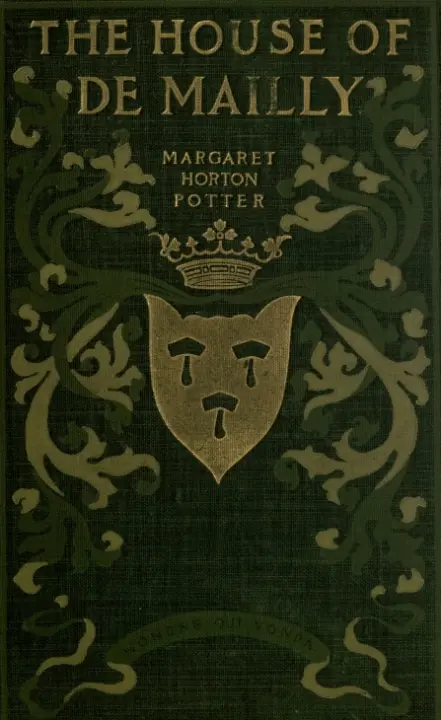
"The House of de Mailly: A Romance" by Margaret Horton Potter is a historical novel written in the early 20th century. Set in the 18th-century French court during the reign of Louis XV, it explores themes of love, rivalry, and power dynamics among the nobility. The main character, Claude de Mailly, navigates the complexities of court life and his infatuation with his cousin, the Duchess de Châteauroux, who is also the king's favorite, creating tension between personal desires and the royal expectations of the time. The opening of the narrative introduces us to a rainy evening in January 1744, where Claude de Mailly and the Duc de Richelieu make their way to a gathering at the Café Procope. Here, they engage in witty banter while discussing courtly affairs and the attraction that Claude feels for the Duchess. This scene paints a vibrant picture of court life, foreshadowing the emotional turmoil that will unfold as Claude's affection for the Duchess clashes with the King's interest in her. The interactions reveal the tensions that arise from love and loyalty in a world where appearances and royal favor dictate social standing, providing a glimpse into the complex relationships that will drive the plot forward.
Introduction adapted from the source catalogue; source summaries may be automatically generated.
Free to read · English · 147,771 words · No account needed
MAKE TIME FOR A GOOD BOOK
On by default. Untick to stop anonymous reading totals. Each page counts after 10 seconds in view. How this works.
Anonymous counting is on unless you have switched it off.
Penthièvre had finished an anecdote of the far-off days of Gabrielle d'Estrées, containing a clever apologue, for which he was mentally applauded by the group.
"A clever woman!" murmured Richelieu, dreamily. "I cannot help thinking that if Sully had taken her part, instead of opposing her--"
"Marie de Médicis would have made less difficulty."
Richelieu stared at de Gêvres, who had interrupted somnolently, and remarked, with some insolence: "You miss the point, I think. Her Majesty is scarcely included in the affair."
"Noailles--Sully. Marie de Médicis--Fate," was the retort.
Richelieu shrugged. "It was too vague, Jacques."
"Let us return to the present. We shall find it less complicated,"
suggested Holbach, quietly.
The others acquiesced with alacrity. Their problem was too important to trust to forgotten history for solution. At this moment Richelieu, with serious intent, took snuff, raising the cover of his box in so significant a manner that it was impossible that all should not perceive its miniature to have been removed, leaving the tarnished gold alone visible under the pearl-surrounded glass.
"Ah!" murmured d'Epernon, "what has become of the Duchess?"
"I shall present the picture, as a mark of my high esteem," said
Richelieu, "to M. d'Agenois."
There was a general smile. Then de Gêvres remarked, slowly: "I will purchase that miniature of you for my own use, du Plessis."
"What! Have you not one of her?" cried de Bernis.
De Gêvres pulled out his own box and handed it to the abbé. In it was an exquisitely painted portrait of Marie Anne de Nesle, done just before she was created Duchesse de Châteauroux.
"What, then, would you do with another?"
"I should present it, in a few weeks' time, to the King."
"Diable! You are not stupid enough to believe that she is to be
reinstated?"
"I am sufficiently stupid--to believe exactly that."
Richelieu looked seriously annoyed. For a long time he and de Gêvres had, from policy, been the best of friends and strong allies. They, together, one summer evening, on the terraces of Versailles, had first presented the Marquise de la Tournelle to the King. And since then they had worked constantly on her behalf. De Gêvres, however, having been the more moderate of the two, was now in a position which Richelieu had recklessly forfeited--sure of favor in any case.
Baron d'Holbach, seeing the situation a little uncomfortable, broke the pause by producing his own snuff-box and displaying its cover. "Messieurs," he said, "we are carrying with us to-night the history of France. Behold!"
Your reading position is saved on this browser. Take it to another device with a library code. Reading pages adapt to text, rather than matching a printed edition.
Margaret Horton Potter
Margaret Horton Potter
Margaret Horton Potter
BEHIND THE BOOK
This eBook is for the use of anyone anywhere in the United States and most other parts of the world at no cost and with almost no restrictions whatsoever. You may copy it, give it away or re-use it under the terms of the Project Gutenberg License included with this eBook or online at www.gutenberg.org. If you are not located in the United States, you will have to check the laws of the country where you are located before using this eBook. Read the source licence.
The original source file, including credits and licence, is retained by this library. Request an original-format copy at no charge. Please include the book title and Project Gutenberg identifier #73165.
KEEP YOUR CURIOSITY GOING
Cécile Tormay

Moritz Busch
Coulson Kernahan
John L. Ransom

Maurice Baring
Frances Wright