THE CLASSIC COLLECTION✦The flame-gatherersCLASSIC FREE BOOKS
The flame-gatherers
Margaret Horton Potter
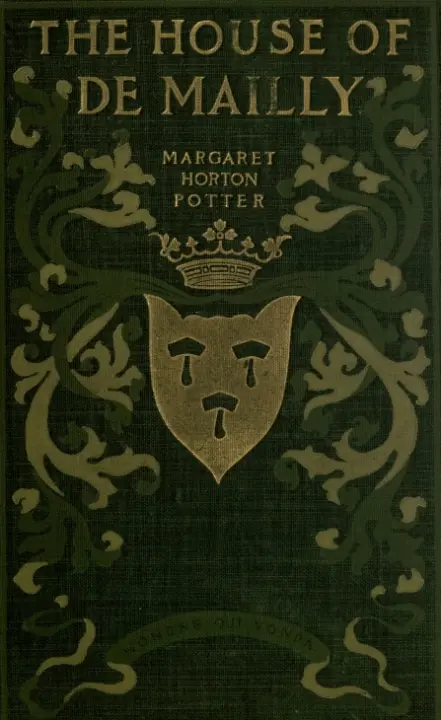
THE CLASSIC COLLECTION · 1901
"The House of de Mailly: A Romance" by Margaret Horton Potter is a historical novel written in the early 20th century. Set in the 18th-century French court during the reign of Louis XV, it explores themes of love, rivalry, and power dynamics among the nobility. The main character, Claude de Mailly, navigates the complexities of court life and his infatuation with his cousin, the Duchess de Châteauroux, who is also the king's favorite, creating tension between personal desires and the royal expectations of the time. The opening of the narrative introduces us to a rainy evening in January 1744, where Claude de Mailly and the Duc de Richelieu make their way to a gathering at the Café Procope. Here, they engage in witty banter while discussing courtly affairs and the attraction that Claude feels for the Duchess. This scene paints a vibrant picture of court life, foreshadowing the emotional turmoil that will unfold as Claude's affection for the Duchess clashes with the King's interest in her. The interactions reveal the tensions that arise from love and loyalty in a world where appearances and royal favor dictate social standing, providing a glimpse into the complex relationships that will drive the plot forward.
Introduction adapted from the source catalogue; source summaries may be automatically generated.
Free to read · English · 147,771 words · No account needed
MAKE TIME FOR A GOOD BOOK
On by default. Untick to stop anonymous reading totals. Each page counts after 10 seconds in view. How this works.
Anonymous counting is on unless you have switched it off.
"It must have been very lonely all the summer. But now, with Monsieur the Marshal returned, it will be better."
"Oh, you are right! It will be more difficult now, and so, more absorbing. But Jules lets me do almost as I please. If he were but more strict, less cold, François would have more interest. He is growing indifferent. Dieu! How I have worked to prevent that! But--it is imbecile of me! I care so much for him that I cannot behave as I should!"
"I do not understand," said Deborah, indistinctly, with a new feeling, one of dread, stealing over her. Instinctively she feared to hear what this pale, big-eyed little creature was going to say next.
For an instant Victorine stared at her. Then, leaning slowly forward and looking straight into Deborah's honest eyes, she asked, in a low tone, "You did not know--that de Bernis--that--I--"
Deborah sprang up, the empty tea-bowl rolling unheeded at her feet. She had grown suddenly very white, and, as she returned Victorine's own look, searchingly, she found in the other face what made the horror in her own deepen, as she backed unconsciously towards the wall.
"You don't know!--Mon Dieu!--Why, Claude--was mad, mad, to have brought you here!--Why, madame--Deborah--we're all alike! You mustn't look at me like that. I am not different from the others. Henri de Mailly--the Marquise--the Mirepoix--Mme. de Rohan--Mme. de Châteauroux--child, it is a custom. The King--Claude himself--before--"
"Ah!" Deborah made a sound in her throat, not a scream, not an articulate word, but a kind of guttural, choking groan. Then she covered her face with her hands. For a moment that seemed an eternity she stood there repeating to herself those last cruel, insensate words, "'Claude himself--before--'"
And then Victorine, looking at her, came to a realizing sense of what she had done. Moved by a half-impulse, she started up unsteadily, swayed for an instant, and then fell back upon her chair, covering her head with her hands and arms, and bursting into a passion of sobs so heart-broken, so deep, so childlike forlorn, that they roused Deborah from herself. Letting her hands fall, she looked over towards her visitor. There was a note in the Maréchale's voice, and a line of utter abandon in her position, that brought a pang of woman's sympathy into the heart of the woman-child who regarded her. Putting away from her all selfishness, even that miserable thought of Claude, forgetting the brutal openness with which Victorine had spoken, she suddenly ran across the room and took Victorine into both her strong, young arms. Victorine's head found a resting-place on her shoulder; Victorine's aching, hopeless, impure heart beat for an instant in unison with that other one; Victorine's racking sobs ceased gradually. She gave a long, shivering sigh. There was a quickening silence through the room. Then the frail little figure loosed its grasp on Deborah, straightened quickly up, and turned to move to the chair where her wraps lay. Dully, Deborah watched the Maréchale tie on her hood and pull the cloak about her shoulders. Then, picking up gloves and muff, the visitor turned again and moved back to where Deborah stood. In front of her she stopped, and her eyes, in which shone two great tears, rested in dim pity and sorrow upon Deborah's white face. The look lasted for a long moment. Then, slowly, without a word, the Maréchale picked her handkerchief from the floor where it lay and began moving towards the door. Before she had reached it Claude's wife spoke again, more steadily:
Your reading position is saved on this browser. Take it to another device with a library code. Reading pages adapt to text, rather than matching a printed edition.
Margaret Horton Potter
Margaret Horton Potter
Margaret Horton Potter
BEHIND THE BOOK
This eBook is for the use of anyone anywhere in the United States and most other parts of the world at no cost and with almost no restrictions whatsoever. You may copy it, give it away or re-use it under the terms of the Project Gutenberg License included with this eBook or online at www.gutenberg.org. If you are not located in the United States, you will have to check the laws of the country where you are located before using this eBook. Read the source licence.
The original source file, including credits and licence, is retained by this library. Request an original-format copy at no charge. Please include the book title and Project Gutenberg identifier #73165.
KEEP YOUR CURIOSITY GOING
Cécile Tormay

Moritz Busch
Coulson Kernahan
John L. Ransom

Maurice Baring
Frances Wright