THE CLASSIC COLLECTION✦The flame-gatherersCLASSIC FREE BOOKS
The flame-gatherers
Margaret Horton Potter
THE CLASSIC COLLECTION · 1901
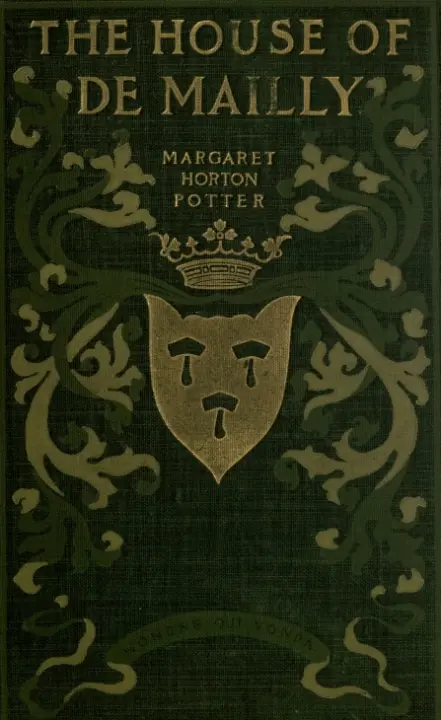
"The House of de Mailly: A Romance" by Margaret Horton Potter is a historical novel written in the early 20th century. Set in the 18th-century French court during the reign of Louis XV, it explores themes of love, rivalry, and power dynamics among the nobility. The main character, Claude de Mailly, navigates the complexities of court life and his infatuation with his cousin, the Duchess de Châteauroux, who is also the king's favorite, creating tension between personal desires and the royal expectations of the time. The opening of the narrative introduces us to a rainy evening in January 1744, where Claude de Mailly and the Duc de Richelieu make their way to a gathering at the Café Procope. Here, they engage in witty banter while discussing courtly affairs and the attraction that Claude feels for the Duchess. This scene paints a vibrant picture of court life, foreshadowing the emotional turmoil that will unfold as Claude's affection for the Duchess clashes with the King's interest in her. The interactions reveal the tensions that arise from love and loyalty in a world where appearances and royal favor dictate social standing, providing a glimpse into the complex relationships that will drive the plot forward.
Introduction adapted from the source catalogue; source summaries may be automatically generated.
Free to read · English · 147,771 words · No account needed
MAKE TIME FOR A GOOD BOOK
On by default. Untick to stop anonymous reading totals. Each page counts after 10 seconds in view. How this works.
Anonymous counting is on unless you have switched it off.
"Ah, Madame la Maréchale, you speak of by-gone days. I know the
engagements of Mme. de Châteauroux? Impossible! Am I my cousin's
keeper?"
"Perhaps," murmured the Marquise de Châtelet, sweetly, "she is to form part of his Majesty's escort."
Silence followed this remark. Mme. de Rohan glared with displeasure at her companion, and the Marquise flushed a little beneath her rouge. It was too much, for once. Mme. de Mailly-Nesle, with commendable haste, turned to her near neighbor and reinstated the tête-à-têtes.
"Ah!" murmured Mme. de Coigny to Deborah, "these dames d'étiquette are insufferable. They should be stricken with a plague!"
Deborah smiled very faintly, and could make no reply. One of her
hands was tightly clenched. Otherwise she appeared unconcerned
enough.
At this moment M. de Bernis, having decided the new Countess to be rather presentable at a distance, drew nearer, with intent to converse with her. The abbé was, to-day, in his clerical dress, and thus Deborah acknowledged Mme. de Coigny's introduction with great gravity. When Victorine presently turned aside to Coyer, de Bernis began his conversation:
"Come to the window, here, madame, and look at the crowd upon the quay. In your country I dare swear you have no such canaille."
"Poor things! How dirty and ragged they look in all the light,"
murmured Deborah, in English.
"You should one day drive through the Faubourg where they live; it would interest you," returned the abbé, in the same tongue.
Deborah looked at him with a quick smile. "English sounds very dear to me. Thank you vastly for speaking it."
"One would learn Sanscrit to gain a word of praise from your lips, madame," was the abbé's unnecessary reply, whispered, not spoken.
The young girl was embarrassed. How could a priest say such things? Turning her head uneasily, she found Mme. de Coigny close to her, and beheld a new expression on that childlike, fretful face. It was as well that, at this moment, the distant shouting of the throng proclaimed the advance of the royal procession. Under cover of the general hastening to the lantern-hung windows, Victorine took occasion to murmur in de Bernis' ear:
"Why are you always cruel, François? Why will you continually torture me so? This child, now! Have pity on her."
De Bernis shrugged impatiently. "You are silly, Victorine. It is not my fault that you are jealous every time I speak to a woman."
They were silent for a moment. Then Mme. de Coigny, as she stared into the torchlit street below, sighed. "Those faces--the rags--the dirt--François, do they not remind you of our first days together in the Court of Miracles?"
Your reading position is saved on this browser. Take it to another device with a library code. Reading pages adapt to text, rather than matching a printed edition.
Margaret Horton Potter
Margaret Horton Potter
Margaret Horton Potter
BEHIND THE BOOK
This eBook is for the use of anyone anywhere in the United States and most other parts of the world at no cost and with almost no restrictions whatsoever. You may copy it, give it away or re-use it under the terms of the Project Gutenberg License included with this eBook or online at www.gutenberg.org. If you are not located in the United States, you will have to check the laws of the country where you are located before using this eBook. Read the source licence.
The original source file, including credits and licence, is retained by this library. Request an original-format copy at no charge. Please include the book title and Project Gutenberg identifier #73165.
KEEP YOUR CURIOSITY GOING
Cécile Tormay

Moritz Busch
Coulson Kernahan
John L. Ransom

Maurice Baring
Frances Wright