THE CLASSIC COLLECTION✦The flame-gatherersCLASSIC FREE BOOKS
The flame-gatherers
Margaret Horton Potter
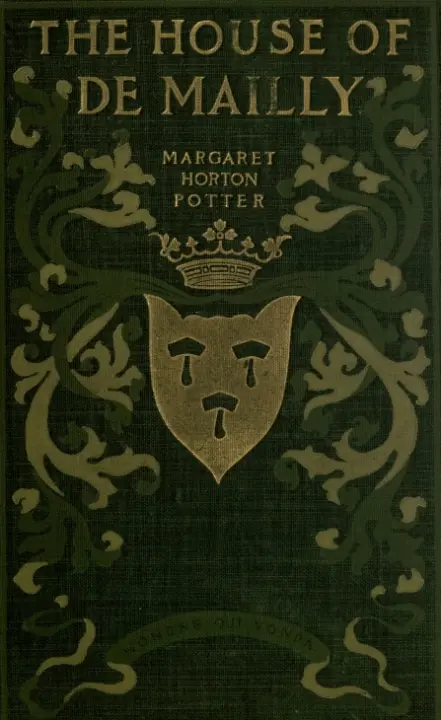
THE CLASSIC COLLECTION · 1901
"The House of de Mailly: A Romance" by Margaret Horton Potter is a historical novel written in the early 20th century. Set in the 18th-century French court during the reign of Louis XV, it explores themes of love, rivalry, and power dynamics among the nobility. The main character, Claude de Mailly, navigates the complexities of court life and his infatuation with his cousin, the Duchess de Châteauroux, who is also the king's favorite, creating tension between personal desires and the royal expectations of the time. The opening of the narrative introduces us to a rainy evening in January 1744, where Claude de Mailly and the Duc de Richelieu make their way to a gathering at the Café Procope. Here, they engage in witty banter while discussing courtly affairs and the attraction that Claude feels for the Duchess. This scene paints a vibrant picture of court life, foreshadowing the emotional turmoil that will unfold as Claude's affection for the Duchess clashes with the King's interest in her. The interactions reveal the tensions that arise from love and loyalty in a world where appearances and royal favor dictate social standing, providing a glimpse into the complex relationships that will drive the plot forward.
Introduction adapted from the source catalogue; source summaries may be automatically generated.
Free to read · English · 147,771 words · No account needed
MAKE TIME FOR A GOOD BOOK
On by default. Untick to stop anonymous reading totals. Each page counts after 10 seconds in view. How this works.
Anonymous counting is on unless you have switched it off.
The Marquis embraced the Lauraguais with some affection, and then turned to his youngest sister, who had not risen.
"Madame, you wished me to come, I believe?" he asked, gravely.
"But certainly! It is three months that we have not seen each other. Is it so unusual that I wish to behold you again?" she asked, loftily. It was not often that Henri attempted to reprove her even by a tone, and she would not permit it now.
Her manner gave her brother his cue, and, with a mental shrug, he accepted it. His manner was entirely different as, after certain conventional remarks, he asked: "You have not heard, perhaps, of the return of M. d'Agenois after his exile?"
"I learned it this morning," she responded, indifferently.
"He is ill, it seems. The air of Paris still does not agree with him." Henri took a meditative pinch of snuff. "Apropos of d'Agenois, Anne, have you heard from Claude?"
"Claude! No. Surely he is not also returned?"
"Not he. He is in one of the English colonies at a town with some
impossible Homeric name."
"Ah! I warned him that he would perish of ennui among those savages."
"On the contrary, he would appear, from a letter which I have received, to be very well amused. From his accounts he has met there some delightful people--a charming girl--by name--peste! I forget the name--"
"It is no matter. Claude among the bourgeois! Who could fancy it?
Eh bien, let us dine."
The dinner was not protracted, for none of the three found it very comfortable. At its end Mme. de Châteauroux rose abruptly, snapping a finger for Fouchelet, and turning to her brother with the dismissing command, "Summon our chairs, Henri."
Mailly-Nesle went off obediently to see that the chairs and link-boys were ready, while the sisters adjusted their scarfs and caps. The brother handed them out, gave directions as to their destination, and himself started to return on foot to his hôtel. The ladies were going to Mme. de Tencin, who lived near by, not far from the Orleans Palais Royal. Though they had dined at an unconventionally late hour, it was not yet dark, the sunset just fading into a twilight that played in softening shadows about the old streets, with their high, gabled wooden houses, and the occasional buildings of stone. The streets were quiet, for all Paris was at supper. A few chairs, a chaise or two, and now and then a coach with some familiar coat-of-arms on its panels passed them. Foot-passengers were few. In crossing the Place du Palais Royal, however, Mme. de Châteauroux, looking out of the open window of her chair, encountered the glance of a priest going the opposite way. She bowed, and he uncovered with a respect less marked than usual, walking on without any attempt to speak to her. It was the Abbé de Bernis.
Your reading position is saved on this browser. Take it to another device with a library code. Reading pages adapt to text, rather than matching a printed edition.
Margaret Horton Potter
Margaret Horton Potter
Margaret Horton Potter
BEHIND THE BOOK
This eBook is for the use of anyone anywhere in the United States and most other parts of the world at no cost and with almost no restrictions whatsoever. You may copy it, give it away or re-use it under the terms of the Project Gutenberg License included with this eBook or online at www.gutenberg.org. If you are not located in the United States, you will have to check the laws of the country where you are located before using this eBook. Read the source licence.
The original source file, including credits and licence, is retained by this library. Request an original-format copy at no charge. Please include the book title and Project Gutenberg identifier #73165.
KEEP YOUR CURIOSITY GOING
Cécile Tormay

Moritz Busch
Coulson Kernahan
John L. Ransom

Maurice Baring
Frances Wright