THE CLASSIC COLLECTION✦The flame-gatherersCLASSIC FREE BOOKS
The flame-gatherers
Margaret Horton Potter
THE CLASSIC COLLECTION · 1901
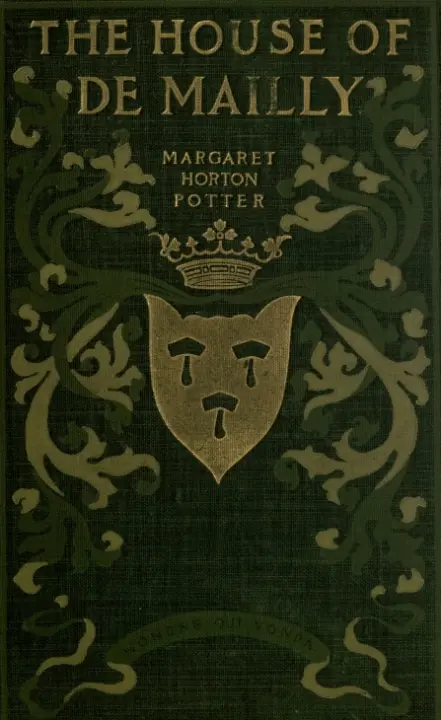
"The House of de Mailly: A Romance" by Margaret Horton Potter is a historical novel written in the early 20th century. Set in the 18th-century French court during the reign of Louis XV, it explores themes of love, rivalry, and power dynamics among the nobility. The main character, Claude de Mailly, navigates the complexities of court life and his infatuation with his cousin, the Duchess de Châteauroux, who is also the king's favorite, creating tension between personal desires and the royal expectations of the time. The opening of the narrative introduces us to a rainy evening in January 1744, where Claude de Mailly and the Duc de Richelieu make their way to a gathering at the Café Procope. Here, they engage in witty banter while discussing courtly affairs and the attraction that Claude feels for the Duchess. This scene paints a vibrant picture of court life, foreshadowing the emotional turmoil that will unfold as Claude's affection for the Duchess clashes with the King's interest in her. The interactions reveal the tensions that arise from love and loyalty in a world where appearances and royal favor dictate social standing, providing a glimpse into the complex relationships that will drive the plot forward.
Introduction adapted from the source catalogue; source summaries may be automatically generated.
Free to read · English · 147,771 words · No account needed
MAKE TIME FOR A GOOD BOOK
On by default. Untick to stop anonymous reading totals. Each page counts after 10 seconds in view. How this works.
Anonymous counting is on unless you have switched it off.
In slow wonderment the tangled head lifted, the white face, with its tear-stained cheeks, was raised, and the gray-blue eyes fell open sleepily. He did not speak while she looked at him, the actual presence corresponding, with startling accuracy, to her dream.
"I thought--you had gone away," she said, softly.
"I could not go while you were here," he answered, seating himself
beside her.
She sighed like a child. She seemed to-day many years younger than usual, and Claude looked at her curiously, wondering at her manner.
"Deborah," he said, gravely, without offering to touch her, "I am going back--home. Will you come with me? Will you trust me? Will you let me make a new life, a new home, for you?"
She caught her breath, as a child, after a long crying-spell, sobs, reminiscently. Then she sat silent while he waited.
"I can't be happy here after--last night," she said, at length.
"I will try to make you happy."
She made no answer, but perhaps he read her mind, for he grew troubled. One thought held each of them. It was that of the fair and stately Duchess--la Châteauroux, whom Claude had loved. And which picture was the fairer, Claude's memory or Deborah's imagination, it were hard to tell.
After a moment or two the pause became more than uncomfortable. Both sat in growing rigidity, looking straight before them, thinking, helplessly. Then, all at once, Deborah, with fearful hesitation, turned her head and looked into his face. And suddenly, when Claude's poor hope was all but dead, one of her hands, cold and tremulous, crept into that passive one of his that lay beside her on the seat. It was her answer. How the promise was sealed--need not be told.
Twilight deepened over the shadow of the dead day. Behind the black, lacy tree-tops of the forest a sunset flush pulsated in crimson and gold. From the still garden the evening fragrance, intoxicating, heart-stilling, to which neither the sunny morning odors nor the night's holy incense could be compared, floated in warm, rich breaths about the figures of the man and woman whose lives had come to join each other over wide seas and many lands. The spell of the evening was over them both. Their eyes wandered. Their thoughts were still. Hand in hand, two of God's pilgrims met here to rest a little ere they moved on again, they sat, silent, nerveless, feeling, perhaps, more of the universal love than that of individuals. No prophecy of storms to come disturbed their hour. Only the garden and the timeless twilight enfolded them. The bird-songs, one by one, melted away. The waves whispered unutterable things. And so, out upon the pale sunset, hanging tremulous as by a thread of heaven, came a fair silver jewel--the evening star. Deborah's eyes beheld it, and were riveted upon its liquid beauty.
Your reading position is saved on this browser. Take it to another device with a library code. Reading pages adapt to text, rather than matching a printed edition.
Margaret Horton Potter
Margaret Horton Potter
Margaret Horton Potter
BEHIND THE BOOK
This eBook is for the use of anyone anywhere in the United States and most other parts of the world at no cost and with almost no restrictions whatsoever. You may copy it, give it away or re-use it under the terms of the Project Gutenberg License included with this eBook or online at www.gutenberg.org. If you are not located in the United States, you will have to check the laws of the country where you are located before using this eBook. Read the source licence.
The original source file, including credits and licence, is retained by this library. Request an original-format copy at no charge. Please include the book title and Project Gutenberg identifier #73165.
KEEP YOUR CURIOSITY GOING
Cécile Tormay

Moritz Busch
Coulson Kernahan
John L. Ransom

Maurice Baring
Frances Wright