THE CLASSIC COLLECTION✦The flame-gatherersCLASSIC FREE BOOKS
The flame-gatherers
Margaret Horton Potter
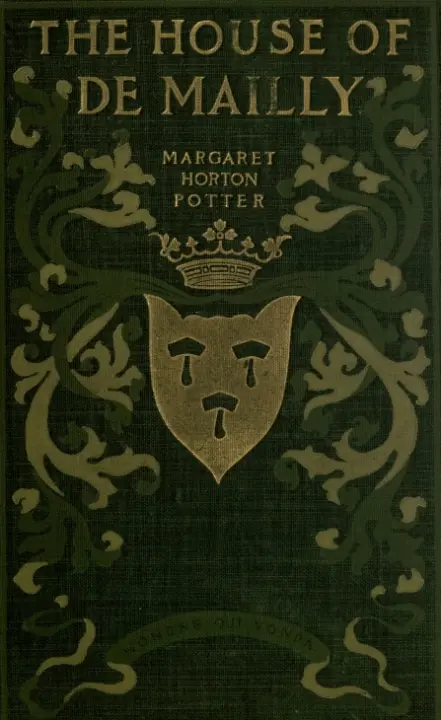
THE CLASSIC COLLECTION · 1901
"The House of de Mailly: A Romance" by Margaret Horton Potter is a historical novel written in the early 20th century. Set in the 18th-century French court during the reign of Louis XV, it explores themes of love, rivalry, and power dynamics among the nobility. The main character, Claude de Mailly, navigates the complexities of court life and his infatuation with his cousin, the Duchess de Châteauroux, who is also the king's favorite, creating tension between personal desires and the royal expectations of the time. The opening of the narrative introduces us to a rainy evening in January 1744, where Claude de Mailly and the Duc de Richelieu make their way to a gathering at the Café Procope. Here, they engage in witty banter while discussing courtly affairs and the attraction that Claude feels for the Duchess. This scene paints a vibrant picture of court life, foreshadowing the emotional turmoil that will unfold as Claude's affection for the Duchess clashes with the King's interest in her. The interactions reveal the tensions that arise from love and loyalty in a world where appearances and royal favor dictate social standing, providing a glimpse into the complex relationships that will drive the plot forward.
Introduction adapted from the source catalogue; source summaries may be automatically generated.
Free to read · English · 147,771 words · No account needed
MAKE TIME FOR A GOOD BOOK
On by default. Untick to stop anonymous reading totals. Each page counts after 10 seconds in view. How this works.
Anonymous counting is on unless you have switched it off.
Fairfield hesitated. The plantation held out no special inducement to him. His blood had been heated, and he was eager for some excitement after a long period of inertia. "I think not, Vincent, since you have company. If Jennings, here, cannot put me up for the night, I'll go up to Mrs. Miriam's, or to Reynolds'."
"I'll ride with you, Trevor. I can cross the river at King's Ferry. My people will expect me to-night. Our town house is shut."
"Very well. I leave you, then, Charles. You'll ride out in the morning with M. de Mailly and Carleton."
"Ay, and me, too," called young Carroll after him. "I'll see Castor rode with the rest of you, and, egad, I'll go to the race as well!"
"We shall be delighted, Charles," replied Vincent, as he left the
room.
"Until to-morrow, then. Good-day, sir," said Paca, bowing with courtly politeness to Claude, who liked him thenceforth.
The four who remained in the jockey-club-room sat silent together for some moments after they had been left alone. Then Claude, looking at young Charles, rose.
"Come, Mr. Carroll, since we are making your holiday together, let us go and finish it with a supper at my inn. You will forgive me, messieurs"--he turned to Sir Charles and Jennings--"you will forgive me that I do not propose a party of four. After the excitement of the cock-fight this afternoon, and my ride for to-morrow, we will make our evening quiet. You might be perhaps--how do you say--ennuyé--by it. Where shall we join you to-morrow?" He smiled gently as he beheld the lieutenant regarding him with knitted brows. Indeed, to Fairfield it seemed that the Frenchman had read his mind, and was bound to thwart his hopes of arranging a gentleman's night in Jennings' company.
"Come, come, monsieur, be more lenient. Dine with us at the 'Blue Balls' and join us in a game of écarté later."
"Eh, yes!" cried young Charles, eagerly. "'Twould be vastly more fun!" He pulled de Mailly's sleeve.
"No, no, Charles, not you! It--your father--damme, you ain't out of
school yet, you know," stammered Jennings, voicing Fairfield's
thought.
Carroll flushed hot with anger, and Claude bit his lip before he answered, quietly: "It is impossible that I should dine with you to-night, gentlemen, though I thank you for your kindness. Mr. Carroll is my guest."
Your reading position is saved on this browser. Take it to another device with a library code. Reading pages adapt to text, rather than matching a printed edition.
Margaret Horton Potter
Margaret Horton Potter
Margaret Horton Potter
BEHIND THE BOOK
This eBook is for the use of anyone anywhere in the United States and most other parts of the world at no cost and with almost no restrictions whatsoever. You may copy it, give it away or re-use it under the terms of the Project Gutenberg License included with this eBook or online at www.gutenberg.org. If you are not located in the United States, you will have to check the laws of the country where you are located before using this eBook. Read the source licence.
The original source file, including credits and licence, is retained by this library. Request an original-format copy at no charge. Please include the book title and Project Gutenberg identifier #73165.
KEEP YOUR CURIOSITY GOING
Cécile Tormay

Moritz Busch
Coulson Kernahan
John L. Ransom

Maurice Baring
Frances Wright