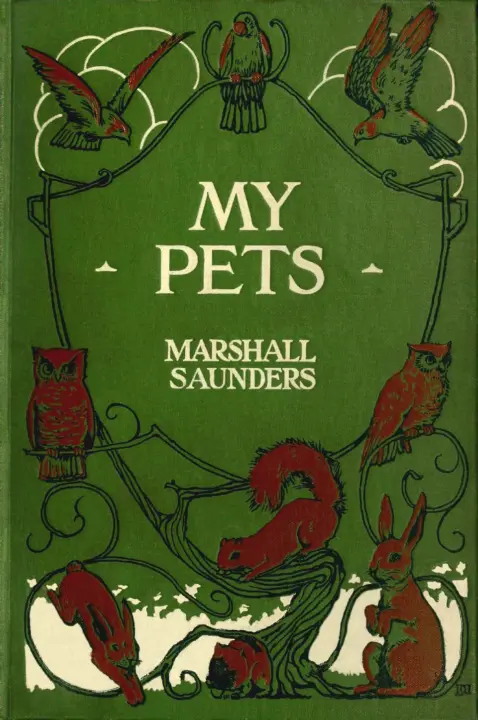
My pets
Marshall Saunders
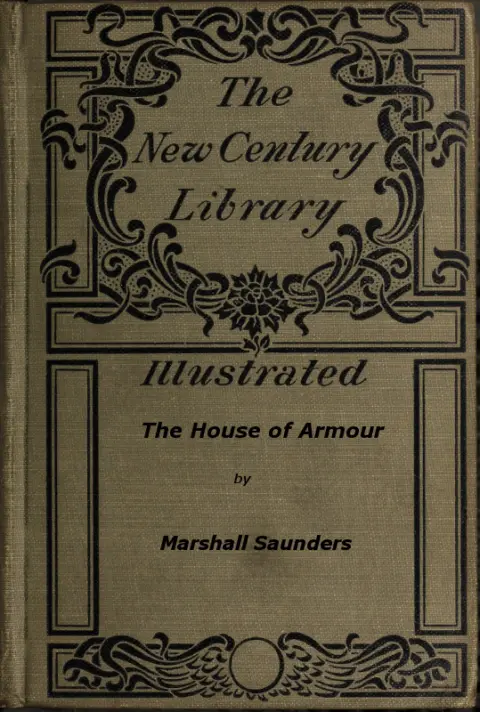
THE CLASSIC COLLECTION · 1897
"The House of Armour" by Marshall Saunders is a novel written in the late 19th century. The narrative follows Vivienne Delavigne, a young girl returning to her native Nova Scotia from abroad, and her experiences as she reintegrates into a life complicated by her past and her guardians, the Armour family. The book explores themes of identity, cultural heritage, and the social dynamics of the time. The opening of the story sets the scene with a passenger ship entering the picturesque harbor of Halifax. Vivienne is introduced as an enthusiastic character reflecting on her childhood memories of the place. Alongside her is Captain Macartney, who is intrigued by her passion for her homeland. Their dialogue hints at deeper themes of nationalism and personal connection, especially as Vivienne reveals her longing for belonging amid her recent losses. The chapter intriguingly establishes the setting, character dynamics, and themes that will likely evolve throughout the novel, inviting readers into Vivienne's journey as she navigates her complex emotions and relationships.
Introduction adapted from the source catalogue; source summaries may be automatically generated.
Free to read · English · 116,963 words · No account needed
MAKE TIME FOR A GOOD BOOK
On by default. Untick to stop anonymous reading totals. Each page counts after 10 seconds in view. How this works.
Anonymous counting is on unless you have switched it off.
“Yet you know how to suffer,” she interposed impetuously.
“Yes; perhaps if you knew what it costs me to say to you, ‘Vivienne, love me and be my wife,’ you would not be so hard on me.”
“That is it,” she replied with a despairing gesture. “You fancy that I admire you. You wish to have me all to yourself; you are a man to be respected by women but not adored, and you are consumed with pride to find one who does adore you; I understand you.”
“Partly only,” he replied. “Vivienne, come here.”
“I will not.”
“I foresee a stormy courtship,” he said in an undertone. Then anxious to try his power over her he added aloud, “Vivienne, please come here.”
“I will not,” she said again, but in her goings to and fro her feet seemed to carry her nearer him in spite of herself.
“Come,” he said, holding out his hands.
“I will not,” she said a third time, but the words were feeble and her outstretched finger tips rested on his hands.
“Sit there now, unreasoning child,” he said, drawing her to his knee, “and let us talk this matter over. I have something to tell you that will greatly astonish you.”
Her black head drooped to his shoulder. “What is it?” she said feebly.
“I have good reason to believe that your father is not the villain he is
supposed to be.”
“Is not,” she repeated keenly. “Is he not dead?”
“No,” quietly; “I do not think so.”
She made a bewildered gesture. “I am surprised at nothing now; but why
do you say this?”
“I think I would have heard of it if he had died.”
The girl was too excited to sit still. She sprang up again and moved restlessly about him. “You understand him,” she said; “ah, why have you not talked to me of him before?”
“You have never asked me to do so.”
She stopped short, measured him with a quick, comprehensive glance, then resumed her restless movements. She could not understand him; it was useless to try to do so. “You liked my father,” she said impulsively.
“Yes; as a lad my father and Étienne Delavigne were my ideals; your father was very patient and kind to me. He gave me my first instruction in business principles.”
“And were they all they ought to be?” asked the girl passionately. “Did he teach you anything dishonorable?”
“No; he did not.”
“Then why did he change?” she asked with one of her eloquent gestures.
Your reading position is saved on this browser. Take it to another device with a library code. Reading pages adapt to text, rather than matching a printed edition.
Marshall Saunders
Marshall Saunders
Marshall Saunders
Marshall Saunders
BEHIND THE BOOK
This eBook is for the use of anyone anywhere in the United States and most other parts of the world at no cost and with almost no restrictions whatsoever. You may copy it, give it away or re-use it under the terms of the Project Gutenberg License included with this eBook or online at www.gutenberg.org. If you are not located in the United States, you will have to check the laws of the country where you are located before using this eBook. Read the source licence.
The original source file, including credits and licence, is retained by this library. Request an original-format copy at no charge. Please include the book title and Project Gutenberg identifier #53697.
KEEP YOUR CURIOSITY GOING
Coulson Kernahan

Maurice Baring
Frances Wright
Cécile Tormay

Frederic Jesup Stimson

W. H. P. (William Henry Pope) Jarvis