THE CLASSIC COLLECTION✦An outlaw’s diary: the CommuneCLASSIC FREE BOOKS
An outlaw’s diary: the Commune
Cécile Tormay
THE CLASSIC COLLECTION · 1827
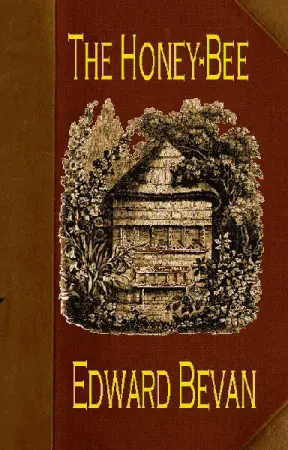
"The Honey-Bee: Its Natural History, Physiology and Management" by Edward Bevan is a scientific publication written in the early 19th century. This comprehensive work delves into the natural history and intricate biological processes of the honey bee, as well as practical management advice for beekeepers. Bevan aims to provide both a popular overview and detailed insights into apiarian knowledge, blending historical context with physiological and practical information in his exploration of these industrious insects. At the start of the work, the author introduces the honey bee as a complex social insect comprising three main types: the queen, the workers, and the drones. He highlights the distinctive characteristics and roles of each group within the colony, referencing historical figures such as Aristotle and Virgil as early contributors to the understanding of bees. This introductory section sets the stage for a detailed analysis of the bees' physiology, behavior, and the vital role they play in the ecosystem, while also providing the reader with a historical context of apiarian science.
Introduction adapted from the source catalogue; source summaries may be automatically generated.
Free to read · English · 87,903 words · No account needed
MAKE TIME FOR A GOOD BOOK
On by default. Untick to stop anonymous reading totals. Each page counts after 10 seconds in view. How this works.
Anonymous counting is on unless you have switched it off.
Many instances are also recorded of domesticated bees seeking an asylum in some hollow part of an old building or tree. +Dr. Warder+, +Mr. Butler+, +Mr. Knight+, +Dr. Evans+, +M. Duchet+, and other writers think that the bees about to swarm regularly send out scouts, to explore an eligible situation for their future residence; though Dr. Evans admits that this disposition to resume wild habits, like many of the instinctive faculties of the animal creation, has its intensity weakened by domestication. Dr. Warder asserts that the bees always send out providers, to select a suitable residence for them, several days before swarming, and considers that their clustering upon a bough, &c. soon after they issue forth, proceeds from their desire to be all congregated together prior to the last flight: this is likewise the opinion of Mr. Knight. If the place selected be a deserted hive, it is first cleared by the bees of all heterogeneous matters, the old combs alone being allowed to remain. An observance of this conduct probably led +Columella+ to recommend the placing of empty hives, during the swarming season, in appropriate situations near an apiary. +Keys+ gives a similar recommendation. +Reaumur+ on the other hand ridicules the idea of "spies and quartermasters," as ingenious fable. What I have stated in Chapter XVII. p. 148. confirms Reaumur's opinion: he is also supported in it by +Buffon+, +Bonnet+, and +Huber+: the former says, that the swarming bees form a cloud round their queen, and set off without seeming to know the place of their destination;--"the world before them, where to choose their place of rest." I will however detail a few cases that support the theory of "spies and quartermasters." In the Philosophical Transactions for 1807, +Mr. Knight+, writing to Sir Joseph Banks, relates several instances of the kind. On one occasion he observed from twenty to thirty bees paying daily visits to some decayed trees, about a mile distant from his garden; the bees appeared to be busily employed in examining the hollow parts, and particularly the dead knots around them, as if apprehensive of the knots admitting moisture. In about fourteen days, these seeming surveyors were followed by a large swarm from his apiary, which was watched the whole way, till it alighted in one of these cavities. It was observed to journey nearly in a direct line from the apiary to the tree. On several similar occasions the bees selected that cavity which Mr. Knight thought best adapted to their use. He has also noticed that, a stock being nearly ready to swarm, one of these hollow trees was daily occupied by a small number of bees; but the swarm from that stock, being lodged in another hive, the tree was wholly deserted. This preference of a hive, when offered them, to a place chosen by themselves, Mr. Knight ascribes to a habit acquired by domestication, which generating a dependence upon man for providing them a dwelling, descends hereditarily from the parents to their offspring. Another instance is related by +Dr. Evans+: he suffered a hive, whose tenants had died in the winter, to remain upon the stand till spring: he then observed several bees paying it daily visits, and busily employed within, but leaving it at the close of evening. These soon appeared, like Dr. Warder's providers, to be the harbingers of a swarm; for, early in June, an immense body of these insects were seen rapidly approaching, and then surrounding the hive: they took possession as quickly as its narrow entrance and crowded combs would permit. The same result was noticed after the mild winter of 1806-7, which untenanted one of his hives by famine: he was present when the swarm issued (from another hive in his garden) to take possession of the empty one, which, on his endeavouring to raise it, to give facility to their entrance, he found already cemented to the floor. The Doctor also relates a case in which a swarm of bees "made its way either over the tops of some very high houses, or through several winding streets, to an old house in the centre of Shrewsbury, and passing through an aperture in the wood-work to a room on the first floor, were there hived by the family." +Mr. Butler+ in his Feminine Monarchie mentions the case of a poor woman whose hive being depopulated by famine was allowed to remain out of doors till the ensuing summer, when a swarm took possession of it, from which she afterwards stored her garden. Other instances of a similar kind have been related; but in most of them it is not easy to ascertain how far the proprietors of the hives, from which the swarms went forth, had been improvident. The cases related by Mr. Knight are the most remarkable; but with respect to these, further information would be desirable. Was there any inducement beyond a snug housing in the cavities of the trees, to tempt the bees to wander so far from their native spot? such as favourite pasturage, or neighbouring trees that were wont to supply honey-dew? or were there in either of the hollow trees, thus occupied, any old combs which had been left there by another family? Lastly, were the emigrating bees exposed to any annoyance in their old habitation, either from neighbours of their own species or the attacks of other animals? or were they deprived of any sheltering protection to which they had been accustomed, by the removal of buildings, the cutting down of trees or otherwise? +Bonner+, who agrees in opinion with Mr. Knight, that bees often go in quest of a suitable habitation, before they swarm, has observed that he knew for certain that a swarm would not fly a mile to an empty hive, "whereas they will fly," says he, "four miles to take possession of an old one with combs in it."
Your reading position is saved on this browser. Take it to another device with a library code. Reading pages adapt to text, rather than matching a printed edition.
BEHIND THE BOOK
This eBook is for the use of anyone anywhere in the United States and most other parts of the world at no cost and with almost no restrictions whatsoever. You may copy it, give it away or re-use it under the terms of the Project Gutenberg License included with this eBook or online at www.gutenberg.org. If you are not located in the United States, you will have to check the laws of the country where you are located before using this eBook. Read the source licence.
The original source file, including credits and licence, is retained by this library. Request an original-format copy at no charge. Please include the book title and Project Gutenberg identifier #67107.
KEEP YOUR CURIOSITY GOING
Cécile Tormay

Moritz Busch
John L. Ransom
Frances Wright
Cécile Tormay

Mabel Potter Daggett