THE CLASSIC COLLECTION✦An outlaw’s diary: the CommuneCLASSIC FREE BOOKS
An outlaw’s diary: the Commune
Cécile Tormay
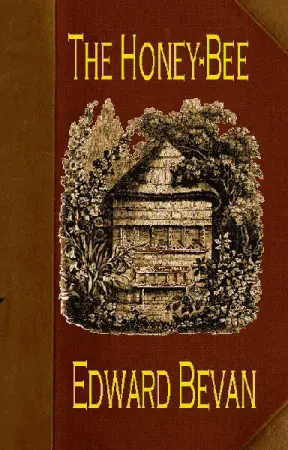
THE CLASSIC COLLECTION · 1827
"The Honey-Bee: Its Natural History, Physiology and Management" by Edward Bevan is a scientific publication written in the early 19th century. This comprehensive work delves into the natural history and intricate biological processes of the honey bee, as well as practical management advice for beekeepers. Bevan aims to provide both a popular overview and detailed insights into apiarian knowledge, blending historical context with physiological and practical information in his exploration of these industrious insects. At the start of the work, the author introduces the honey bee as a complex social insect comprising three main types: the queen, the workers, and the drones. He highlights the distinctive characteristics and roles of each group within the colony, referencing historical figures such as Aristotle and Virgil as early contributors to the understanding of bees. This introductory section sets the stage for a detailed analysis of the bees' physiology, behavior, and the vital role they play in the ecosystem, while also providing the reader with a historical context of apiarian science.
Introduction adapted from the source catalogue; source summaries may be automatically generated.
Free to read · English · 87,903 words · No account needed
MAKE TIME FOR A GOOD BOOK
On by default. Untick to stop anonymous reading totals. Each page counts after 10 seconds in view. How this works.
Anonymous counting is on unless you have switched it off.
Palpi 256 Pasturage 55 effect on the flavour of honey 66, 230 ancient opinion of 65 Barthelemy's ib. Duppa's 230 noxious 67, 230 Xenophon's opinion of 67 Tournefort's ib. Darwin's opinion of 68 Barton's 68, 231 Pellets, moulding of 372 Perspiration 273 Pissoceros 378 Poison of Bees 286 its nature ib. crystallizes in drying ib. Pollen. Vide Farina. Propolis 375 analysis of ib. mode of conveying 376 source of ib. Huber's experiments ib. Evans's observations 377 Knight's 378 form of its pellets 377 variously compounded with wax 378 time of gathering 379 uses of 375 substitutes sometimes used for 378 Reaumur's experiment ib. Providers, or Scouts 131 Warder's opinion of 132 Butler's ib. Knight's ib. Evans's ib. Duchet's ib. Reaumur's ib. Buffon's ib. Bonnet's ib. Huber's ib. Bonner's 135 Pupa 12 resemblance of to a mummy 13
Queen-bees, artificial 20 discovery attributed to Schirach ib. said to have been long known 20 opinions of Vogel and Monticelli ib. experiment of Dunbar 22 not mute as Huber supposed 23 attachment of workers to 141 enmity towards, and combats with each other 281 evolution of ab ovo 14 homage paid to 144 impregnation of 25 opinions concerning ib. Bonner's 28 Bonnet's 29 Butler's 36 Debraw's 27 Dobbs's 26 Fleming's 32 Hattorf's 28 Huber's 27, et seq. Huish's 27 Hunter's 30, 33 Linnæus's 33 Lombard's 29 Maraldi's 26 Reaumur's 26 Schirach's 28 Swammerdam's 25 Wildman's 36 objections to Huber's theory ib. impregnation retarded 37, 41 intercourse with drones 30, et seq. probable duration of fertilizing influence 31 laying, commencement of 37 affected by temperature ib. loss of, its consequences 144 mode of depositing eggs 8 mode of searching for when a stock has been suffocated 174 mutilated, lose their instincts 309 prescience (supposed) of 118 prisoners when very young 17 reason of this ib. virgin, when first seek the drones 34 voice of, authoritative 128 when imprisoned 19
Reason, human, definition of 335 insect, definition of ib. presumptive evidence of 322 difference between human and insect 335 observations of Reid 356 of Evans ib. Regurgitating power of bees 229 Reimar's opinion of memory 333 Reproduction, organs of 275 ovaries 276 oviducts ib. ovipositor 277 sperm-reservoir ib. Respiration, organs of 266 evidences of their existence 267 stigmata, spiracles or breathing pores 266 tracheæ ib. Riem's discovery 3
Salt, of use to bees 186 Schirach's discovery 20 Scouts. Vide Providers. Secretions of bees 273 Sensation of bees 258 medium of its communication 259 its seat ib. bees have a common sensorium ib. evidences of it ib. protracted vitality ib. memory 260 instances of ib. Reimar's opinion of 333 susceptible of instruction 261 instances of ib. organs of 258 antennæ 262 opinions of their offices ib. facts in support of them 263 palpi ib. uses ascribed to ib. Senses of bees 302 smell ib. instances of its acuteness 303, et seq. touch 307 analogy from ants 291 taste 309 hearing 310 evidences of ib. sight 311 not very perfect ib. Dr. Virey's theory 316 Sensorium 259 Separation of wax and honey 216 Shed for bees 99 Sleep of bees 295 Source of bees-wax 356 Source and nature of bees-wax; pollen formerly supposed to be the prime constituent of it 356 striking difference between them ib. wax proved to be a secretion from the body of the bee 362 experiments and observations of Huber, Thorley, Duchet, Wildman, Hunter and Evans 362, et seq. regular division of labour 367 hence wax-working and nursing-bees ib. experiment to show the designation of pollen ib. other sources of wax 368 Sphinx Atropos. Vide Hawk-moth. Spider, anecdotes of 261 fertilization of 31 Sir Joseph Banks's 332 Stemmata 315 experiments of Swammerdam, Reaumur, &c. 315 Sting of working-bee 277 fatal consequences attending its use 278, 283 not apt to be used when the bee is distant from home 289 of queen-bee 279 her cautious use of it 286 compared with sharp instruments ib. Stinging, remedies for 284 precautions against, when attacked 285 Storifying 109 will not always prevent swarming 124 compared with single-hiving 122 Suffocating or sulphuring of bees 174 Sugar an excellent substitute for honey 360 Super-hiving 124, 151 Swarming 115 causes of ib. usual periods of 119 best periods of ib. instance of very early ib. disadvantages of early and late 120 heat produced by 39, 273 bees not apt to sting at this time 138 striking instance of this 139 instance to the contrary ib. importance of queen at the time 140 experiments in proof of it 141, et seq. Swarms, number thrown off in a season 115 intervals betwixt successive 116 hiving of 136 union of 154 causes of 115 period usual of 118 best 119 early ib. late ib. led off by senior queen 31 symptoms preceding 127 Syrup for feeding bees 179
Your reading position is saved on this browser. Take it to another device with a library code. Reading pages adapt to text, rather than matching a printed edition.
BEHIND THE BOOK
This eBook is for the use of anyone anywhere in the United States and most other parts of the world at no cost and with almost no restrictions whatsoever. You may copy it, give it away or re-use it under the terms of the Project Gutenberg License included with this eBook or online at www.gutenberg.org. If you are not located in the United States, you will have to check the laws of the country where you are located before using this eBook. Read the source licence.
The original source file, including credits and licence, is retained by this library. Request an original-format copy at no charge. Please include the book title and Project Gutenberg identifier #67107.
KEEP YOUR CURIOSITY GOING
Cécile Tormay

Moritz Busch
John L. Ransom
Frances Wright
Cécile Tormay

Mabel Potter Daggett