THE CLASSIC COLLECTION✦An outlaw’s diary: the CommuneCLASSIC FREE BOOKS
An outlaw’s diary: the Commune
Cécile Tormay
THE CLASSIC COLLECTION · 1893
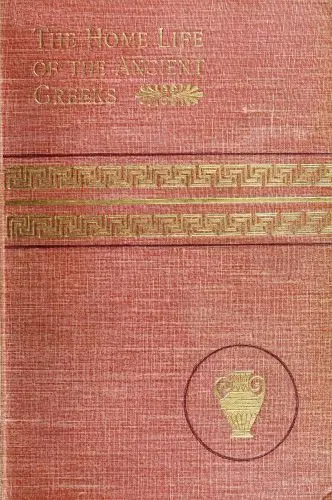
"The Home Life of the Ancient Greeks" by Hugo Blümner is a historical account written in the late 19th century. The book explores the domestic life, customs, and social conditions of ancient Greece, detailing various aspects such as clothing, family structure, education, and daily activities. Its focus is on how these cultural elements were interwoven with broader historical contexts and practices. At the start of the book, the translator provides a preface explaining the challenges of accurately depicting ancient Greek life, due to limited and sometimes biased sources. The introduction sets the tone for the chapters that follow, which are designed to analyze the different dimensions of Greek domestic life. The first chapter on costume elaborates on the significance of clothing in understanding daily life and provides detailed descriptions of traditional garments for both men and women, noting similarities and differences in styles, materials, and cultural influences throughout various periods of Greek history. The author emphasizes that clothing not only reflects personal identity but also societal norms and values within ancient Greek culture.
Introduction adapted from the source catalogue; source summaries may be automatically generated.
Free to read · English · 134,781 words · No account needed
MAKE TIME FOR A GOOD BOOK
On by default. Untick to stop anonymous reading totals. Each page counts after 10 seconds in view. How this works.
Anonymous counting is on unless you have switched it off.
It was, however, quite unusual for such attachment to begin before marriage, since opportunities for this were wanting. But often, in spite of the conventional mode by which marriages were arranged, this attachment was developed after marriage, and we must not fall into the mistake of judging married life in Greece, or especially at Athens, only from the greatly exaggerated descriptions of Aristophanes, or the sarcastic tirades of misogynists like Euripides. The great majority of the women were not so superficial or so quarrelsome as these poets have represented them, nor the young men, as a rule, so vicious or hostile to marriage as they are depicted in the majority of the New Attic Comedies.
It is true enough, of course, that marriage was usually a matter of contract between the fathers or guardians of the young pair, and not the consequence of affection between the youth and maiden; and this it is which we see in the comedies of Plautus and Terence, who copied Greek originals. Very often the fathers agreed to a marriage between their children; sometimes the arrangements were made by a woman (προμνηστρία) acquainted with the circumstances of the citizens’ families, who made a kind of business of arranging marriages. An important point was equality of fortune; of course, both parties had to be full citizens, but degrees of relationship do not seem to have been any hindrance. The girl’s consent was not asked at all; it was a matter of course that she should accept the husband chosen by her parents, and, as she had no other male acquaintances, objections can very seldom have been made. Generally she was only acquainted with the husband destined for her by seeing him hastily on her walks or at festivals. The destined bridegroom is more likely to have made objections if the appointed bride did not please him; yet here, too, as a rule, the father could have his way, since his son was entirely in his power, unless it so happened that he earned his own living by any profession, which was seldom the case among the better classes. The fathers or guardians then concluded the contract of engagement, in which the bride’s dowry was fixed and special arrangements made for community of goods, return of the dowry in case of a divorce, etc. The Homeric custom, by which it was the bridegroom who brought gifts in order to win a bride, while the father gave his daughter to the one who promised the richest bridal presents, had early fallen into disuse, and probably even in the heroic period it was only customary among noble families. In the historic period a dowry was regarded as an indispensable basis for marriage: so much so that daughters or sisters of poor citizens were often endowed at the expense of generous friends, or poor orphan girls by their guardians; sometimes the State even gave a dowry to the daughters of citizens who had deserved well of their country. The engagement itself was, as a rule, a legal act, which followed the private agreement between the fathers, and was considered an essential preliminary to a legal marriage; it was not, however, a general custom to celebrate this act in a social manner by a banquet. As is usual in southern countries, the girls married very young, sometimes even at the age of fifteen, or earlier; but the period between their sixteenth and twentieth years was probably the usual one for marriage. There seems to have been no distinct limit of age for men, but probably the years between twenty and thirty were those in which most of them entered the married state. We do not know how long a period usually elapsed between the engagement and the marriage; probably there was no definite custom, but we know that very often the wedding immediately followed the engagement. We are likewise unable to say whether, in the case of a long engagement, the bride and bridegroom had any opportunities for meeting each other. The actual wedding usually took place in the winter, and a favourite time was the month Gamelion (the end of January and beginning of February), which hence received its name. Certain days regarded as auspicious were generally chosen, and the waning moon was specially avoided. It is curious, when we compare our own and the Roman customs, to note that, though the wedding received a religious character by sacrifices and other solemn ceremonies, it was not of itself regarded as a religious or legal act. The legality of the marriage depended on the engagement, and the religious consecration was not given by a priest (who took no part, as a rule, in the wedding ceremony), but by the marriage gods, who were invoked by prayer and sacrifice, more especially Zeus and Hera, Apollo, Artemis, and Peitho, the goddess of persuasion. We must now endeavour to form an idea of an Athenian wedding ceremony, as described by Greek writers.
Your reading position is saved on this browser. Take it to another device with a library code. Reading pages adapt to text, rather than matching a printed edition.
BEHIND THE BOOK
This eBook is for the use of anyone anywhere in the United States and most other parts of the world at no cost and with almost no restrictions whatsoever. You may copy it, give it away or re-use it under the terms of the Project Gutenberg License included with this eBook or online at www.gutenberg.org. If you are not located in the United States, you will have to check the laws of the country where you are located before using this eBook. Read the source licence.
The original source file, including credits and licence, is retained by this library. Request an original-format copy at no charge. Please include the book title and Project Gutenberg identifier #61689.
KEEP YOUR CURIOSITY GOING
Cécile Tormay

Moritz Busch
John L. Ransom
Frances Wright
Cécile Tormay

Mabel Potter Daggett