THE CLASSIC COLLECTION✦An outlaw’s diary: the CommuneCLASSIC FREE BOOKS
An outlaw’s diary: the Commune
Cécile Tormay
THE CLASSIC COLLECTION · 1893
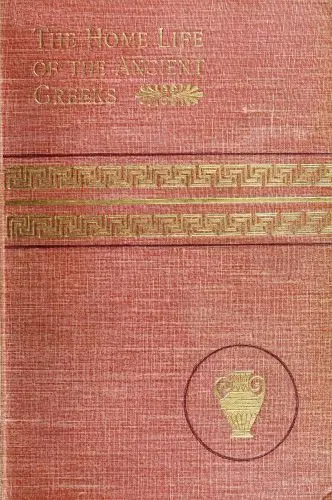
"The Home Life of the Ancient Greeks" by Hugo Blümner is a historical account written in the late 19th century. The book explores the domestic life, customs, and social conditions of ancient Greece, detailing various aspects such as clothing, family structure, education, and daily activities. Its focus is on how these cultural elements were interwoven with broader historical contexts and practices. At the start of the book, the translator provides a preface explaining the challenges of accurately depicting ancient Greek life, due to limited and sometimes biased sources. The introduction sets the tone for the chapters that follow, which are designed to analyze the different dimensions of Greek domestic life. The first chapter on costume elaborates on the significance of clothing in understanding daily life and provides detailed descriptions of traditional garments for both men and women, noting similarities and differences in styles, materials, and cultural influences throughout various periods of Greek history. The author emphasizes that clothing not only reflects personal identity but also societal norms and values within ancient Greek culture.
Introduction adapted from the source catalogue; source summaries may be automatically generated.
Free to read · English · 134,781 words · No account needed
MAKE TIME FOR A GOOD BOOK
On by default. Untick to stop anonymous reading totals. Each page counts after 10 seconds in view. How this works.
Anonymous counting is on unless you have switched it off.
Herewith the official programme of the festivities came to an end, but there was no lack of further entertainment; for the opportunity of appearing before so great a number of their countrymen, and thus attaining sudden fame, was a very attractive one for poets and writers, who in those days were little assisted by the bookselling trade. The custom of holding lectures or reciting poems before the assembled people originated in the 5th century, when it is said to have been introduced by Herodotus, who read aloud a portion of his history at Olympia, though this story is not entirely removed from doubt. It is, however, a fact that from that time onwards recitations of this kind became commoner; thus Gorgias the Sophist, and Hippias the Elian, held long discourses here; and similarly, Prodicus and Anaximenes, Lysias, Isocrates, etc., lectured at Olympia; and in later times this was a frequent occurrence. Occasionally, though less often, works of art were here exposed to view; thus, a painter, Aetion, exhibited his picture of the marriage of Alexander the Great and Roxana, and the astronomer, Oinopides, of Chios, exhibited a brass tablet which was to explain a new method of calculating the time, discovered by him. This last, however, turned out a failure. The publicity of the Olympic festival was also used in other ways. Important decrees relating to solemn pledges, treaties among states, mutual acknowledgment of meritorious actions, decisions to confer crowns, or other matters of importance, which it was desirable to bring into universal notice as soon as possible, were proclaimed by the solemn voice of the herald and then graven in bronze or stone, and set up in the Altis.
Every free man might be present at the contests and other festivities, provided his means permitted him to defray the expenses of the journey and of a stay in the festive city. Naturally the greater number of the spectators came from the neighbouring states of the Peloponnesus; but, still, many came very long distances. So great was the interest roused by these contests that people from all classes came to view them; and even men of the highest intellectual eminence took pleasure in them. Statesmen and generals, such as Themistocles, Cimon, Philopoemen; philosophers, such as Thales, Chiron, Pythagoras, Socrates, Plato; orators, such as Gorgias, Lysias, Demosthenes; poets, such as Pindar, Simonides, were among the spectators; and though some of the poets, especially Euripides, and philosophers were inclined to criticise rather severely the value of the performances at Olympia, yet these were but isolated opinions, and in no way tended to diminish the popularity of the games or the glory of the victors in the eyes of the general public. This interest was revealed by the endurance with which the spectators continued to watch the games, in spite of the fact that they took place in the very hottest season, and lasted for the greater part of the day; from early morning, when they went to the Stadion in order to secure a good place, till late in the afternoon, when the decision was given, they watched and endured the heat, dust, crowding, and thirst, either standing or squatting, according as space permitted, with that patience and endurance of which only the people of the south are capable. No doubt there were noisy expressions of sympathy during the contests, encouraging or mocking cries, applause and sounds of sorrow, since all feelings are expressed in a violent manner by southern nations. Women were not allowed to be present at the games. The statement that the maidens of Elis were an exception to this rule is scarcely credible. Those women or girls who had come to the festival to accompany competing husbands, sons, or brothers, had to remain on the other side of the Alpheus. In consequence of the great number of spectators, inns and lodging-houses were built to accommodate those who had not, like the sacred envoys, brought their own tents with them. Moreover, as already indicated, a kind of fair was connected with the Olympian festivities; traders, with all manner of wares, some of them objects directly connected with the festival, such as fillets, flowers, food, etc., and other useful articles, set up their booths and tents; and, thus, along with the festival, there was a busy commercial activity, such as was common in every place where great crowds of people met together at fixed times.
Your reading position is saved on this browser. Take it to another device with a library code. Reading pages adapt to text, rather than matching a printed edition.
BEHIND THE BOOK
This eBook is for the use of anyone anywhere in the United States and most other parts of the world at no cost and with almost no restrictions whatsoever. You may copy it, give it away or re-use it under the terms of the Project Gutenberg License included with this eBook or online at www.gutenberg.org. If you are not located in the United States, you will have to check the laws of the country where you are located before using this eBook. Read the source licence.
The original source file, including credits and licence, is retained by this library. Request an original-format copy at no charge. Please include the book title and Project Gutenberg identifier #61689.
KEEP YOUR CURIOSITY GOING
Cécile Tormay

Moritz Busch
John L. Ransom
Frances Wright
Cécile Tormay

Mabel Potter Daggett