THE CLASSIC COLLECTION✦Some Notes on Early Woodcut Books, with a Chapter on Illuminated ManuscriptsCLASSIC FREE BOOKS
Some Notes on Early Woodcut Books, with a Chapter on Illuminated Manuscripts
William Morris
THE CLASSIC COLLECTION · 1900
"The Hollow Land" by William Morris is a fantasy novel written in the late 19th century. The book explores themes of love, vengeance, and the longing for an idealized world, focusing on a mythical land where characters strive to find beauty and peace amidst strife and conflict. It reflects Morris's interests in medievalism and romanticism, presenting a narrative that intertwines personal ambition with the allure of a mystical realm. The story follows Florian de Liliis, a young nobleman whose life is intertwined with that of Swanhilda, a vengeful queen. After a series of tragic events driven by revenge against Swanhilda for her treachery, Florian embarks on a quest that ultimately leads him to the Hollow Land—a vision of paradise where he hopes to reunite with lost love and find solace. Along the way, Florian grapples with concepts of justice and morality, particularly in regards to his brother, Amald, and the consequences of their violent actions. The narrative culminates in a poignant exploration of love, loss, and the search for redemption in a world filled with both beauty and horror.
Introduction adapted from the source catalogue; source summaries may be automatically generated.
Free to read · English · 14,770 words · No account needed
MAKE TIME FOR A GOOD BOOK
On by default. Untick to stop anonymous reading totals. Each page counts after 10 seconds in view. How this works.
Anonymous counting is on unless you have switched it off.
So when he got well I asked him what his name was, and he me, and we both of us said, "Truly I know not." Then said I, "but we must call each other some name, even as men call days."
"Call me Swerker," he said, "some priest I knew once had that name."
"And me Wulf," said I, "though wherefore I know not."
Then I tried to learn painting till I thought I should die, but at last learned it through very much pain and grief.
And, as the years went on and we grew old and grey, we painted purple pictures and green ones instead of the scarlet and yellow, so that the walls looked altered, and always we painted God's judgments.
And we would sit in the sunset and watch them with the golden light changing them, as we yet hoped God would change both us and our works. Often too we would sit outside the walls and look at the trees and sky, and the ways of the few men and women we saw; therefrom sometimes befell adventures.
Once there went past a great funeral of some king going to his own country, not as he had hoped to go, but stiff and colourless, spices filling up the place of his heart.
And first went by very many knights, with long bright hauberks on, that fell down before their knees as they rode, and they all had tilting-helms on with the same crest, so that their faces were quite hidden: and this crest was two hands clasped together tightly as though they were the hands of one praying forgiveness from the one he loves best; and the crest was wrought in gold.
Moreover, they had on over their hauberks surcoats which were half scarlet and half purple, strewn about with golden stars.
Also long lances, that had forked knights'-pennons, half purple and half scarlet, strewn with golden stars.
And these went by with no sound but the fall of their horse-hoofs.
And they went slowly, so slowly that we counted them all, five thousand five hundred and fifty-five. Then went by many fair maidens whose hair was loose and yellow, and who were all clad in green raiment ungirded, and shod with golden shoes. These also we counted, being five hundred; moreover some of the outermost of them, viz., one maiden to every twenty, had long silver trumpets, which they swung out to right and left, blowing them, and their sound was very sad.
Then many priests, and bishops, and abbots, who wore white albs and golden copes over them; and they all sang together mournfully, "Propter amnen Babylonis;" and these were three hundred.
Your reading position is saved on this browser. Take it to another device with a library code. Reading pages adapt to text, rather than matching a printed edition.
William Morris
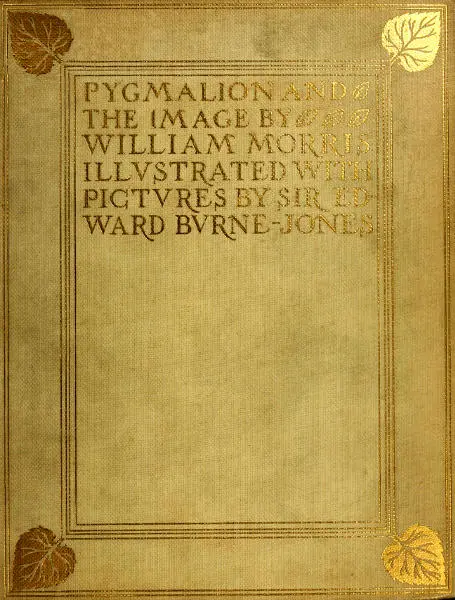
William Morris
William Morris
William Morris
BEHIND THE BOOK
This eBook is for the use of anyone anywhere in the United States and most other parts of the world at no cost and with almost no restrictions whatsoever. You may copy it, give it away or re-use it under the terms of the Project Gutenberg License included with this eBook or online at www.gutenberg.org. If you are not located in the United States, you will have to check the laws of the country where you are located before using this eBook. Read the source licence.
The original source file, including credits and licence, is retained by this library. Request an original-format copy at no charge. Please include the book title and Project Gutenberg identifier #15948.
KEEP YOUR CURIOSITY GOING
Coulson Kernahan

Maurice Baring
Frances Wright
Cécile Tormay
Francis Greenleaf Allinson & Anne C. E. (Anne Crosby Emery) Allinson

Frederic Jesup Stimson