Madame Roland: A Biographical Study
Ida M. (Ida Minerva) Tarbell
THE CLASSIC COLLECTION · 1904
"The History of the Standard Oil Company" by Ida M. Tarbell is an exposé published in 1904. Originally serialized in McClure's magazine, this groundbreaking work of investigative journalism reveals the monopolistic practices of John D. Rockefeller's Standard Oil empire. Through meticulous research and interviews with industry insiders, Tarbell uncovered evidence of price-rigging and predatory business tactics. Her revelations sparked public outrage and helped accelerate the company's eventual breakup in 1911, establishing a landmark example of muckraking journalism's power to challenge corporate abuse.
Introduction adapted from the source catalogue; source summaries may be automatically generated.
Free to read · English · 293,367 words · No account needed
MAKE TIME FOR A GOOD BOOK
On by default. Untick to stop anonymous reading totals. Each page counts after 10 seconds in view. How this works.
Anonymous counting is on unless you have switched it off.
Rockefeller, John D., Jr., II, 2266.
Rockefeller, William A., in the Standard Oil Company, I, 1044;
attractive personality, 1050;
in South Improvement Company, 1058;
in Acme Oil Company, 1159;
in negotiations with the Empire Transportation Company, 1194;
indicted for conspiracy, 1239;
extradition demanded 247;
at Buffalo conspiracy trial, II, 2102;
director Standard Oil, 1266;
railway director, 1279.
Russian oil, II, 2210–2211, 2213, 2214, 2271–2273.
Rutter circular, the, I, 1141–1144.
Satterfield, John, II, 2019–2020, 2162.
Scheide, W. T., testimony on rebate system, I, 1131–1133;
testimony on underselling, 1161–1163;
before the Hepburn Commission, 1228;
supports Billingsley Bill, II, 2122.
Scofield, Shurmer and Teagle, II, 2067–2076.
Scott, Rufus, II, 2164.
Scott, Thomas A., makes secret contracts with South Improvement Company, I, 1059–1061; abandons South Improvement Company, 1090, 1092; denies rebate agreement with Standard Oil Company, 1170; supports Standard Oil against independents, 1200–1201.
Seaboard Pipe Line, projected, I, 1174–1176;
opposed by Standard Oil Company, 1223;
completed, II, 2003–2006;
captured by Standard Oil Company, 1011–1024.
Secret bureau of information; see ESPIONAGE SYSTEM.
Secret contracts with railroads, I, 1059–1062, 1079–1080;
see also REBATE.
Seep, Joseph, I, 1150.
Seneca oil, I, 1005.
Shell Transport and Trading Company, II, 2272–2273.
Sherman, John, II, 2145, 2147.
Sherman, Roger, counsel for Producers’ Union, I, 1251, 1252;
in Producers’ Protective Association, II, 2164;
charges Standard Oil with conspiracy, 1186;
death, 1188.
Shull, Peter, II, 2042–2043.
Silliman, Professor, I, 1007.
South Improvement Company, organized monopoly, I, 1055–1059;
secret contracts with railroads, 1061–1062;
absorption by intimidation, 1064–1068;
boycotted by producers, 1072–1076;
a generous charter, 1078–1079;
investigated by Congressional Committee, 1079–1083;
charter repealed, 1094;
boycott lifted, 1095–1097.
Speculation, I, 1031–1033.
Spring pole, method of drilling wells by, I, 1010.
Squire, F. B., II, 2263.
Standard Oil Company, organized, I, 1044;
absorbs independent refineries, 1063–1068;
held responsible for South Improvement scheme, 1097–1098;
enormous profits, 1127–1128;
favoured shipper on N. Y. Central R. R., 1129–1130;
favoured shipper on Erie R. R., 1134–1135;
absorbs Philadelphia, Pittsburg and New York refineries, 1147–1148;
obtains rebates from railroads, 1151–1153;
absorbs Oil Regions refineries, 1158–1160;
invades oil-shipping business, 1161–1163;
enters pipe-line field, 1179, 1181;
monopolizes pipe-line traffic, 1194–1195;
absorbs Baltimore refineries, 1197;
enters Bradford oil fields, 1216;
investigated in various states, 1227–1229;
secret methods, 1229–1231;
monopolistic character, 1231–1232;
rebate and drawback system, 1232–1235;
increases prices, 1235–1238;
indicted for conspiracy in Pennsylvania, 1239–1240;
charges evaded, 1242–1243;
seeks compromise with producers, 1249–1251;
compromise effected, 1253–1254;
conspiracy charge withdrawn, 1254;
hinders Tidewater pipe-line, II, 2004–2005;
builds rival lines, 1012;
absorbs independent refineries, 1013–1014;
seeks to ruin Tidewater’s credit, 1016–1017;
seeks to dissolve it by legal process, 1017–1019;
attempts to seize control, 1019–1021;
forms alliance with Tidewater, 1023–1024;
extensive pipe-line development, 1025–1027;
alliance with Pennsylvania R. R., 1028–1029;
monopoly of oil transportation, 1029;
contest for world’s markets, 1031–1032;
efficient selling organization, 1032–1034;
secret bureau of information, 1035–1041;
intimidation and underselling, 1041–1051;
summary of competitive methods, 1060–1062;
rebate system, 1063–1087;
sued for conspiracy in Buffalo, 1100–1110;
its political rôle, 1111–1124;
investigated by N. Y. Senate committee, 1131–1135;
its operating constitution revealed, 1136–1137;
charter assailed in Ohio, 1142–1150;
Standard Trust formally dissolved, 1152–1154;
alliance with Producers’ Association, 1160–1161;
enters producing field, 1162–1163;
hinders independent oil movement, 1168–1169;
attacks credit of United States Pipe Line Company, 1170–1172;
undersells it, 1173–1174;
buys up rival’s stock, 1177–1181;
fights independent seaboard pipe-line, 1181–1187;
its control of prices, 1192–1227;
destruction of competition its object, 1227–1229;
merits of the Standard system, 1231–1232;
centralized authority, 1232;
committee system, 1233;
internal emulation, 1234–1235;
minute supervision, 1235;
dismantling of unprofitable plants, 1236;
wise location of industries, 1236–1237;
side-industries, 1237–1240;
economy of time, 1240–1241;
initiative, 1241–1251;
high-grade personnel, 1251–1253;
the Standard Trust after formal dissolution in 1892, 1257–1258;
contempt proceedings in Ohio, 1259–1264;
reorganized as Standard Oil Company of New Jersey, 1265–1265;
its constituent companies, 1265;
capital and surplus, 1265–1266;
its directorate, 1266;
its charter, 1266–1267;
profits, 1267–1268;
invasion of other industrial fields, 1268–1269;
its foreign competitors, 1271–1274;
present practices, 1274–1283;
transportation the basis of its supremacy, 1283–1284;
defence of Standard methods, 1284–1288;
political and ethical influence, 1288–1292.
Your reading position is saved on this browser. Take it to another device with a library code. Reading pages adapt to text, rather than matching a printed edition.
Ida M. (Ida Minerva) Tarbell
Ida M. (Ida Minerva) Tarbell
Ida M. (Ida Minerva) Tarbell
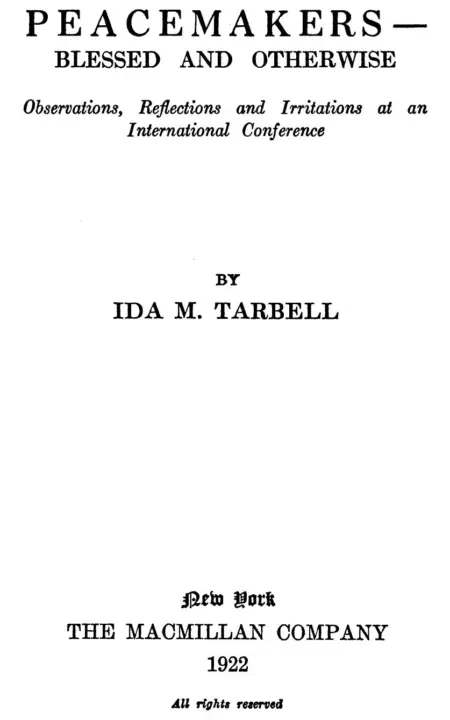
Ida M. (Ida Minerva) Tarbell
BEHIND THE BOOK
This eBook is for the use of anyone anywhere in the United States and most other parts of the world at no cost and with almost no restrictions whatsoever. You may copy it, give it away or re-use it under the terms of the Project Gutenberg License included with this eBook or online at www.gutenberg.org. If you are not located in the United States, you will have to check the laws of the country where you are located before using this eBook. Read the source licence.
The original source file, including credits and licence, is retained by this library. Request an original-format copy at no charge. Please include the book title and Project Gutenberg identifier #60692.
KEEP YOUR CURIOSITY GOING
Cécile Tormay

Moritz Busch
John L. Ransom
Frances Wright
Cécile Tormay

Mabel Potter Daggett