
Colonel Henry Ludington: A Memoir
Willis Fletcher Johnson
THE CLASSIC COLLECTION · 1920
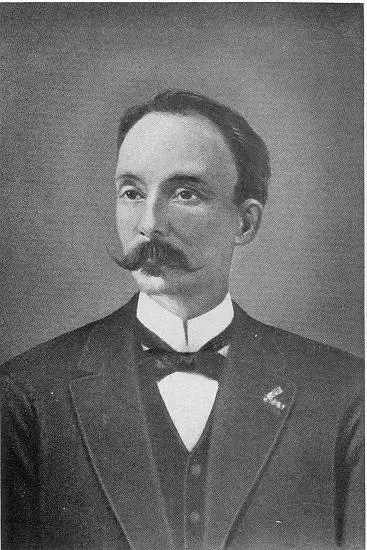
"The History of Cuba, vol. 4" by Willis Fletcher Johnson is a historical account written in the early 20th century. The book delves into the crucial events surrounding Cuba's War of Independence, documenting the rise of revolutionary figures such as José Martí, who is pivotal in the struggle for Cuban freedom. It likely serves not only as a record of historical events but also as an exploration of the broader implications of independence for the nation. The opening of the text sets the stage for the narrative by emphasizing the determination of the Cuban people to achieve independence, highlighting Martí's contributions and his role as a leader in the revolutionary movement. It outlines the organizational efforts of the Cuban Revolutionary Party, which was essential in rallying support from Cubans in both the island and the diaspora, particularly in the United States. Martí’s passion and vision for Cuba is reflected in the formation of various committees and the groundwork laid for the armed insurrection against Spanish rule, culminating in the declaration of independence and a commitment to sovereignty.
Introduction adapted from the source catalogue; source summaries may be automatically generated.
Free to read · English · 112,709 words · No account needed
MAKE TIME FOR A GOOD BOOK
On by default. Untick to stop anonymous reading totals. Each page counts after 10 seconds in view. How this works.
Anonymous counting is on unless you have switched it off.
Shall we take public health as another measure of progress? In the half dozen years just before the War of Independence the death rate in Havana was 33 to the 1,000. By 1902 it was reduced to 22, or only a little more than in New York. To-day, under President Menocal, the death rate for all Cuba is only 11.2. In the registration area of the United States it is 14. In the United Kingdom it is 14.2, and Britain vaunts herself upon its lowness. In France it is 19.6; in Argentina it is 21.6; in Chili it is 31.1. There are only three countries in the world with lower rates of mortality than Cuba; and they are New Zealand, with 9.5, Newfoundland with 10.5, and Australia with 10.6.
Again, consider what is still the chief industry of Cuba. Before the administration of President Menocal, these were the yearly sugar crops, in tons:
1908 961,958
1909 1,513,582
1910 1,804,349
1911 1,480,217
1912 1,893,687
Compare or contrast those figures with these, under the administration of a President who comprehends his responsibilities:
1913 2,429,240
1914 2,596,567
1915 2,583,845
1916 3,006,624
1917 3,019,936
1918 3,444,605
1919 4,000,000
No less impressive and significant are the figures which indicate the volume of trade between Cuba and the United States. The imports of American goods into Cuba in 1903 were only $23,000,000; in 1908 they were $48,577,000; in 1917 they were $189,875,000. The exports of Cuban goods to the United States were in 1908 only $78,869,000, and in 1917 they were $225,275,000, and in 1919 more than $500,000,000. The balance of trade is thus heavily in Cuba's favor. Small as Cuba is in comparison with some of her neighbors, her commerce with the United States far exceeds theirs. Thus in 1917 the commerce, in both directions, of Brazil with the United States was $180,000,000; of Chili, $205,000,000; of Argentina, $305,000,000; of Mexico, $248,000,000; and of Cuba, $415,150,000.
Financially, the administration of President Menocal is to be credited with the cancellation of the heavy and largely unnecessary debts which were left to it by the preceding administration; an achievement which contributed greatly to the improvement of Cuba's international credit. The foreign claims of Great Britain, France and Germany, which had been an embarrassing problem for several years, have been so satisfactorily adjusted that their complete settlement will be effected at a time convenient to all parties concerned. The grave fiscal and economic crisis which followed the beginning of the war of 1914, in practically all the markets of the world was avoided in Cuba by the Economic Defense Bill, and the establishment of a Cuban national monetary system has facilitated exchange and all manner of transactions in Cuba, and has redeemed the country from the reproach of being ridden by and dependent upon foreign coin as its medium of exchange.
Your reading position is saved on this browser. Take it to another device with a library code. Reading pages adapt to text, rather than matching a printed edition.
Willis Fletcher Johnson

Willis Fletcher Johnson

Willis Fletcher Johnson

Willis Fletcher Johnson
BEHIND THE BOOK
This eBook is for the use of anyone anywhere in the United States and most other parts of the world at no cost and with almost no restrictions whatsoever. You may copy it, give it away or re-use it under the terms of the Project Gutenberg License included with this eBook or online at www.gutenberg.org. If you are not located in the United States, you will have to check the laws of the country where you are located before using this eBook. Read the source licence.
The original source file, including credits and licence, is retained by this library. Request an original-format copy at no charge. Please include the book title and Project Gutenberg identifier #33848.
KEEP YOUR CURIOSITY GOING
Cécile Tormay

Moritz Busch
John L. Ransom
Frances Wright
Cécile Tormay

Mabel Potter Daggett