
Colonel Henry Ludington: A Memoir
Willis Fletcher Johnson
THE CLASSIC COLLECTION · 1920
"The History of Cuba, vol. 1" by Willis Fletcher Johnson is a historical account written in the early 20th century. This work aims to provide a comprehensive narrative of Cuba's past, focusing on both the land’s historical significance and the development of its people. The initial chapters delve into the pivotal moments of discovery and early interactions between Columbus and the island, setting the stage for Cuba's complex colonial history. The opening of the book recounts the initial landing of Christopher Columbus in Cuba on October 28, 1492, and emphasizes the island's historical significance as a key landmark in the history of the Western Hemisphere. Columbus's first impressions of Cuba's lush landscapes and the native populace are detailed, capturing his misconceptions about the island's riches and its supposed connections to Asia. As he explores the island along the northern coast, Columbus's interactions with the natives and his misinterpretations of their knowledge further illustrate the complexities underlying the historical narrative of Cuba. The text paints a vivid picture of the foundational moments of Cuba's entry into global history, making it a crucial introduction to the broader themes of the book.
Introduction adapted from the source catalogue; source summaries may be automatically generated.
Free to read · English · 140,101 words · No account needed
MAKE TIME FOR A GOOD BOOK
On by default. Untick to stop anonymous reading totals. Each page counts after 10 seconds in view. How this works.
Anonymous counting is on unless you have switched it off.
Christianity, introduced into Cuba by Ojeda, I, 55;
urged by King Ferdinand, 73.
Church, Roman Catholic, organized and influential in Cuba, I, 122; cathedral removed from Baracoa to Santiago, 123; conflict with civil power, 227; controversy with British during British occupation, II, 84; division of island into two dioceses, 173; attitude toward War of Independence, IV, 26; controversy over property, 294.
Cienfuegos, Jose, Governor, II, 311.
Cimmarones, "wild Indians," I, 126;
revolt against De Soto, 148.
Cipango, Cuba identified with, by Columbus, I, 5.
Cisneros, Gaspar Betancourt, sketch and portrait, II, 379.
Cisneros, Pascal Jiminez de, II, 110, 127.
Cisneros, Salvador, III, 167;
sketch and portrait, 276;
President of Cuban Republic, 277;
President of Council of Ministers, IV, 48;
in Constitutional Convention, 190.
Civil Service, law, IV, 325;
respected by President Menocal, 325.
Clay, Henry, policy toward Cuba, II, 261.
Clayton, John M., U. S. Secretary of State, issues proclamation against filibustering, III, 42.
Cleaveland, Samuel, controversy over church bells, II, 83.
Cleveland, Grover. President of United States, issues warning against
breaches of neutrality, IV, 70;
reference to Cuba
in message of 1896, 79;
its significance, 80.
Coat of Arms of Cuba, picture, IV, 251;
significance, 251.
Cobre, copper mines, I, 173, 259.
"Cockfighting and Idleness" campaign, IV, 291.
Coffee, cultivation begun, II, 33, 113.
Coinage, reformed, II, 142;
statistics of, 158.
Collazo, Enrique, filibuster, IV, 55.
Coloma, Antonio Lopez, revolutionist, IV, 30.
Colombia, designs upon Cuba, II, 262;
III, 134;
attitude toward Cuban revolution, 223.
Columbus, Bartholomew, recalled to Spain, I, 57.
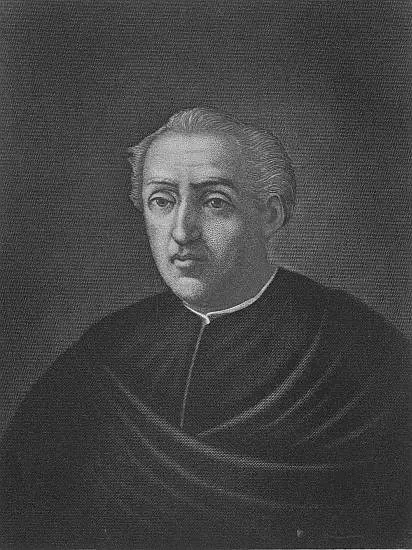
Columbus, Christopher, portrait, frontispiece, Vol. I;
discoverer of America, I;
i;
first landing in America, 2;
monument on Watling's Island, picture, 3;
arrival in Cuba, 11;
question as to first landing place, 12;
first impressions of Cuba and intercourse with natives, 14;
exploration of north coast, 16;
end of first visit, 18;
second visit, 19;
exploration of south coast, 21;
at Bay of Cortez, 25;
turns back from circumnavigation, 26;
at Isle of Pines, 26;
final departure from Cuba, 27;
diary and narrative, 28 et seq.;
death and burial, 33;
tomb in Havana cathedral, 34;
removal to Seville, 36;
removal from Santo Domingo to Havana, II, 181;
epitaph, 182.
Columbus, Diego, plans exploration and colonization of Cuba, I, 57; attempts mediation between Velasquez and Cortez, 97; replaces Velasquez with Zuazo, 100; rebuked by King, 100.
Comendador, Cacique, I, 55.
Commerce, begun by Velasquez, I, 68;
rise of corporations, II, 19;
after British occupation, 98;
under Torre, 132;
reduction of duties, 141;
extension of trade, 163;
Tribunal of Commerce founded, 177;
Real Compania de Havana, 199;
restrictive measures, 200;
Chamber of Commerce founded, 307;
commerce with United States, III, 2;
during American occupation, IV, 184;
present, 358.
Compostela, Diego E. de, Bishop, I, 318;
death, 332.
Concepcion, Columbus's landing place, I, 3.
Concessions, forbidden under American occupation, IV, 153.
Concha, Jose Gutierrez de la, Governor, III, 62, 290.
Conchillos, royal secretary, I, 59.
Congress, Cuban, welcomed by Gen. Wood, IV, 246;
turns against Palma, 269;
friendly to Gomez, 303;
hostile to Menocal, 323;
protects the lottery, 324.
Your reading position is saved on this browser. Take it to another device with a library code. Reading pages adapt to text, rather than matching a printed edition.
Willis Fletcher Johnson

Willis Fletcher Johnson

Willis Fletcher Johnson

Willis Fletcher Johnson
BEHIND THE BOOK
This eBook is for the use of anyone anywhere in the United States and most other parts of the world at no cost and with almost no restrictions whatsoever. You may copy it, give it away or re-use it under the terms of the Project Gutenberg License included with this eBook or online at www.gutenberg.org. If you are not located in the United States, you will have to check the laws of the country where you are located before using this eBook. Read the source licence.
The original source file, including credits and licence, is retained by this library. Request an original-format copy at no charge. Please include the book title and Project Gutenberg identifier #33847.
KEEP YOUR CURIOSITY GOING
Cécile Tormay

Moritz Busch
John L. Ransom
Frances Wright
Cécile Tormay

Mabel Potter Daggett