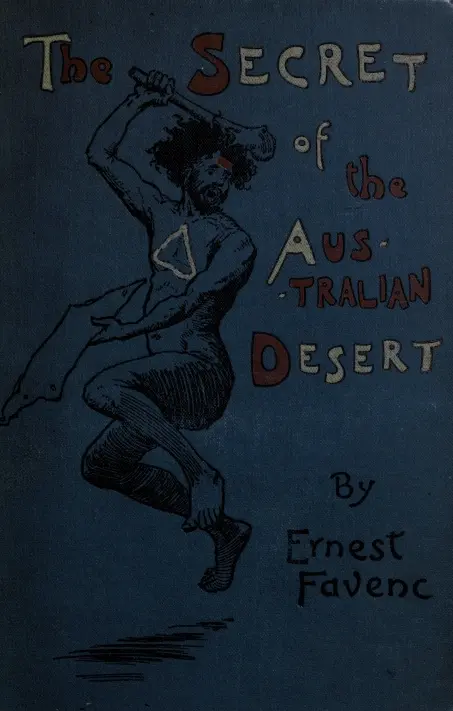
The secret of the Australian desert
Ernest Favenc
THE CLASSIC COLLECTION · 1888
"The History of Australian Exploration from 1788 to 1888" by Ernest Favenc is a historical account written in the late 19th century. The book meticulously chronicles the exploration of Australia over a century, detailing the numerous expeditions that led to the discovery and mapping of the continent. Favenc aims to weave together the tales of both public expeditions, which often received government support, and the lesser-known journeys of private individuals, showcasing their significant contributions to Australian history. At the start of this extensive work, Favenc dedicates the book to a prominent figure in Australian politics, Sir Henry Parkes, and provides a preface explaining the challenges historians face in compiling a complete history of Australian exploration. The opening portion discusses early navigators and explorers, tracing the myths and realities surrounding Australia's discovery, such as hopes for an inland sea and encounters with the indigenous population. It outlines the endeavors of key figures like Captain Phillip and Captain Tench, who initially explored the terrain around Sydney, focusing on the discovery of the Hawkesbury and Nepean Rivers and their attempts to penetrate the daunting Blue Mountains. The subsequent expeditions, marked by descriptions of the land’s physical characteristics and indigenous tribes, set the groundwork for understanding Australia's vast interior landscape.
Introduction adapted from the source catalogue; source summaries may be automatically generated.
Free to read · English · 185,806 words · No account needed
MAKE TIME FOR A GOOD BOOK
On by default. Untick to stop anonymous reading totals. Each page counts after 10 seconds in view. How this works.
Anonymous counting is on unless you have switched it off.
1839--Governor Gawler, South Australia; made an excursion to the Murray.
1839--E. J. Eyre to the head of Spencer's Gulf and Lake Torrens, Port
Lincoln, and Streaky Bay.
1839--Allan Cunningham died in Sydney.
1840--Angus M'Millan discovered Gippsland.
1840--Patrick Leslie, called the father of Darling Downs settlement;
settled on the Condamine.
1840-41--E. J. Eyre travelled the Great Bight to King George's Sound.
1841--John Orr and party explored Gippsland.
1841--Stuart and Sydenham Russell form Cecil Plains Station.
1841--Dr. Edward Barker, Edward Hobson, and Albert Brodribb were the first to walk from Melbourne to Gippsland. The present road follows their track.
1842--Stuart Russell discovered Boyne River; journeyed from Moreton to
Wide Bay in a boat.
1842-45--Captain Blackwood, in the FLY; continued the surveys of Captains Wickham and Stokes; and made a minute examination of the Great Barrier Reef.
1843--Count Paul von Strzelecki followed M'Millan's tracks when he
discovered Gippsland.
1843--Captain Frome, Surveyor-General of South Australia; explorations in the neighbourhood of Lake Torrens.
1843--Messrs. Landor and Lefroy; exploration in Western Australia.
1843--J. A. Horracks was killed by the explosion of his gun at the head of Spencer's Gulf soon after the start of his expedition.
1844--45-Captain Charles Sturt; Great Central Desert expedition.
1844-45--Dr. Ludwig Leichhardt; first expedition, from Jimbour Station, Darling Downs, to Port Essington; Gilbert, the naturalist, killed by natives.
1845-46--Sir Thomas Mitchell; Barcoo expedition.
1846--Dr. Ludwig Leichhardt's second expedition.
1846--A. C. Gregory and brothers; first expedition in Western Australia.
1847--E. Kennedy; to decide the final course of the Victoria, named the
Thompson.
1847--Baron Von Mueller; expeditions, for botanical and geographical researches combined, in South Australia and the Australian Alps.
1848--Dr. Ludwig Leichhardt's last expedition.
1848--E. Kennedy's fatal venture up Cape York Peninsula.
1848--A. C. Gregory, with party, explore the Gascoyne.
1848--Governor Fitzgerald, of Western Australia; examined the new mineral discovery, accompanied by A. C. Gregory, and named the Geraldine Aline.
1848-49--J. S. Roe, Surveyor-General of Western Australia; from York to
Esperance Bay.
1851--Messrs. Oakden and Hulkes; on west side of Lake Torrens.
1852--Hovenden Hely, in charge of search party for Leichhardt; from
Darling Downs.
1854--R. Austin, Assistant Surveyor-General of Western Australia; in search of pastoral country, and to examine the interior for auriferous deposits.
1855--Sir Thomas Mitchell died near Sydney.
1855-56--A. C. Gregory and Baron von Mueller North Australian expedition, in search of Leichhardt; discover Sturt's Creek and the Elsey.
1855--B. H. Babbage; to examine country north and east of Adelaide for gold. In a second expedition the same year discovered Blanche Water.
1857--Campbell and party; west of Lake Torrens; and again, with party, looking for pastoral country west of Lake Eyre.
Your reading position is saved on this browser. Take it to another device with a library code. Reading pages adapt to text, rather than matching a printed edition.
BEHIND THE BOOK
This eBook is for the use of anyone anywhere in the United States and most other parts of the world at no cost and with almost no restrictions whatsoever. You may copy it, give it away or re-use it under the terms of the Project Gutenberg License included with this eBook or online at www.gutenberg.org. If you are not located in the United States, you will have to check the laws of the country where you are located before using this eBook. Read the source licence.
The original source file, including credits and licence, is retained by this library. Request an original-format copy at no charge. Please include the book title and Project Gutenberg identifier #7163.
KEEP YOUR CURIOSITY GOING
Wilfrid Scawen Blunt
Wilfrid Scawen Blunt

E. W. (Edgar Watson) Howe
Cécile Tormay

Moritz Busch
John L. Ransom