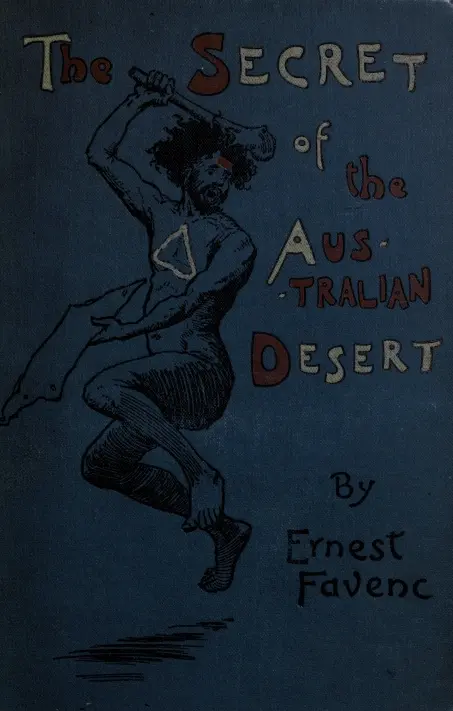
The secret of the Australian desert
Ernest Favenc
THE CLASSIC COLLECTION · 1888
"The History of Australian Exploration from 1788 to 1888" by Ernest Favenc is a historical account written in the late 19th century. The book meticulously chronicles the exploration of Australia over a century, detailing the numerous expeditions that led to the discovery and mapping of the continent. Favenc aims to weave together the tales of both public expeditions, which often received government support, and the lesser-known journeys of private individuals, showcasing their significant contributions to Australian history. At the start of this extensive work, Favenc dedicates the book to a prominent figure in Australian politics, Sir Henry Parkes, and provides a preface explaining the challenges historians face in compiling a complete history of Australian exploration. The opening portion discusses early navigators and explorers, tracing the myths and realities surrounding Australia's discovery, such as hopes for an inland sea and encounters with the indigenous population. It outlines the endeavors of key figures like Captain Phillip and Captain Tench, who initially explored the terrain around Sydney, focusing on the discovery of the Hawkesbury and Nepean Rivers and their attempts to penetrate the daunting Blue Mountains. The subsequent expeditions, marked by descriptions of the land’s physical characteristics and indigenous tribes, set the groundwork for understanding Australia's vast interior landscape.
Introduction adapted from the source catalogue; source summaries may be automatically generated.
Free to read · English · 185,806 words · No account needed
MAKE TIME FOR A GOOD BOOK
On by default. Untick to stop anonymous reading totals. Each page counts after 10 seconds in view. How this works.
Anonymous counting is on unless you have switched it off.
Orr, John (and party)--
Expedition through Gippsland. Confirmed the previous glowing reports.
1841.
Ovens, Major--
With Captain Curry, started on an exploring trip south of Lake George.
Discovered Morumbidgee River and Monaroo Plains. 1823.
Oxley, John-- With Lieutenant Charles Robbins, in the cutter INTEGRITY, examined Western Port, with a view to settlement; opinion unfavourable. 1804-5.
Surveyor-General of New South Wales. Second in command, Mr. Evans. Accompanied by Mr. Allan Cunningham, King's botanist, and Charles Fraser, Colonial botanist, William Parr, mineralogist, eight men, and two boats, for the purpose of tracing the Lachlan and Macquarie. Return in 1817. The following year again started, discovering the Castlereagh River, Liverpool Plains, Apsley River, and the Goulburn Valley. Following down the River Hastings, they discovered and named Port Macquarie. 1817-18.
Accompanied by Messrs. Meehan and Hume, made a short excursion to Jarvis Bay. Oxley returned by sea his companions overland. 1819.
In the MERMAID with Messrs. Uniacke and Lieutenant Stirling, left Port Jackson to investigate the coast north of Sydney, with the view of forming a penal settlement. They examine Port Curtis, Port Bowen, and Moreton Bay. Discovered the Boyne and Brisbane Rivers. 1823.
Died near Sydney, 1828. He had been a successful explorer, although in no case attaining the objects aimed at, had always brought his men through in safety, and had opened up vast tracts of country. [See Appendix.]
O'Donnell and Carr Boyd--
From the overland telegraph line to Western Australia, finding good
country, but no new geographical discovery. 1883.
O'Donnell (and party)--
From the Katherine Telegraph Station, overland telegraph line to Western
Australia. 1884-5.
Parry, S.--
Government Surveyor, examined the country round Lake Torrens. 1858.
Paterson, Colonel-- Intending if possible to cross the Blue Mountains, rowed up the Hawkesbury, and named the highest point reached "The Grose." 1793.
Pelsart, Francis--
In the BATAVIA. Wrecked on Houtman's Abrolhos. 1629.
"Pera" (The) and "Arnheim"-- Yachts commanded by Captain Jan Carstens, touched on the north coast. Pera Head in the Gulf of Carpentaria a memorial of this visit. 1623.
Perouse, Jean Francois Galup de La--
At Botany Bay with the ASTROLABE and BOUSSOLE. 1778.
Phillip, Governor--
Arrived at Botany Bay with the first fleet. 1788.
Pool, Captain Gerrit Tomaz-- In the KLYN, AMSTERDAM, and WEZEL, from Banda, was murdered on the New Guinea coast--the same spot where Captain Carstens met his death. The supercargo continued the voyage, re-visiting Arnheim's Land. 1636.
Poole--
Second in command in Sturt's Great Central Desert expedition died of
scurvy; and was buried at Depôt Glen. 1845.
Port Essington--
Founded by Sir Gordon Bremer, 1824, and re-settled, 1838.
Portlock, Captain, Nathan, and Captain Bligh-- In the PROVIDENCE AND ASSISTANT. Through Torres Straits. 1792.
Portuguese--
The claim to the discovery of New Holland in 1540 is doubtful.
Your reading position is saved on this browser. Take it to another device with a library code. Reading pages adapt to text, rather than matching a printed edition.
BEHIND THE BOOK
This eBook is for the use of anyone anywhere in the United States and most other parts of the world at no cost and with almost no restrictions whatsoever. You may copy it, give it away or re-use it under the terms of the Project Gutenberg License included with this eBook or online at www.gutenberg.org. If you are not located in the United States, you will have to check the laws of the country where you are located before using this eBook. Read the source licence.
The original source file, including credits and licence, is retained by this library. Request an original-format copy at no charge. Please include the book title and Project Gutenberg identifier #7163.
KEEP YOUR CURIOSITY GOING
Wilfrid Scawen Blunt
Wilfrid Scawen Blunt

E. W. (Edgar Watson) Howe
Cécile Tormay

Moritz Busch
John L. Ransom