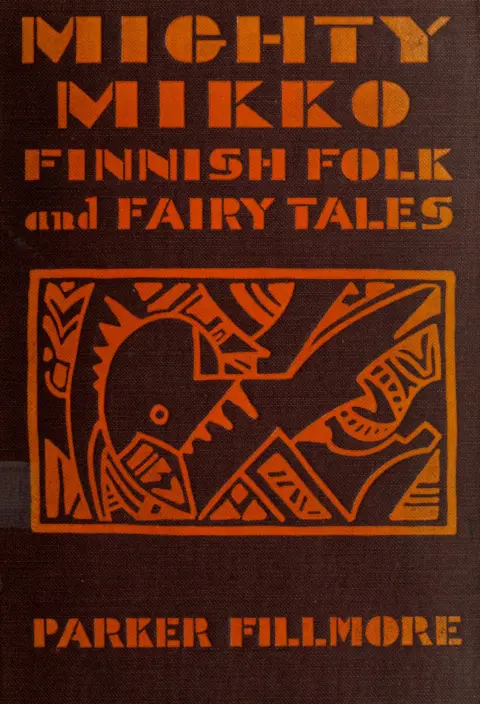
Mighty Mikko: A Book of Finnish Fairy Tales and Folk Tales
Parker Fillmore
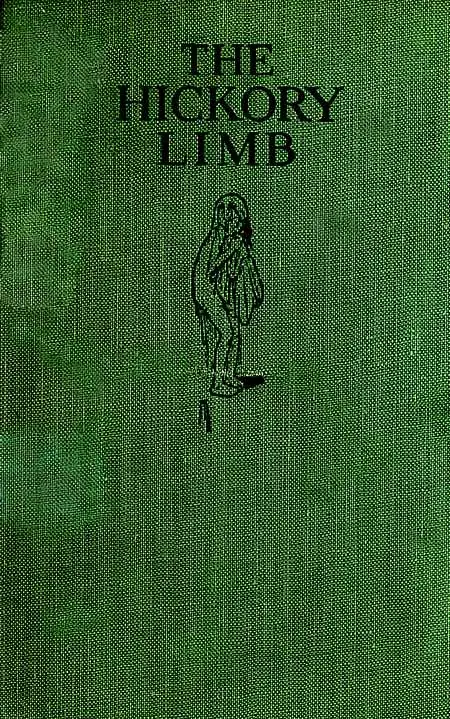
THE CLASSIC COLLECTION · 1907
"The Hickory Limb" by Parker Fillmore is a novel written in the early 20th century that explores themes of childhood, gender roles, and rebellion. The story revolves around the spirited character of Margery Blair, showcasing her struggles against the restrictions placed upon her as a girl in a conventional society. In the narrative, Margery's desire to assert herself leads her to venture into an adventure where she challenges social norms by going swimming with boys, a bold act that causes a stir among her siblings and friends. As she relishes the thrill of swimming, Margery experiences a clash with societal expectations when she is reprimanded for her behavior. Throughout the book, the reader witnesses Margery's evolution as she grapples with her identity and the consequences of her actions. The story culminates in a heartwarming reconciliation with her father, highlighting the complexities of childhood innocence, societal pressure, and familial love.
Introduction adapted from the source catalogue; source summaries may be automatically generated.
Free to read · English · 7,023 words · No account needed
MAKE TIME FOR A GOOD BOOK
On by default. Untick to stop anonymous reading totals. Each page counts after 10 seconds in view. How this works.
Anonymous counting is on unless you have switched it off.
"I can't button my dress," was Margery's final plaint.
"You got to."
"But I tell you I can't," she insisted, her voice rising to a long-drawn wail. "It buttons behind."
With the utmost dignity the screen slowly turned itself around. That was a signal for the small boys in the water to break forth into jeers and taunts. They spoke in that treble squeal which little boys use when they seek to imitate girls' voices.
"Say, Henry, please lend me your towel to wipe my ears."
"Button my dress, Henry."
"Where's your shoe-horn, Henry?"
Apparently Henry's calm remained unshaken. In reality he made a rather poor job of the buttoning. As soon as the back of the dress promised to hold together, he stopped. Then, firmly clutching Margery's arm in one hand and holding his seine and tin can of minnows in the other, he faced his waspish little tormentors.
The moment had come for him to speak. He did not hesitate. Had he been forty-five and bald, he could not have met the situation with more determined conventionality. He realized, plainly enough, that the family had been disgraced, and neither to herself nor to the world would he minimize or excuse Margery's culpability. Yet, nevertheless, he would do his best to hush up the scandal.
"See here, you kids," he began warningly. Both hands were occupied, so he could not emphasize his threat with the sight of a clenched fist. His tones, however, carried conviction. "If any of you's blab about this, I'll give you such a smashin'----"
Henry did not finish the sentence. There was no need to finish the sentence. When one's thought has been fully enough expressed, why go on further?
Henry paused a moment for the meaning to sink in. Then he started
up the knoll, dragging Margery after him. Instantly the pond was
in an uproar.
"Oh, Henry, can't guess who I seen in swimmin' this afternoon!"
"Comin' back to-morrow, ain't you, Margery?"
"Better slow up, Henry, or you'll drop your minnies."
"Say, Margery, your stockin's is comin' down."
Then Freddy Larkin started to chant at the top of his lungs:
Motheh, may I go out to thwim?
Yeth, my darlin' daughter;
Hang your cloth' ...
Of course Margery knew that their wit was aimed at Henry, not at her. But she breathed freer, nevertheless, once out of ear-shot.
Henry dragged her homeward at a furious pace. He held her arm so tightly that it ached. The worst was that she couldn't make him argue about it. He simply held on without talking.
"You just let my arm go, Henry Blair," she whimpered again and again. "You ain't got any right to hurt me."
Your reading position is saved on this browser. Take it to another device with a library code. Reading pages adapt to text, rather than matching a printed edition.
Parker Fillmore
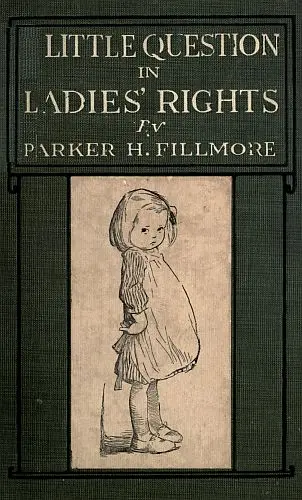
Parker Fillmore
Parker Fillmore
BEHIND THE BOOK
This eBook is for the use of anyone anywhere in the United States and most other parts of the world at no cost and with almost no restrictions whatsoever. You may copy it, give it away or re-use it under the terms of the Project Gutenberg License included with this eBook or online at www.gutenberg.org. If you are not located in the United States, you will have to check the laws of the country where you are located before using this eBook. Read the source licence.
The original source file, including credits and licence, is retained by this library. Request an original-format copy at no charge. Please include the book title and Project Gutenberg identifier #28886.
KEEP YOUR CURIOSITY GOING
Coulson Kernahan

Maurice Baring
Frances Wright
Cécile Tormay

Frederic Jesup Stimson

W. H. P. (William Henry Pope) Jarvis