THE CLASSIC COLLECTION✦The childrenCLASSIC FREE BOOKS
The children
Edith Wharton
THE CLASSIC COLLECTION · 1908
"The Hermit and the Wild Woman, and Other Stories" by Edith Wharton is a collection of short stories written in the early 20th century. The stories intertwine themes of solitude, spirituality, and the confrontation between the sacred and the mundane. The opening story, "The Hermit and the Wild Woman," introduces a hermit who seeks peace in isolation from the chaos of his violent past, only to encounter a wild woman who disrupts his tranquility and challenges his understanding of salvation and sin. The opening of the story focuses on the hermit, who lives in a cave after fleeing the violence of his childhood town, haunted by memories of horror and death. He embraces his solitude, engaging in religious practices and enjoying the tranquility it brings. However, his peaceful existence is shattered when a wild woman, fleeing from armed marauders, takes refuge in his cave. Their subsequent interactions reveal her complex past and the hermit’s internal struggle between his spiritual convictions and his burgeoning empathy for her plight, setting the stage for a narrative filled with rich moral dilemmas and character development.
Introduction adapted from the source catalogue; source summaries may be automatically generated.
Free to read · English · 62,374 words · No account needed
MAKE TIME FOR A GOOD BOOK
On by default. Untick to stop anonymous reading totals. Each page counts after 10 seconds in view. How this works.
Anonymous counting is on unless you have switched it off.
"Oh, Rickham found me out long ago," he said lightly; then, passing his arm through mine: "Come and see the rest of the house."
He showed it to me with a kind of naive suburban pride: the bath-rooms, the speaking-tubes, the dress-closets, the trouser-presses--all the complex simplifications of the millionaire's domestic economy. And whenever my wonder paid the expected tribute he said, throwing out his chest a little: "Yes, I really don't see how people manage to live without that."
Well--it was just the end one might have foreseen for him. Only he was, through it all and in spite of it all--as he had been through, and in spite of, his pictures--so handsome, so charming, so disarming, that one longed to cry out: "Be dissatisfied with your leisure!" as once one had longed to say: "Be dissatisfied with your work!"
But, with the cry on my lips, my diagnosis suffered an unexpected check.
"This is my own lair," he said, leading me into a dark plain room at the end of the florid vista. It was square and brown and leathery: no "effects"; no bric-a-brac, none of the air of posing for reproduction in a picture weekly--above all, no least sign of ever having been used as a studio.
The fact brought home to me the absolute finality of Jack's break with
his old life.
"Don't you ever dabble with paint any more?" I asked, still looking about for a trace of such activity.
"Never," he said briefly.
"Or water-colour--or etching?"
His confident eyes grew dim, and his cheeks paled a little under their
handsome sunburn.
"Never think of it, my dear fellow--any more than if I'd never touched
a brush."
And his tone told me in a flash that he never thought of anything else.
I moved away, instinctively embarrassed by my unexpected discovery; and as I turned, my eye fell on a small picture above the mantel-piece--the only object breaking the plain oak panelling of the room.
"Oh, by Jove!" I said.
It was a sketch of a donkey--an old tired donkey, standing in the rain
under a wall.
"By Jove--a Stroud!" I cried.
He was silent; but I felt him close behind me, breathing a little
quickly.
"What a wonder! Made with a dozen lines--but on everlasting foundations. You lucky chap, where did you get it?"
He answered slowly: "Mrs. Stroud gave it to me."
"Ah--I didn't know you even knew the Strouds. He was such an inflexible
hermit."
"I didn't--till after.... She sent for me to paint him when he was
dead."
"When he was dead? You?"
Your reading position is saved on this browser. Take it to another device with a library code. Reading pages adapt to text, rather than matching a printed edition.
Edith Wharton
Edith Wharton
Annie Eliot Trumbull & George A. (George Abiah) Hibbard & Bliss Perry & Edith Wharton & John Seymour Wood
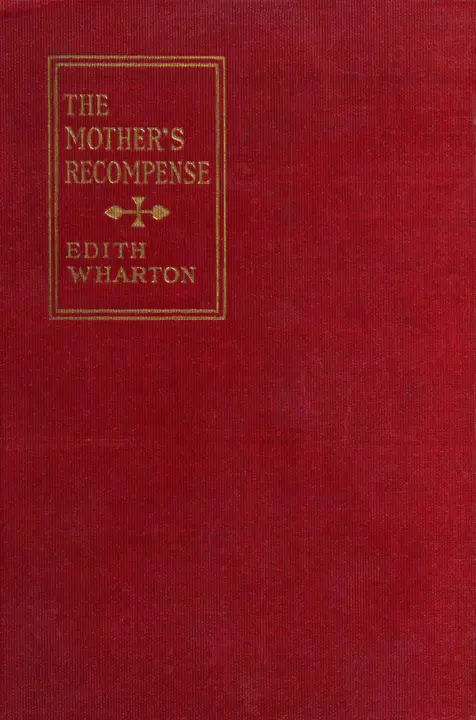
Edith Wharton
BEHIND THE BOOK
This eBook is for the use of anyone anywhere in the United States and most other parts of the world at no cost and with almost no restrictions whatsoever. You may copy it, give it away or re-use it under the terms of the Project Gutenberg License included with this eBook or online at www.gutenberg.org. If you are not located in the United States, you will have to check the laws of the country where you are located before using this eBook. Read the source licence.
The original source file, including credits and licence, is retained by this library. Request an original-format copy at no charge. Please include the book title and Project Gutenberg identifier #4533.
KEEP YOUR CURIOSITY GOING

Charles G. (Charles Griffith) Ross
Hannah Webster Foster

Emily Lawless
Edwin Hamlin Carr

Charles De Lano Hine
Andrew Ure