THE CLASSIC COLLECTION✦Angel Unawares: A Story of Christmas EveCLASSIC FREE BOOKS
Angel Unawares: A Story of Christmas Eve
C. N. (Charles Norris) Williamson & A. M. (Alice Muriel) Williamson
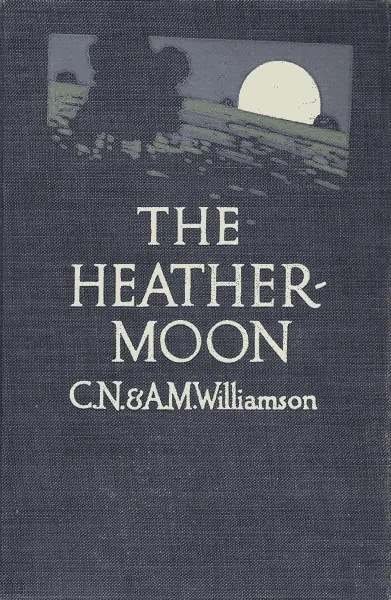
THE CLASSIC COLLECTION · 1912
"The Heather-Moon" by C. N. Williamson and A. M. Williamson is a novel written in the early 20th century. The story follows a young girl named Barrie, who lives somewhat isolated with her strict grandmother and is intrigued by the mysterious garret filled with her late mother's belongings. As Barrie explores this hidden world, she grapples with her family’s secrets and the desire for her mother’s love, which elevates her yearning for romance and connection beyond the confines of her dreary home life. At the start of the novel, Barrie discovers the garret door ajar for the first time, granting her access to a space that symbolizes lost dreams and the romance she craves. Inside the garret, she finds remnants of her mother's life, including elegant dresses and a portrait that evokes a strong emotional response. As she immerses herself in this treasure trove, Barrie confronts the legacy of her mother and the oppressive nature of her grandmother, leading her to a pivotal moment where she decides to seek out her estranged mother. The opening sets the tone for a tale of adventure, self-discovery, and the quest for familial connection, challenging the constraints that have bound Barrie thus far.
Introduction adapted from the source catalogue; source summaries may be automatically generated.
Free to read · English · 124,041 words · No account needed
MAKE TIME FOR A GOOD BOOK
On by default. Untick to stop anonymous reading totals. Each page counts after 10 seconds in view. How this works.
Anonymous counting is on unless you have switched it off.
In the roar and rush and riot I was incapable of caring, though vaguely I recalled the fact that I had come out with the sole object of annexing the girl's society. Vaguely too, though only vaguely, I resented the Douglas method; but I had my revenge almost before I recovered sense enough to want it. There came, I know not why or how (perhaps one of the masters decreed it, to strike our ears with the contrast), a sudden unexpected lull. It was only a comparative lull, and it lasted no more than a few seconds; but there was time enough to hear Douglas yell into Barrie's ear, "I must have you for my own."
The next instant he was purple through his soldier-tan. He knew the dragon and the dragon's wicked wife had betrayed him, as he took advantage of their domestic clamour to speak in a crowd as though he were alone with his love in the desert. What Barrie answered, or if she had breath to answer, none of us could guess, though all, especially the four Americans, were bursting with anxiety to know. Later, however, when we went up to the Castle (anything but the Castle, with its thousand years of history, would have been an anticlimax after that wonderful dragon cave), Donald Douglas walked meekly with his cousin, leaving Barrie to Jack Morrison. As for me, I had temporarily lost my individuality, and with that roar still echoing through my brain, vibrating through my nerves, I was glad to crawl along, talking to nobody, and picking up dropped or untied bits of myself as I went. For the moment, frankly I didn't care how many men proposed to Barrie, or whether she accepted them all. But afterward, it was different. It occurred to me that Jack Morrison was not only a handsome and gallant fellow, but said to be very rich, at least as rich as Somerled, and ten years younger. Aline and I might be mistaken about the girl's feelings for Ian. Very likely it was no more than a romantic sort of gratitude; and though I absolved the child from the smallest taint of mercenary motive, it was almost impossible that a sleepless night had not given her some wise counsel. She was too sensitive and quick-witted a girl, I reflected, not to have seen that she could not go on living with her mother, and that it was a necessity to find a niche somewhere. All these young men saw this also, though they knew no more than the fact that they were prayed to consider Mrs. Bal an elder sister of "Miss Ballantree," therefore they were hastening to offer her sheltering niches, more or less desirable. In other circumstances, they would have waited a few days, long enough at least for Barrie to know which was which, and get their features and some of their characteristics ticketed with the right labels; but as it was, each saw he had no time to waste if he didn't want his friend or foe to get in ahead of him. While we were at the Castle, looking at Mons Meg (which recalled Thrieve) and the banqueting-hall of armour with its faded banners and fadeless memories; gaping at the mysterious place over the entrance door where, in a bricked-up alcove, a baby skeleton was found wrapped in cloth of gold embroidered with a royal monogram; walking through the wainscoted room where Mary of Guise died; gazing at the long mislaid crown of Bruce ("the Honours of Scotland"); seeing sweet Queen Margaret's Chapel where the Black Rood lay till it went in state down the hill to make Holyrood holy; peering at the wall-stairway down which the Douglas boys were dragged after the "black dinner"; admiring the kilted soldiers; and drinking in the view over hill and valley and mountains, towns and nestling villages, the vast, colourful checkerboard of beautiful Mary Stuart's journeys, flights and fightings: while beholding treasures and splendours which are as the red drops of Scotland's heart's blood, man after man took his place at Barrie's side and became her cicerone. Each talked with her awhile, and after a few brief minutes allowed a change of partners, the discarded one humbly retiring to Mrs. James's side. It was really funny; or at least so it seemed until enough self-assertion came back to admit of my entering the lists. Then I promptly lost my sense of humour, and had no wish to look for it. I wanted only to look at Barrie, who was unusually flushed and bright of eye.
Your reading position is saved on this browser. Take it to another device with a library code. Reading pages adapt to text, rather than matching a printed edition.
C. N. (Charles Norris) Williamson & A. M. (Alice Muriel) Williamson
C. N. (Charles Norris) Williamson & A. M. (Alice Muriel) Williamson
C. N. (Charles Norris) Williamson & A. M. (Alice Muriel) Williamson
C. N. (Charles Norris) Williamson & A. M. (Alice Muriel) Williamson
BEHIND THE BOOK
This eBook is for the use of anyone anywhere in the United States and most other parts of the world at no cost and with almost no restrictions whatsoever. You may copy it, give it away or re-use it under the terms of the Project Gutenberg License included with this eBook or online at www.gutenberg.org. If you are not located in the United States, you will have to check the laws of the country where you are located before using this eBook. Read the source licence.
The original source file, including credits and licence, is retained by this library. Request an original-format copy at no charge. Please include the book title and Project Gutenberg identifier #19742.
KEEP YOUR CURIOSITY GOING
Coulson Kernahan

Maurice Baring
Frances Wright
Cécile Tormay

Frederic Jesup Stimson

W. H. P. (William Henry Pope) Jarvis