THE CLASSIC COLLECTION✦Angel Unawares: A Story of Christmas EveCLASSIC FREE BOOKS
Angel Unawares: A Story of Christmas Eve
C. N. (Charles Norris) Williamson & A. M. (Alice Muriel) Williamson
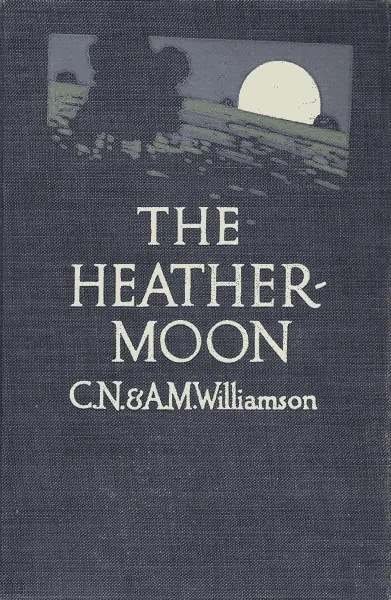
THE CLASSIC COLLECTION · 1912
"The Heather-Moon" by C. N. Williamson and A. M. Williamson is a novel written in the early 20th century. The story follows a young girl named Barrie, who lives somewhat isolated with her strict grandmother and is intrigued by the mysterious garret filled with her late mother's belongings. As Barrie explores this hidden world, she grapples with her family’s secrets and the desire for her mother’s love, which elevates her yearning for romance and connection beyond the confines of her dreary home life. At the start of the novel, Barrie discovers the garret door ajar for the first time, granting her access to a space that symbolizes lost dreams and the romance she craves. Inside the garret, she finds remnants of her mother's life, including elegant dresses and a portrait that evokes a strong emotional response. As she immerses herself in this treasure trove, Barrie confronts the legacy of her mother and the oppressive nature of her grandmother, leading her to a pivotal moment where she decides to seek out her estranged mother. The opening sets the tone for a tale of adventure, self-discovery, and the quest for familial connection, challenging the constraints that have bound Barrie thus far.
Introduction adapted from the source catalogue; source summaries may be automatically generated.
Free to read · English · 124,041 words · No account needed
MAKE TIME FOR A GOOD BOOK
On by default. Untick to stop anonymous reading totals. Each page counts after 10 seconds in view. How this works.
Anonymous counting is on unless you have switched it off.
"Will you please thank Mrs. Muir for me?" Barrie asked.
"You can thank her to-morrow."
"I mayn't have a chance. Do thank her for me to-night. Say I wanted you
to."
"Why are you in such a hurry?"
"Oh--just because. Will you?"
"Yes, I will try, after prayers, when she is shutting up the house. Now,
eat your supper."
"I don't want to, yet. Please, Heppie, dear Heppie, tell me what you know about my mother. You weren't here when she was, but you're a kind of cousin of Grandma's, and you must have heard all about her."
"If I had, that would not give me the right to tell you," replied Miss Hepburn, clinging desperately to her stiff dignity, despite the pleading voice and the "dear, dear Heppie," against which, being one third human, she was not quite proof. It was always difficult not to be beguiled by Barrie.
"I've only you I can come to," said the girl. "You're the one person in the house except me who isn't old and dried-up."
This was a stroke of genius, but the genius of instinct, for Barrie had no experience in the art of cajolery. "Was I named after my mother?"
"Only partly. She was a Miss Ballantree, and her first name was Barbara, I believe; but she disliked it, and when her husband wished to have the child christened the same, she insisted on Barribel. It seems that is an old Scottish name also, or Celtic perhaps, for she was Irish, though I know nothing of her family. But Barribel has always sounded frivolous to me."
"Yet you would never call me Barrie when I begged you to. I wonder if there ever was another girl who had to make up her own pet name, and then had nobody who would use it except herself? When I talk to myself I always say 'Barrie,' in different tones of voice, to hear how it sounds. I try to say it as if I loved myself, because no one else loves me--unless maybe you do; just a tiny, tiny bit. Do you, Heppie?"
"Of course I have an affection for you," Miss Hepburn returned decorously, half alarmed at so pronounced a betrayal of her inner emotions, "and naturally your grandmother----"
"Let's not talk about her now," Barrie pleaded. "Was my mother young
when she was married?"
"Quite young, I understand--about nineteen."
"Only nineteen--not very much older than I am. And she stood two years of Grandma and this house!"
"Barribel, you forget yourself."
"If I do, it's because I'm thinking about my mother. Twenty--twenty-one; that's what she was when she--went away!"
Your reading position is saved on this browser. Take it to another device with a library code. Reading pages adapt to text, rather than matching a printed edition.
C. N. (Charles Norris) Williamson & A. M. (Alice Muriel) Williamson
C. N. (Charles Norris) Williamson & A. M. (Alice Muriel) Williamson
C. N. (Charles Norris) Williamson & A. M. (Alice Muriel) Williamson
C. N. (Charles Norris) Williamson & A. M. (Alice Muriel) Williamson
BEHIND THE BOOK
This eBook is for the use of anyone anywhere in the United States and most other parts of the world at no cost and with almost no restrictions whatsoever. You may copy it, give it away or re-use it under the terms of the Project Gutenberg License included with this eBook or online at www.gutenberg.org. If you are not located in the United States, you will have to check the laws of the country where you are located before using this eBook. Read the source licence.
The original source file, including credits and licence, is retained by this library. Request an original-format copy at no charge. Please include the book title and Project Gutenberg identifier #19742.
KEEP YOUR CURIOSITY GOING
Coulson Kernahan

Maurice Baring
Frances Wright
Cécile Tormay

Frederic Jesup Stimson

W. H. P. (William Henry Pope) Jarvis