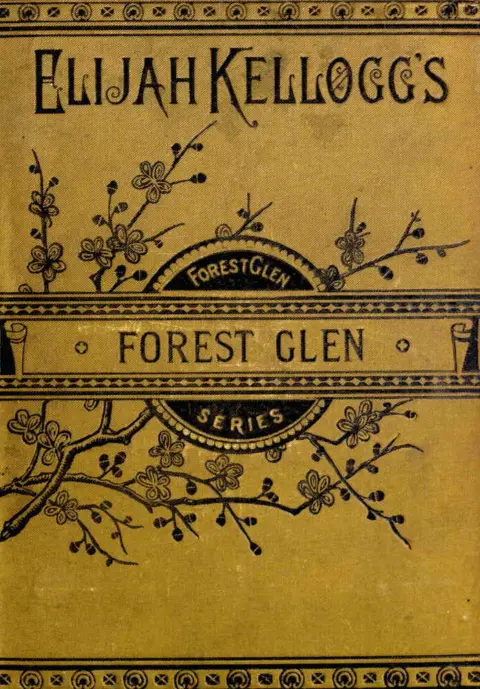
Forest Glen; or, The Mohawk’s Friendship
Elijah Kellogg
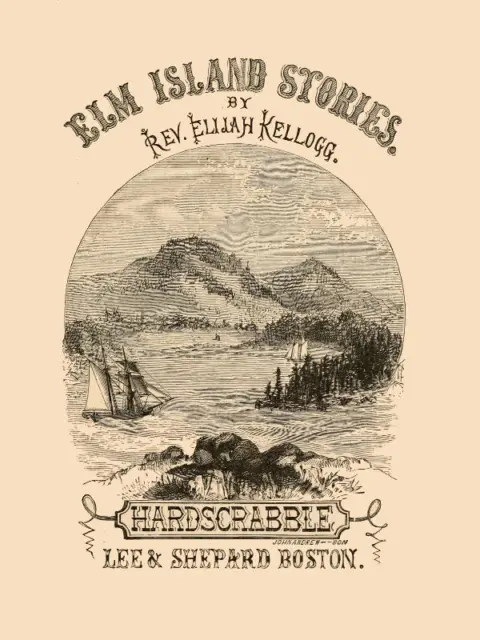
THE CLASSIC COLLECTION · 1870
"The Hard-Scrabble of Elm Island" by Elijah Kellogg is a novel written in the late 19th century. The story follows a group of young characters, including Charlie, John, and their friends, who face various challenges and adventures as they transition into manhood on Elm Island. Their experiences involve building a vessel called the Hard-Scrabble and navigating their individual roles within a community marked by growth and innovation. The opening of the book establishes the setting and introduces several key characters, highlighting their personal pursuits and the camaraderie they share. As the boys embark on ambitious projects such as constructing their boat, they express a thirst for adventure and a desire to contribute to their community. The narrative effectively sets the stage for themes of perseverance, friendship, and growth, hinting at the trials and triumphs that await in their journey towards realizing their dreams.
Introduction adapted from the source catalogue; source summaries may be automatically generated.
Free to read · English · 67,009 words · No account needed
MAKE TIME FOR A GOOD BOOK
On by default. Untick to stop anonymous reading totals. Each page counts after 10 seconds in view. How this works.
Anonymous counting is on unless you have switched it off.
“That’s so,” said Uncle Isaac, by way of parenthesis.
Without heeding the interruption, Joe went on. “Well, as I was saying, we were poor: father was clearing up his farm; I had a natural turn to an axe, and had been used to falling and chopping ever since I was fifteen years old, and, boy as I was, could hold play with most men. Uncle Isaac, you knew Sam Apthorp?”
“O, yes, very well; and a fine young man he was.”
“Well,” continued Joe, “the Apthorps were our neighbors. John Apthorp, Sam’s father, began his clearing at the same time with mine; they cut their first tree the same day. Sam was several years older than I, and a powerful, smart fellow. He took a great liking to me, and taught me about hunting, trapping, and many other things, for he was a master hunter; and as for me, I almost worshipped him: it was for the sake of being with him that made me so anxious to go. Sam and I, Dick Clay, and another by the name of Rogers, came up here in August to build a camp, cut hay, and look out the timber. O, what a happy time that was to me, though it was the worst and hardest work I ever did before or since! It was all new to me, and wild. That swale below where we shot the deer hadn’t any bushes on it then, for it was all covered with grass as high as your shoulder; there is a brook runs through it, and the beaver had dammed and flowed it, killing all the trees, I suppose, a thousand years before; and then the Indians, or somebody else, had broken the dam, killed the beaver, let the water out, and the grass had come in; you can see the old dam there yet. Well, we came up to cut this hay: it was hot--scorching hot--not a breath of wind; for it was all surrounded with woods except a little gap, where the brook ran into the river, and that was filled with alders, and sich like. The black flies and mosquitos were awful: the only way we could live was to grease ourselves; but that only lasted a little while, for the hot sun, and the heat of our bodies sweating, would soon take it off, and then they would come worse than ever. We came up in a bateau, cut the hay, and stacked it up for our oxen the next winter. O, how natural everything here looks! There is not a log I helped cut and roll up but has a memory belonging to it. This seat we are sitting on Sam and I hewed out; we cut the sapling within three feet of the door, and there are our names, which he cut on it one Sabbath morning; right in that corner we slept side by side for two long winters; many a rousing meal we’ve eat, and many a merry evening we’ve spent around the fire; many’s the deer we’ve shot and the beavers we’ve trapped together here. Poor Sam! He had found a bear’s den, and we’d made a plan for all hands to leave off work early in the afternoon, and go and take them. All the evening before we were sitting round the fire, I on that seat and Sam in that corner, stretched out on the brush, with his boots off, and his feet to the fire. We were all laughing and talking, telling how we would get them, and what we would do with them; and Sam said he would carry a cub home, learn it to dance, and go to Boston with it, as he had read about their doing in the old country, and make his everlasting fortune out of it. Sam Chesley, our old cook, was rubbing his hands, and telling, in high life, what steaks he’d fry, and how he would cook it; and we agreed to cast lots for the skin, on expectation, before we had got the bears, or even seen them. We little thought, in our happiness, what was in store for us. The next day, about ten o’clock, Sam and I fell a large pine; it had more top than such pines commonly have; it came down between two big hemlocks, breaking their branches, and clearing the way as it went. A large limb, that we didn’t see, lodged in the thick top of the hemlock; and as Sam went under it, to cut off the top log, the second blow he struck, down came the limb, as swift and silent as the lightning, and struck him on the head and shoulders, crushing him dead to the ground! He never spoke or moved; when I got to him he was dead. It was only a week before we were to break camp, and go home. Sam and I had often, during the last month, talked of the good times we would have when we got home,--and then to bury him, without a prayer or sermon, in the wilderness! We had nothing to make a coffin, and so we took two barrels that we had emptied of pork, and put his head and shoulders in one, and the lower part of his body in the other, and then fastened them together, and buried him in his clothes, beneath that great blazed pine that stands on the bank. It was the first real sorrow I ever had. I had never seen or thought anything of death before, and this almost broke me down. I was through here, as I told you, visited the grave, and saw the camp, though I didn’t go into it; but it didn’t make me feel as it does to sit here on this very bench where I have sat with him, and see his name cut on it, and the very place where we used to sleep--” And hiding his face in his hand, he burst into tears. There was not a dry eye in the group.
Your reading position is saved on this browser. Take it to another device with a library code. Reading pages adapt to text, rather than matching a printed edition.
Elijah Kellogg
Elijah Kellogg
Elijah Kellogg
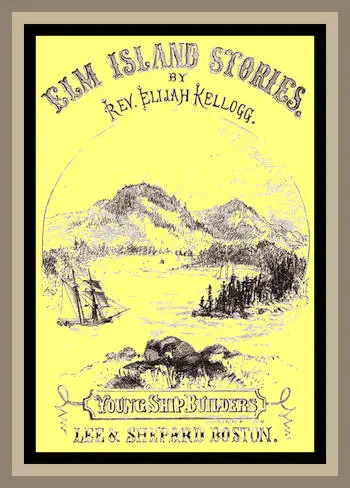
Elijah Kellogg
BEHIND THE BOOK
This eBook is for the use of anyone anywhere in the United States and most other parts of the world at no cost and with almost no restrictions whatsoever. You may copy it, give it away or re-use it under the terms of the Project Gutenberg License included with this eBook or online at www.gutenberg.org. If you are not located in the United States, you will have to check the laws of the country where you are located before using this eBook. Read the source licence.
The original source file, including credits and licence, is retained by this library. Request an original-format copy at no charge. Please include the book title and Project Gutenberg identifier #54767.
KEEP YOUR CURIOSITY GOING
Coulson Kernahan

Maurice Baring
Frances Wright
Cécile Tormay

Frederic Jesup Stimson

W. H. P. (William Henry Pope) Jarvis