THE CLASSIC COLLECTION✦His Second WifeCLASSIC FREE BOOKS
His Second Wife
Ernest Poole
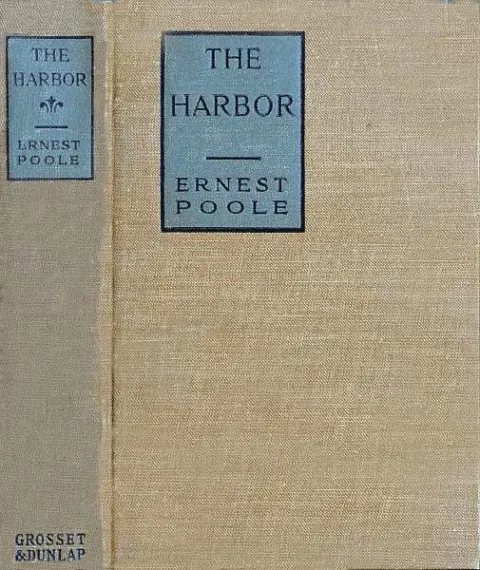
THE CLASSIC COLLECTION · 1915
"The Harbor" by Ernest Poole is a novel written in the early 20th century. The story revolves around a young boy's tumultuous relationship with the harbor of Brooklyn, embodying his innocent perception of adventure and danger, as well as his struggles with a dispassionate father and a devoted mother. Through the eyes of the protagonist, who reflects on his childhood experiences and dreams of exploration, the narrative delves into themes of innocence, adventure, and the dichotomy between safety and the allure of the unknown. At the start of "The Harbor," we are introduced to a seven-year-old boy who grapples with feelings of discomfort and alienation while sitting in church, waiting through a sermon by Henry Ward Beecher. As he reflects on his life, he recalls the strange and foreboding harbor visible from his home — a world filled with mysteries that spark both fear and fascination. The boy's emotions are intertwined with his family dynamics; he feels a lack of connection with his stern father, yet takes comfort in the nurturing presence of his mother. His thoughts wander to rebellious ideals, culminating in a resolve to escape his home and explore the harbor, setting the stage for his journey from childhood innocence to a deeper engagement with the world around him.
Introduction adapted from the source catalogue; source summaries may be automatically generated.
Free to read · English · 123,089 words · No account needed
MAKE TIME FOR A GOOD BOOK
On by default. Untick to stop anonymous reading totals. Each page counts after 10 seconds in view. How this works.
Anonymous counting is on unless you have switched it off.
I looked out. Close by on the deck, in the hard blue glare of an arc-light, were some twenty men, dirty, greasy, ragged, sweating, all gripping the ropes and waiting for Paddy, who rolled his quid in his mouth, spat twice, and then began:
"As I went awalking down Paradise Street
A pretty young maiden I chanced for to meet."
A heave on the ropes and a deafening roar:
"Blow the man down, bullies,
Blow him right down!
Hey! Hey! Blow the man down!"
Again the solo voice, plaintiff and tender:
"By her build I took her for Dutch.
She was square in the stuns'l and bluff in the bow."
The rest was a detailed account of the night spent with the maiden. Roar on roar rose the boisterous chorus: "Blow the man down, bullies, blow him right down!" The big patched, dirty sails went jerking and flapping up toward the stars, which from here were so faint they could barely be seen. And the ship moved out on the harbor.
"There go the folk songs of the seas," I thought disgustedly, looking out on the water now showing itself grease-mottled in the first raw light of day.
I tried other songs with my artist's ears and found them all much like the first, the music like the very stars, the words like the grease and scum on the water. I was about giving up my search when I met my old friend, the watchman.
"Well, did ye find the chanties?" he asked.
"Yes," I said. "They can't be printed." His old eyes twinkled merrily:
"Of course they can't. An' most songs an' stories can't. But I'll give ye a nice little song ye can print. It's the oldest chanty of 'em all. I'll try to remember an' write it down."
Here is the song he gave me:
To Australia's fair-haired maidens
We will bid our last good-bye.
We are going home to England,
We may never more see you.
Rolling home, rolling home,
Rolling home across the sea,
Rolling home to merry England,
Rolling home dear land to thee.
We will leave you our best wishes
As we leave your rocky shores,
We are going home to England,
We may never see you more.
Rolling home....
Up aloft amidst her rigging
Spreading out her snow white sails,
Like a bird with outstretched pinions,
On we speed before the gale.
Rolling home....
And the wild waves, as we leave them,
Seem to murmur as they roll;
There are hands and hearts to greet thee
In that land to which you go.
Rolling home....
Your reading position is saved on this browser. Take it to another device with a library code. Reading pages adapt to text, rather than matching a printed edition.
BEHIND THE BOOK
This eBook is for the use of anyone anywhere in the United States and most other parts of the world at no cost and with almost no restrictions whatsoever. You may copy it, give it away or re-use it under the terms of the Project Gutenberg License included with this eBook or online at www.gutenberg.org. If you are not located in the United States, you will have to check the laws of the country where you are located before using this eBook. Read the source licence.
The original source file, including credits and licence, is retained by this library. Request an original-format copy at no charge. Please include the book title and Project Gutenberg identifier #29932.
KEEP YOUR CURIOSITY GOING
Coulson Kernahan

Maurice Baring
Frances Wright
Cécile Tormay

Frederic Jesup Stimson

W. H. P. (William Henry Pope) Jarvis