THE CLASSIC COLLECTION✦Little Miss WeezyCLASSIC FREE BOOKS
Little Miss Weezy
Penn Shirley
THE CLASSIC COLLECTION · 1897
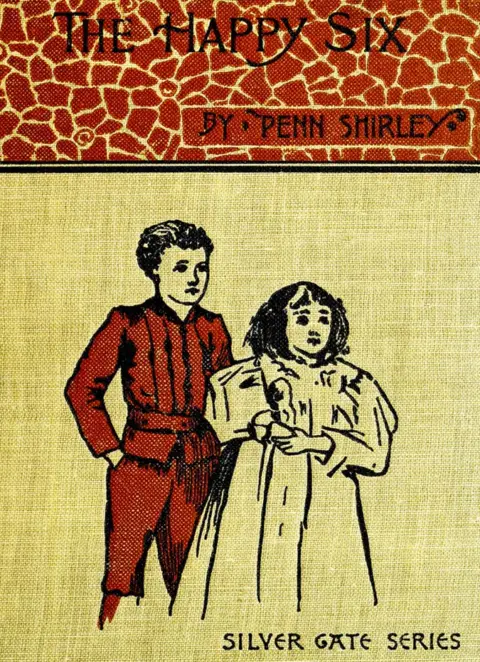
"The Happy Six" by Penn Shirley is a children's novel written in the late 19th century. This story appears to revolve around a group of young friends from Silver Gate City, California, who are filled with excitement as they anticipate embarking on a journey to Europe. The characters include the spirited young Kirke, his lively friends Molly, Weezy, Paul, and Pauline, as well as their enthusiastic little brother, Donald. At the start of the novel, we are introduced to the core group of friends, known as The Merry Five, who dramatically transitions to The Happy Six with the addition of Donald. The opening chapters capture their playful banter and explore their camaraderie as they learn about the possibility of traveling to Europe. As they express a mix of excitement and trepidation, the chapters set the stage for adventures that await them, hinting at themes of friendship, travel, and youthful enthusiasm. The narrative is light-hearted and engaging, appealing to young readers looking for a joyful exploration of childhood adventures and experiences abroad.
Introduction adapted from the source catalogue; source summaries may be automatically generated.
Free to read · English · 23,286 words · No account needed
MAKE TIME FOR A GOOD BOOK
On by default. Untick to stop anonymous reading totals. Each page counts after 10 seconds in view. How this works.
Anonymous counting is on unless you have switched it off.
After this, she was constantly appealed to for translating French into English. On one of these occasions, Mrs. Rowe said, with one of her affable smiles, “We are grateful to you, Miss Evans, for acting as our interpreter. Mr. Rowe and I find ourselves sadly rusty in French.”
“So are Molly and I, Miss Evans,” added Pauline. “You never would dream that we’ve just been studying it; now would you?”
“And we had good marks at school, too,” said Molly. “I don’t see what
the trouble is.”
“I do,” said Pauline. “We are not one bit to blame. The people don’t understand their own language, that’s all. Ask ’em a question, and they just shake their heads and rattle off the sounds of the vowels,--‘A, ah, aw, ă, ē, e,’ and so on.”
Pauline was a capital mimic, and rendered this burlesque of foreign speech with a drollery that provoked loud applause and aroused Donald to a high pitch of enthusiasm.
“A, ah, ow; bow, wow wow,” he screamed, waving his little hands like
Pauline.
Jane Leonard quietly slipped her arm about his waist to prevent his falling from the carriage, and whispered him to be quiet, for her head ached. She considered little Number Six a very noisy child. Though too young to appreciate the quaint, beautiful pictures of the constantly changing landscape, he enjoyed their novelty, and was constantly trying to express his delight.
“And this is Normandy,” said Mrs. Rowe, drawing a long breath of satisfaction; “picturesque Normandy.”
Ancient houses, on which were growing grass and flowers,--among the flowers the fleur-de-lis, or lily of France. By the roadside, gorgeous red poppies, hobnobbing with the blue corn-flower or bachelor’s button. Acres and acres of sugar beets, and of flax, and of absinthe. In one valley, some peasants--men and women--were pulling the absinthe and laying it in rows to dry.
“They should burn it instead,” Captain Bradstreet remarked rather severely. “The drink they make from absinthe intoxicates and does them much harm.”
“But it’s a good medicine and brings them a deal of money,” said Mr.
Rowe.
Farther on, at a turning of the road, Donald gave an ecstatic little scream and pointed with his finger.
“Oh, look, mamma, look!”
An old dame was approaching, leading five cows abreast, all tied
together by the horns.
“She seems to be moving her dairy,” remarked Kirke to the carriage at
large.
“Her dairy? The dairy of the whole neighborhood, more likely,” said
Paul.
“A cow-operative dairy,” suggested Pauline quickly, whereupon they
all laughed.
Your reading position is saved on this browser. Take it to another device with a library code. Reading pages adapt to text, rather than matching a printed edition.
BEHIND THE BOOK
This eBook is for the use of anyone anywhere in the United States and most other parts of the world at no cost and with almost no restrictions whatsoever. You may copy it, give it away or re-use it under the terms of the Project Gutenberg License included with this eBook or online at www.gutenberg.org. If you are not located in the United States, you will have to check the laws of the country where you are located before using this eBook. Read the source licence.
The original source file, including credits and licence, is retained by this library. Request an original-format copy at no charge. Please include the book title and Project Gutenberg identifier #73914.
KEEP YOUR CURIOSITY GOING
Wilfrid Scawen Blunt
Wilfrid Scawen Blunt

E. W. (Edgar Watson) Howe
Coulson Kernahan

Maurice Baring
Frances Wright