THE CLASSIC COLLECTION✦Little Miss WeezyCLASSIC FREE BOOKS
Little Miss Weezy
Penn Shirley
THE CLASSIC COLLECTION · 1897
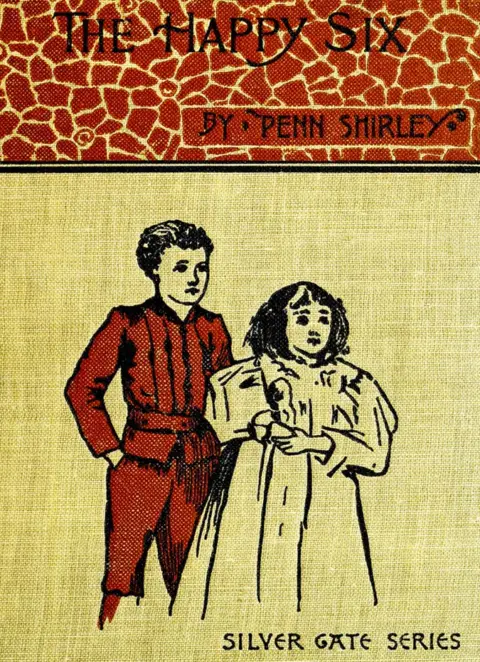
"The Happy Six" by Penn Shirley is a children's novel written in the late 19th century. This story appears to revolve around a group of young friends from Silver Gate City, California, who are filled with excitement as they anticipate embarking on a journey to Europe. The characters include the spirited young Kirke, his lively friends Molly, Weezy, Paul, and Pauline, as well as their enthusiastic little brother, Donald. At the start of the novel, we are introduced to the core group of friends, known as The Merry Five, who dramatically transitions to The Happy Six with the addition of Donald. The opening chapters capture their playful banter and explore their camaraderie as they learn about the possibility of traveling to Europe. As they express a mix of excitement and trepidation, the chapters set the stage for adventures that await them, hinting at themes of friendship, travel, and youthful enthusiasm. The narrative is light-hearted and engaging, appealing to young readers looking for a joyful exploration of childhood adventures and experiences abroad.
Introduction adapted from the source catalogue; source summaries may be automatically generated.
Free to read · English · 23,286 words · No account needed
MAKE TIME FOR A GOOD BOOK
On by default. Untick to stop anonymous reading totals. Each page counts after 10 seconds in view. How this works.
Anonymous counting is on unless you have switched it off.
In the morning they landed at the port of Havre and passed through the Custom House. There, to Weezy’s great indignation, their trunks were opened and searched. When a dark, sour-looking officer handled roughly her cherished Araminta, the little girl could no longer contain herself, but in her anxiety exclaimed aloud,--
“Please, sir, lift my doll easy! Sometimes her eye falls out!”
He never answered, never even looked up, but went on holding the unfortunate Araminta upside down in his left hand, while with his right hand he fumbled about among the contents of the box.
Weezy considered his conduct extremely rude, and was very angry with him, till her mother suggested that as he was a Frenchman he might not have understood what she said.
After the luggage had been examined and chalked with a capital letter D, our party drove to the Frascati, a large hotel, for breakfast.
After breakfast the boys walked off to the immense stone bath-house across the court. A white-capped old woman sat at a desk in the broad entrance hall, writing accounts in a ledger. The boys had French money--francs and centimes--which they had received from the purser on the ship in exchange for United States money.
Paul could speak a little French, and he bought the bath-tickets, paying an extra sum for soap and towels.
“Well, I hope that’s mean enough!” said Kirke, when this was explained to him. “Do they charge extra for the water, too?”
Then they followed a waiting-maid up-stairs into separate bath-rooms; and again Kirke was astonished, for when he had entered his room, the girl turned the key and locked him in. To the American boy, unused to foreign customs, this seemed a strange proceeding.
When he had made his toilet, rung a bell, and been released from solitary confinement, he ran out to seek Paul in the waiting-room.
“What do you think, Paul Bradstreet! That girl locked me into my room!”
“Well, she locked me into mine, too; that’s a way they have in this
country.”
Kirke related his experience to the girls that afternoon in a very graphic way, as the quartette strolled together on the heights.
Pauline laughed, and Molly demurely remarked that she had never heard before of a country where people were shut up who hadn’t been naughty!
“Be careful, Molly, or President Faure may hear you,” said Paul, in pretended alarm. “I suppose he is in that square, cream-colored house this minute; it’s where he lives in the summer.”
“How do you know that?” asked Pauline. “Who said so?”
“The head clerk at the hotel described it to me.”
Your reading position is saved on this browser. Take it to another device with a library code. Reading pages adapt to text, rather than matching a printed edition.
BEHIND THE BOOK
This eBook is for the use of anyone anywhere in the United States and most other parts of the world at no cost and with almost no restrictions whatsoever. You may copy it, give it away or re-use it under the terms of the Project Gutenberg License included with this eBook or online at www.gutenberg.org. If you are not located in the United States, you will have to check the laws of the country where you are located before using this eBook. Read the source licence.
The original source file, including credits and licence, is retained by this library. Request an original-format copy at no charge. Please include the book title and Project Gutenberg identifier #73914.
KEEP YOUR CURIOSITY GOING
Wilfrid Scawen Blunt
Wilfrid Scawen Blunt

E. W. (Edgar Watson) Howe
Coulson Kernahan

Maurice Baring
Frances Wright