THE CLASSIC COLLECTION✦Little Miss WeezyCLASSIC FREE BOOKS
Little Miss Weezy
Penn Shirley
THE CLASSIC COLLECTION · 1897
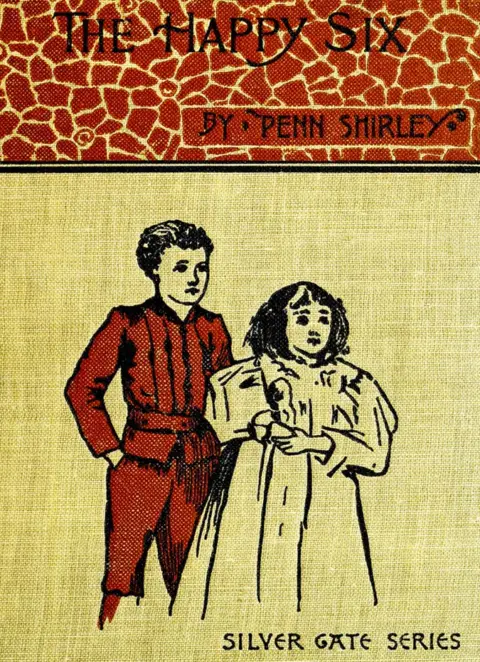
"The Happy Six" by Penn Shirley is a children's novel written in the late 19th century. This story appears to revolve around a group of young friends from Silver Gate City, California, who are filled with excitement as they anticipate embarking on a journey to Europe. The characters include the spirited young Kirke, his lively friends Molly, Weezy, Paul, and Pauline, as well as their enthusiastic little brother, Donald. At the start of the novel, we are introduced to the core group of friends, known as The Merry Five, who dramatically transitions to The Happy Six with the addition of Donald. The opening chapters capture their playful banter and explore their camaraderie as they learn about the possibility of traveling to Europe. As they express a mix of excitement and trepidation, the chapters set the stage for adventures that await them, hinting at themes of friendship, travel, and youthful enthusiasm. The narrative is light-hearted and engaging, appealing to young readers looking for a joyful exploration of childhood adventures and experiences abroad.
Introduction adapted from the source catalogue; source summaries may be automatically generated.
Free to read · English · 23,286 words · No account needed
MAKE TIME FOR A GOOD BOOK
On by default. Untick to stop anonymous reading totals. Each page counts after 10 seconds in view. How this works.
Anonymous counting is on unless you have switched it off.
It was a nice dinner, well served, and The Happy Six enjoyed it immensely. They supped that night from their luncheon-basket and called it a picnic. They had adjoining tables by themselves, and the three parents were at a table farther down the aisle. They were now beyond the desert, at Laguna, where the train had been delayed for some hours by an accident to the engine.
From the window at which Paul was seated they caught a glimpse of the Indian city with its clustering adobe houses and brown church surmounted by a cross.
“Not much of a city,” commented Paul, opening a box of sardines. “It looks more like a village, a tiny, half-grown one into the bargain.”
“But for all that, papa says it holds thousands of Indians, just thousands!” said Kirke. “They must be packed snug, like those little fishes.”
“They’d pack better if they were longer lengthwise and shorter widthwise,” laughed Paul, glancing at a group of thick-set Indians parading along the track.
“Why are those red men like heavy biscuits?” asked Pauline, helping Donald to orange marmalade.
“Because they’re ill-bred,” responded her brother. Pauline shook her
head.
“I know why they’re like heavy biscuits,” exclaimed Weezy confidently. “Because you can’t eat ’em.”
“Very bright, little Miss Weezy, but not the answer,” returned Pauline amid general merriment. “Kirke, you haven’t guessed. Tell me this minute why those Indians are like heavy biscuits?”
“Because”--Kirke thoughtfully squeezed lemon juice upon his sardine--“because every one of them is good for a shot.”
“No, no; you’re far from the mark! Molly, now it’s your turn.”
“Is it because they’re both such a miserable lot?” asked Molly
dubiously.
“Oh, you stupid guessers!” Pauline canted her head saucily. “Why, listen now, my children. Those Indians and heavy biscuits are alike because neither have been properly raised.”
“They’re ill-bred, then, aren’t they, just as I said,” retorted Paul, twisting his neck to look at three Indian girls coming toward the car. All wore blankets, not folded, but hanging from their necks by the hems; and their flowing, black hair was straight and coarse, like a horse’s mane.
“Out with your camera, Paul!” said Kirke, while Molly whispered,--
“Do look at their faces, a bright vermilion!”
“From their foreheads down to their chins. What a waste of good paint!” Kirke whispered back.
“Let’s take them something to eat,” said Pauline, gathering up the fragments of the luncheon.
“Yes, yes, so we will,” cried Molly.
Your reading position is saved on this browser. Take it to another device with a library code. Reading pages adapt to text, rather than matching a printed edition.
BEHIND THE BOOK
This eBook is for the use of anyone anywhere in the United States and most other parts of the world at no cost and with almost no restrictions whatsoever. You may copy it, give it away or re-use it under the terms of the Project Gutenberg License included with this eBook or online at www.gutenberg.org. If you are not located in the United States, you will have to check the laws of the country where you are located before using this eBook. Read the source licence.
The original source file, including credits and licence, is retained by this library. Request an original-format copy at no charge. Please include the book title and Project Gutenberg identifier #73914.
KEEP YOUR CURIOSITY GOING
Wilfrid Scawen Blunt
Wilfrid Scawen Blunt

E. W. (Edgar Watson) Howe
Coulson Kernahan

Maurice Baring
Frances Wright