
East of the sun and west of the moon
Theodore Roosevelt & Kermit Roosevelt
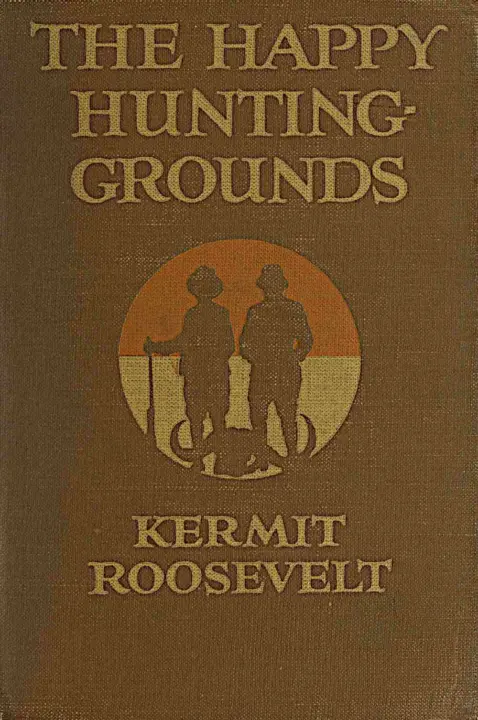
THE CLASSIC COLLECTION · 1912
"The Happy Hunting-Grounds" by Kermit Roosevelt is a collection of hunting autobiographies written in the early 20th century. The author shares his exceptional experiences of hunting expeditions, reflecting on both the adventures and challenges he faced in the wild. The narrative features various hunts across diverse locations such as Africa and the American deserts, portraying not only the thrill of the hunt but also insights into nature and personal reflections. The opening of the book sets the stage by discussing the impact of wilderness life on individuals, highlighting the changes in character that emerge when faced with discomfort and survival challenges. Roosevelt introduces his father as a passionate huntsman, recalling formative camping experiences that instilled in him a deep love for outdoor adventures. The chapter also emphasizes lessons learned about sharing and camaraderie among hunting companions, laying a foundation for the rich tales of expeditions that follow. Through engaging anecdotes, readers are invited into a world where the bond between man and nature is vividly explored.
Introduction adapted from the source catalogue; source summaries may be automatically generated.
Free to read · English · 36,032 words · No account needed
MAKE TIME FOR A GOOD BOOK
On by default. Untick to stop anonymous reading totals. Each page counts after 10 seconds in view. How this works.
Anonymous counting is on unless you have switched it off.
The morning after we reached the tanks, the Tinah’alta, as they are called colloquially, Win and I were up and off for the hunting-grounds by half past three; by sun-up we were across the border, and hunted along the foot of the mountains, climbing across the out-jutting ridges. At about nine we reached the top of a ridge and began looking around. Win called to me that he saw some sheep. We didn’t manage things very skilfully, and the sheep took fright, but as they stopped I shot at a fine ram, Win’s rifle echoing my shot. We neither of us scored a hit, and missed several running shots. This missing was mere bad luck on Win’s part, for he was a crack shot, and later on that day, when we were not together, he shot a ram, only part of which was visible, at a distance of three hundred and fifty yards. As the sun grew hotter we hunted farther up on the mountains, but we saw no more sheep, and returned to camp with Utting, who met us at a ravine near the border.
After we got back to camp, Win and I filled some canteens, threw our blankets on one of the pack-mules, took Dominguez, and rode back over the border to camp in the dry bed of an arroyo near where we had been hunting in the morning. We sent back the animals, arranging with Dominguez to return with them the following day. Next morning at a little after three we rolled out of our blankets, built a little fire of mesquite wood, and after a steaming cup of coffee and some cold frying-pan bread we shouldered our rifles and set out. At the end of several hours’ steady walking I got a chance at a fair ram and missed. I sat down and took out my field-glasses to try to see where he went; and I soon picked up three sheep standing on a great boulder, near the foot of a mountain of the same range that we were on. They were watching us and were all ewes, but I wanted one for the museum. So I waited till they lost interest in us, got down from the rock, and disappeared from our sight. I then left Win and started toward the boulder; after some rather careful stalking I got one of them at about two hundred yards by some fairly creditable shooting. The side of the mountain range along which we were hunting was cut by numerous deep gullies from two to three hundred yards across. After I had dressed the ewe I thought I would go a little way farther, on the chance of coming upon the ram I had missed; for he had disappeared in that direction. When I had crossed three or four ridges I sat down to look around. It was about half past nine, the heat was burning, and I knew the sheep would soon be going up the mountains to seek the shelter of the caves in which they spend the noonday hours. Suddenly I realized that there were some sheep on the side of the next ridge standing quietly watching me. There were four bunches, scattered among the rocks; three were of ewes and young, and there was one bunch of rams; in all there were sixteen sheep. I picked out the best ram, and, estimating the distance at two hundred and fifty yards, I fired, hitting, but too low. I failed to score in the running shooting, but when he was out of sight I hurried over and picked up the trail; he was bleeding freely, and it was not difficult to follow him. He went half a mile or so and then lay down in a rock cave; but he was up and off before I could labor into sight, and made a most surprising descent down the side of a steep ravine. When I caught sight of him again he was half-way up the opposite wall of the ravine though only about a hundred yards distant; he was standing behind a large rock with only his quarters visible, but one more shot brought matters to a finish. The heat was very great, so I started right to work to get the skin off. A great swarm of bees gathered to the feast. They were villainous-looking, and at first they gave me many qualms, but we got used to each other and I soon paid no attention to them, merely brushing them off any part that I wanted to skin. I was only once stung, and that was when a bee got inside my clothing and I inadvertently squeezed it. Before I had finished the skinning I heard a shot from Win; I replied, and a little while afterward he came along. I shall not soon forget packing the skin, with the head and the leg-bones still in it, down that mountainside. In addition to being very heavy, it made an unwieldy bundle, as I had no rope with which to tie it up. I held the head balanced on one shoulder, with a horn hooked round my neck; the legs I bunched together as best I could, but they were continually coming loose and causing endless trouble. After I reached the bottom, I left Win with the sheep and struck off for our night’s camping-place. It was after eleven and the very hottest part of the day. I had to be careful not to touch any of the metal part of my gun; indeed, the wooden stock was unpleasantly hot, and I was exceedingly glad that there was to be water waiting for me at camp.
Your reading position is saved on this browser. Take it to another device with a library code. Reading pages adapt to text, rather than matching a printed edition.
Theodore Roosevelt & Kermit Roosevelt
BEHIND THE BOOK
This eBook is for the use of anyone anywhere in the United States and most other parts of the world at no cost and with almost no restrictions whatsoever. You may copy it, give it away or re-use it under the terms of the Project Gutenberg License included with this eBook or online at www.gutenberg.org. If you are not located in the United States, you will have to check the laws of the country where you are located before using this eBook. Read the source licence.
The original source file, including credits and licence, is retained by this library. Request an original-format copy at no charge. Please include the book title and Project Gutenberg identifier #64079.
KEEP YOUR CURIOSITY GOING

Fanny Van de Grift Stevenson

Isabel Anderson
Charles King
Henry Vizetelly
Randall Parrish
James De Mille