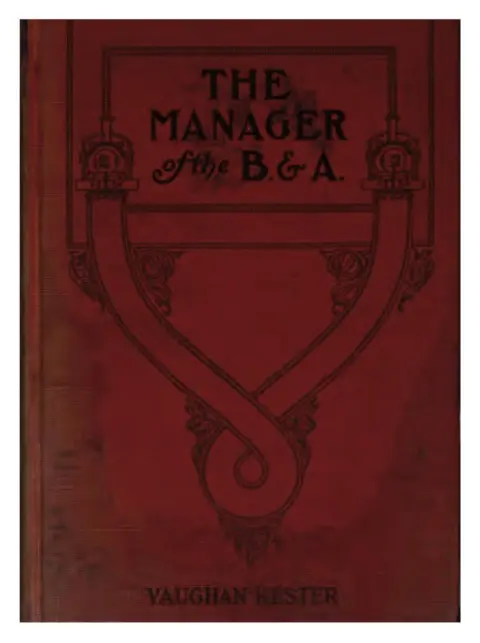
The Manager of the B. & A.: A Novel
Vaughan Kester
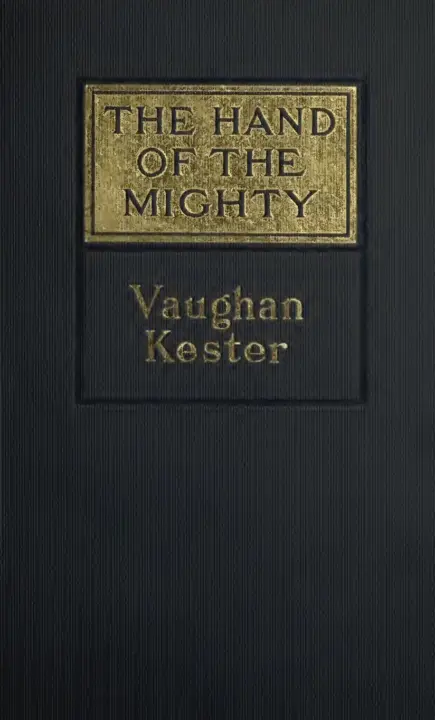
THE CLASSIC COLLECTION · 1913
"The Hand of the Mighty and Other Stories" by Vaughan Kester is a collection of short stories written in the early 20th century. The opening tale introduces readers to the character of Thomas R. Pendagrast, a simple and genuine millionaire, and his interaction with the good-hearted yet simple local lawyer, Silas Quinby. Through their encounters, the story explores themes of kindness, misunderstanding, and the relationship between wealth and integrity within small-town life. At the start of the book, Pendagrast arrives in a small valley, charming local residents with his humility and friendliness, quite unlike the stereotypical image of a millionaire. Silas Quinby is portrayed as overly simplistic and somewhat ineffectual, yet he manages to gain Pendagrast's friendship. As Pendagrast enjoys his stay, an unexpected turn of events arise when Silas offers to help him buy local land, unwittingly putting both men in a predicament regarding inflated land prices and community dynamics. The opening establishes a humorous yet thought-provoking examination of character and morality, setting the tone for the stories to follow.
Introduction adapted from the source catalogue; source summaries may be automatically generated.
Free to read · English · 97,146 words · No account needed
MAKE TIME FOR A GOOD BOOK
On by default. Untick to stop anonymous reading totals. Each page counts after 10 seconds in view. How this works.
Anonymous counting is on unless you have switched it off.
She put up her lips to kiss him, then pressed her cheek to his. “I'm so sorry, Philip!” she whispered. It was the only expression of pity she had ventured.
“Don't, mother. I can't endure it. Not now—not yet.”
With a hasty good-by he hurried off.
Ten minutes later and he stood with Perkins before the door leading into the room where Margaret lay.
“Where is Franz?” Philip asked.
Perkins nodded toward the door. “We can't induce him to leave her,” he said.
“Why should you seek to? Poor fellow!”
They were silent, gazing at each other, a depth of sorrow in their glance. Finally Perkins said, with a show of control:
“Have you seen her, Philip?”
“No.”
“Why?”
“I had decided to keep the memory I have of her unchanged. It is as I saw her when they were married. She was so happy, poor little thing!”
“There is more than happiness in her face now,” Perkins observed thoughtfully. “Do you believe in a hereafter?”
“What odds can it be? It's in the present our lot is cast.”
“Don't you like to think you are destined to meet those you love again?”
Philip placed his hand irresolutely upon the knob.
“I shall go in. Perhaps I shall be able to determine what I do believe.”
As he entered the room, a rush of cold air met him, for the windows were partially raised—the outer shutters only being closed. The dim light filled the apartment with shadowy indistinctness.
Slowly and overpoweringly objects became plain in the somberness of his surroundings.
Margaret lay upon a couch in the center of the room. She might have been asleep.
At her side sat Franz, regardless of the stinging gusts of wind that came in between the shutters.
Philip stepped to the couch and looked down upon the beautiful face, then he moved back quietly, and would have quitted the room, but Franz detained him by saying: “Is it you, Perkins?”
“It is I,” Philip answered.
Franz arose instantly, putting out his hand, and Philip clasped it eagerly.
Without the wind sighed drearily. The sound was depressing.
The naked branches of a tree growing in a corner of the yard lashed the house incessantly. The single lamp burned with a flickering flame.
“What is it?” Franz questioned, for twice Philip had essayed to speak.
“I am so sorry, Franz. So sorry,” he cried in broken tones.
“I know you are,” Franz answered simply.
“There is this that I want to tell you, Franz, if I may,” Philip continued.
“Yes?”
Your reading position is saved on this browser. Take it to another device with a library code. Reading pages adapt to text, rather than matching a printed edition.
BEHIND THE BOOK
This eBook is for the use of anyone anywhere in the United States and most other parts of the world at no cost and with almost no restrictions whatsoever. You may copy it, give it away or re-use it under the terms of the Project Gutenberg License included with this eBook or online at www.gutenberg.org. If you are not located in the United States, you will have to check the laws of the country where you are located before using this eBook. Read the source licence.
The original source file, including credits and licence, is retained by this library. Request an original-format copy at no charge. Please include the book title and Project Gutenberg identifier #52563.
KEEP YOUR CURIOSITY GOING
Coulson Kernahan

Maurice Baring
Frances Wright
Cécile Tormay

Frederic Jesup Stimson

W. H. P. (William Henry Pope) Jarvis