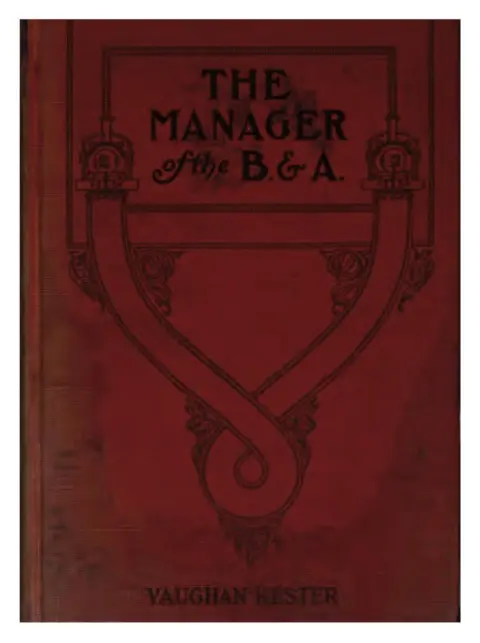
The Manager of the B. & A.: A Novel
Vaughan Kester
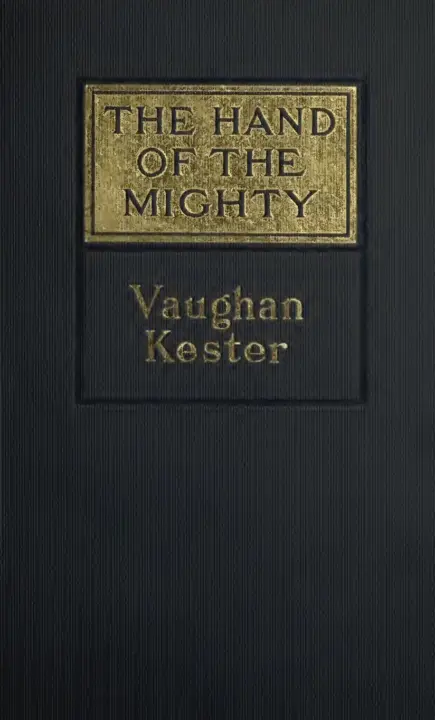
THE CLASSIC COLLECTION · 1913
"The Hand of the Mighty and Other Stories" by Vaughan Kester is a collection of short stories written in the early 20th century. The opening tale introduces readers to the character of Thomas R. Pendagrast, a simple and genuine millionaire, and his interaction with the good-hearted yet simple local lawyer, Silas Quinby. Through their encounters, the story explores themes of kindness, misunderstanding, and the relationship between wealth and integrity within small-town life. At the start of the book, Pendagrast arrives in a small valley, charming local residents with his humility and friendliness, quite unlike the stereotypical image of a millionaire. Silas Quinby is portrayed as overly simplistic and somewhat ineffectual, yet he manages to gain Pendagrast's friendship. As Pendagrast enjoys his stay, an unexpected turn of events arise when Silas offers to help him buy local land, unwittingly putting both men in a predicament regarding inflated land prices and community dynamics. The opening establishes a humorous yet thought-provoking examination of character and morality, setting the tone for the stories to follow.
Introduction adapted from the source catalogue; source summaries may be automatically generated.
Free to read · English · 97,146 words · No account needed
MAKE TIME FOR A GOOD BOOK
On by default. Untick to stop anonymous reading totals. Each page counts after 10 seconds in view. How this works.
Anonymous counting is on unless you have switched it off.
Franz turned back alone—but not to retrace his steps. Instead he rambled through the streets of the sleeping town—to find himself—he knew not how, a dozen times beneath her window. So he wore out the night, and when at last the day broke, it found him going in the direction of his home. VIII
Philip was looking from his window out upon the street where the first snows of winter lay slowly melting in the sunshine, when a cab rattled up through the mud and slush. It stopped before the house and his interest became active.
“It's the saintly Anson! This is, indeed, penance for my sins.”
Almost with the thought Anson stepped from the cab and was followed by a gentleman who had no small trouble in wriggling through the narrow door.
Philip, with a groan of disgust, recognized the junior member of the firm employing his brother.
“As if Anson were not affliction enough,” he thought, “he brings Mr. Hale to bore us—especially me, by prosy recitals of his own worth.”
He promptly put himself beyond his brother's range of vision, as he wished to avoid the necessity of going down-stairs until the last moment.
He resumed his work, and for an hour or more wrote steadily on, then he threw down his pen and was resting his eyes, his hands before them, when the door opened and his mother entered the room. He knew who it was without looking up, since she was the only one of all the family who ever invaded his privacy.
“What is it, mother?” he asked.
“May I see you, Philip? Are you very busy?”
There was something in her voice that caused him to glance around quickly. “Why, what is it, mother?”
He left his chair and went to her side. He saw that her face was red and swollen as though from much weeping. “What is it, dear?” He put his arms about her. “Does Anson bring bad news of any sort?”
By a sudden gesture she freed herself from his embrace, covering her face with her apron.
“Oh! Philip, it's awful.” And she began to cry softly.
“But what is it—why don't you tell me?”
He tried to draw the apron away that he might see her face again, but she resisted his gentle force.
“What is it, dear? Is it Anson—is he ill?”
“It's worse than that! Oh! a million times worse!”
At her words the desperate sickening feeling begotten of some great and unknown calamity, the forerunner of actual knowledge, came into his heart.
“You must tell me, mother, or how can I ever help you?”
Your reading position is saved on this browser. Take it to another device with a library code. Reading pages adapt to text, rather than matching a printed edition.
BEHIND THE BOOK
This eBook is for the use of anyone anywhere in the United States and most other parts of the world at no cost and with almost no restrictions whatsoever. You may copy it, give it away or re-use it under the terms of the Project Gutenberg License included with this eBook or online at www.gutenberg.org. If you are not located in the United States, you will have to check the laws of the country where you are located before using this eBook. Read the source licence.
The original source file, including credits and licence, is retained by this library. Request an original-format copy at no charge. Please include the book title and Project Gutenberg identifier #52563.
KEEP YOUR CURIOSITY GOING
Coulson Kernahan

Maurice Baring
Frances Wright
Cécile Tormay

Frederic Jesup Stimson

W. H. P. (William Henry Pope) Jarvis