THE CLASSIC COLLECTION✦The strange transfiguration of Hannah StubbsCLASSIC FREE BOOKS
The strange transfiguration of Hannah Stubbs
Florence Marryat
THE CLASSIC COLLECTION · 1894
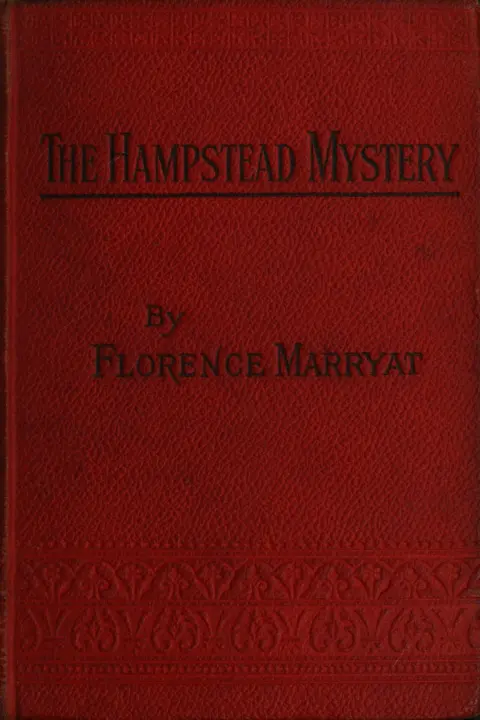
"The Hampstead Mystery: A Novel. Volume 2" by Florence Marryat is a fictional novel written in the late 19th century. The story revolves around the tragic events following the mysterious death of Jane Emily Walcheren, exploring themes of love, guilt, and societal judgment through the lives of the characters connected to her. Central characters include Frederick Walcheren, the bereaved husband, who is grappling with grief and accusations surrounding his wife's tragic fall, and Philip Walcheren, his supportive cousin attempting to shield him from overwhelming suspicions. The beginning of the novel opens with an intense court scene where Frederick Walcheren is under questioning regarding the last moments he spent with his wife before her untimely death. The tension escalates as the coroner and jury express skepticism over Frederick’s alibi and the circumstances leading to Jane’s fall from the cliffs. Through vivid portrayals of Frederick's distress and the courtroom's harsh scrutiny, readers witness his deep anguish as he faces potential accusations of foul play. This sets the stage for a gripping narrative that delves into the psychological turmoil and societal pressures confronting those left in the aftermath of a tragedy shrouded in mystery.
Introduction adapted from the source catalogue; source summaries may be automatically generated.
Free to read · English · 41,530 words · No account needed
MAKE TIME FOR A GOOD BOOK
On by default. Untick to stop anonymous reading totals. Each page counts after 10 seconds in view. How this works.
Anonymous counting is on unless you have switched it off.
‘Very few, sir, if any. They lie too heavy on the conscience for that. Why, isn’t Rayner a case in point? If any have been kept dark for ever it must be amongst Roman Catholics, for they can ease their consciences by confession, and, if they receive absolution, they are set at rest. They have such entire faith in the power of their priests to absolve them from their sins. I have a friend of that religion, and it’s wonderful how bright he seems after he’s been to confession, quite a different creature.’
‘But if a man were to confess a murder in the confessional, the priest would give him up to justice, surely?’ said Henry Hindes.
‘Oh, no, he wouldn’t, begging your pardon. My friend tells me that the secrets of the confessional are inviolate. No priest would dare reveal them, on penalty of being stripped of his cloth. What he hears there never passes his lips again, not even to another priest.’
‘I shouldn’t like to trust him, all the same,’ said Hindes; ‘human nature is subject to too many accidents. A priest might lose his brain and babble everything he had heard.’
‘I fancy, Mr Henry,’ replied Bloxam, laughing, ‘that he hears so many things, good, bad, and indifferent, that he forgets them as soon as he has heard them. And he doesn’t know the names of half his penitents. A Catholic may go to any confessor he likes. It is his director only that he does not change.’
‘You seem to know a lot about it,’ said Hindes, indifferently.
‘Only what my friend tells me, sir,’ replied the cashier; ‘but Catholics seem to derive so much consolation from confession, that I often wonder the practice is not more largely used in other churches. Will you see the books now, Mr Henry?’
‘No, not now,’ replied Hindes, in a languid voice; ‘I’m awfully tired.’
‘But you did not see them last week, sir, and, if you’ll excuse my saying so, it is too long to let them run on without casting an eye over them.’
‘Oh, they’re sure to be all right, Bloxam. I can trust you better than
myself.’
‘I hope you may trust me, Mr Henry, after forty years’ service with your honoured father and yourself, but still it would be a satisfaction if you would look into matters a little more closely than you have done of late. You’re not yourself, sir, if you’ll forgive my saying so, since poor Mr Crampton’s death.’
Hindes roused himself directly, and, sitting upright in his chair, pulled the ledger towards him.
Your reading position is saved on this browser. Take it to another device with a library code. Reading pages adapt to text, rather than matching a printed edition.
Florence Marryat
Florence Marryat
Florence Marryat
Florence Marryat
BEHIND THE BOOK
This eBook is for the use of anyone anywhere in the United States and most other parts of the world at no cost and with almost no restrictions whatsoever. You may copy it, give it away or re-use it under the terms of the Project Gutenberg License included with this eBook or online at www.gutenberg.org. If you are not located in the United States, you will have to check the laws of the country where you are located before using this eBook. Read the source licence.
The original source file, including credits and licence, is retained by this library. Request an original-format copy at no charge. Please include the book title and Project Gutenberg identifier #69217.
KEEP YOUR CURIOSITY GOING
Coulson Kernahan

Maurice Baring
Frances Wright
Cécile Tormay

Frederic Jesup Stimson

W. H. P. (William Henry Pope) Jarvis