THE CLASSIC COLLECTION✦Adam Hepburn’s Vow: A Tale of Kirk and CovenantCLASSIC FREE BOOKS
Adam Hepburn’s Vow: A Tale of Kirk and Covenant
Annie S. Swan
THE CLASSIC COLLECTION · 1892
"The Guinea Stamp: A Tale of Modern Glasgow" by Annie S. Swan is a novel written in the late 19th century. The story introduces us to Gladys Graham, a young girl who is suddenly orphaned and must confront the harsh realities of life without her father, an unsuccessful artist, in the bleak environment of a small Lincolnshire village. With no prospects or support, she finds herself at the mercy of her uncle, Abel Graham, a miserly man who brings her to Glasgow, where she is thrust into an unfamiliar and challenging world. At the start of the novel, we witness Gladys in her father's modest studio, grappling with her grief and uncertainty about her future. After the death of her father, her uncle arrives, and Gladys, realizing that she has no choice but to go with him to Scotland, prepares for this new chapter in her life. The opening chapters depict her somber transition from a life of an artist's child to living with a distant uncle in Glasgow, where the atmosphere is heavy with poverty and desperation. As she navigates this new, unfamiliar world filled with struggle and hardship, readers are introduced to Walter Hepburn, the boy who works for her uncle and becomes a source of companionship for her. The poignant depiction of her struggles and the unlikely friendships that arise set the tone for a narrative that deeply explores themes of resilience, familial bonds, and social hardship.
Introduction adapted from the source catalogue; source summaries may be automatically generated.
Free to read · English · 106,891 words · No account needed
MAKE TIME FOR A GOOD BOOK
On by default. Untick to stop anonymous reading totals. Each page counts after 10 seconds in view. How this works.
Anonymous counting is on unless you have switched it off.
'I think it would only be fair, Uncle Abel, if you told me now where we are going,' she said playfully.
For answer, he held out the ticket to her, and in amazement she read 'Mauchline' on it. The colour flushed all over her face, and she looked at him with eager, questioning eyes.
'Oh, Uncle Abel, what does it mean? Why are you going there to-day? I
cannot understand it.'
'I have my reasons, Gladys. You will know them, perhaps, sooner than you
think.'
'Is it a long journey, uncle? I am so afraid for you. Let me shut the window up quite. And are we really, really going into Ayrshire at last?'
She was full of excitement as a child. She sat close to the window, and when the train had left the city behind, looked out with eagerest interest on the wintry landscape.
'Oh, Uncle Abel, it is so beautiful to see it, the wide country, and the sky above it so clear and lovely. Oh, there is room to breathe!'
'I am sure it looks wintry and bleak enough,' the old man answered, with a grunt. 'I don't see much beauty in it myself.'
'How strange! To me it is wholly beautiful. Is this Ayrshire yet? Tell me when we come to Ayrshire.'
A slow smile was on the old man's face as he looked and listened. He enjoyed her young enthusiasm, but it seemed to awaken in him some sadder thought, for once he sighed heavily, and drew himself together as if he felt cold, or some bitter memory smote him.
In little more than an hour the train drew up at the quiet country station, and Gladys was told they had reached their journey's end. It was a lovely spring morning; the sun shone out cheerfully from a mild, bright sky, the air was laden with the awakening odours of spring, and the spirit of life seemed to be everywhere.
'Now, my girl, we have a great deal to do to-day,' said the old man,
when they had crossed the footbridge. 'What do you want most to see
here?'
'Mossgiel and Ballochmyle, and the house where you lived in Mauchline.'
'We'll go to that first; it's not a great sight, I warn you--only a whitewashed, thatched cottage in a by-street. When we've seen that, we'll take a trap and drive to the other places.'
'But that will cost a great deal,' said Gladys doubtfully, recalled for the moment to the small economies it was her daily lot to practise.
Your reading position is saved on this browser. Take it to another device with a library code. Reading pages adapt to text, rather than matching a printed edition.
Annie S. Swan
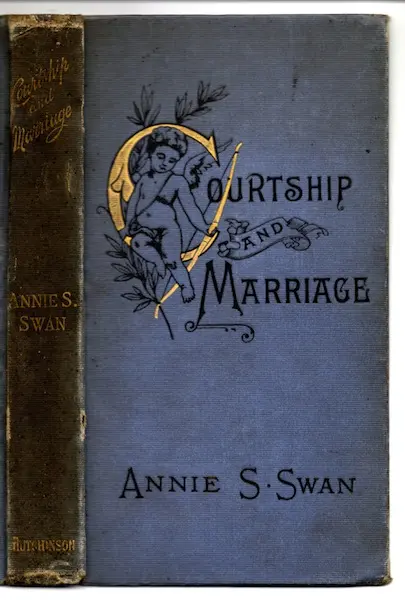
Annie S. Swan
Annie S. Swan
Annie S. Swan
BEHIND THE BOOK
This eBook is for the use of anyone anywhere in the United States and most other parts of the world at no cost and with almost no restrictions whatsoever. You may copy it, give it away or re-use it under the terms of the Project Gutenberg License included with this eBook or online at www.gutenberg.org. If you are not located in the United States, you will have to check the laws of the country where you are located before using this eBook. Read the source licence.
The original source file, including credits and licence, is retained by this library. Request an original-format copy at no charge. Please include the book title and Project Gutenberg identifier #17442.
KEEP YOUR CURIOSITY GOING
Coulson Kernahan

Maurice Baring
Frances Wright
Cécile Tormay

Frederic Jesup Stimson

W. H. P. (William Henry Pope) Jarvis