THE CLASSIC COLLECTION✦Angel Unawares: A Story of Christmas EveCLASSIC FREE BOOKS
Angel Unawares: A Story of Christmas Eve
C. N. (Charles Norris) Williamson & A. M. (Alice Muriel) Williamson
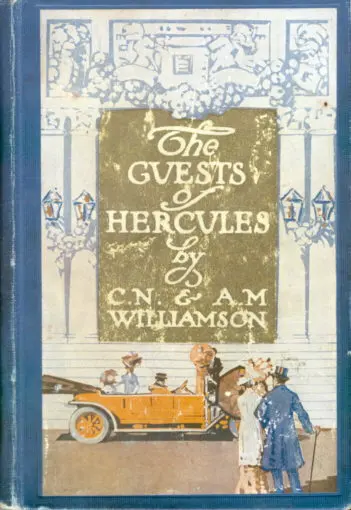
THE CLASSIC COLLECTION · 1912
"The Guests of Hercules" by C. N. Williamson and A. M. Williamson is a novel written in the early 20th century. The story begins with the character Mary Grant, a novice set to leave her convent home to embark on a new life outside its walls. The narrative explores themes of self-discovery, nostalgia, and the clash between sheltered innocence and the allure of the outside world, particularly the exciting yet daunting prospect of Monte Carlo. At the start of the novel, Mary is saying goodbye to the convent garden, reflecting on her years spent in the sheltered life of a novice. As she prepares for her departure, she grapples with feelings of nostalgia and homesickness, despite having chosen to leave the convent. Her friend, Peter Maxwell, encourages her to embrace her newfound freedom as Mary's mind swirls with thoughts of the vibrant world awaiting her, particularly her long-held dream of visiting Italy. The emotional weight of her decision to leave the convent is palpable and sets up a compelling exploration of her journey into adulthood, freedom, and the uncertainties that come with it.
Introduction adapted from the source catalogue; source summaries may be automatically generated.
Free to read · English · 159,020 words · No account needed
MAKE TIME FOR A GOOD BOOK
On by default. Untick to stop anonymous reading totals. Each page counts after 10 seconds in view. How this works.
Anonymous counting is on unless you have switched it off.
The fat stacks of French banknotes were extracted with some effort from the hand-bag into which they had been stuffed. Captain Hannaford and Schuyler counted while the others watched, Carleton with amused interest, Mary with comparative indifference, because the actual money meant less to her than the thrill of winning it, and Madame d'Ambre on the verge of tears. She considered that she was being robbed of her rights, for she knew that this merciless man with the hard jaw and pleasant blue eyes intended to keep her hands off the money.
"One hundred and nine thousand francs!" Schuyler announced at last. "I congratulate you, Mademoiselle. And I wish you'd let me advise you."
"If I did, what would you say?" Mary smiled.
"I should say: 'Go home to-morrow.'"
"But I've just come away from home. I don't want to go back."
"Well, then, go to some other place, a place without a Casino."
"I suppose that's good advice," said Mary. "But--I can't take it yet."
"I'm sorry," returned Peter's cousin.
The whole conversation had been in French from the first, as Madame d'Ambre knew little English; and Mary's accent was so perfect that to an American or English ear it passed as Parisian. Neither Hannaford, Schuyler, nor Carleton supposed that she had just arrived from England, though her name--if they had caught it correctly--was English or Scotch. "Mademoiselle" they called her, and wondering who and what she was, vaguely associated her with France, probably Paris.
"How long shall you stay?" asked Carleton, in the pause that followed.
"I don't know," Mary said. "A few days, perhaps."
"Will you come down to the Condamine and see my hydro-aeroplane to-morrow? I'm keeping her there, and practising a bit in the harbour, before taking her to Nice."
"Oh, I should love to! I've never seen any sort of aeroplane, not even a
picture of one."
"That's clever and original of you, anyhow. Where have you been, to avoid them? What time to-morrow? Is ten o'clock too early?"
Mary blushed. "Would afternoon suit you? I feel as if I should have luck again, if I played in the morning."
"Afternoon, of course," Carleton assented politely, though he was disappointed; for in giving the invitation he had been following his friend's lead in trying to save the moth from the candle. "Shall we say three o'clock? I'll call for you."
"We'll both call, with my car," said Schuyler. "But what about that 5 per cent. which I suppose you want to give your roulette teacher?" he went on, with apparent carelessness.
"I want to give her more," Mary confessed, with that soft obstinacy which people found difficult to combat.
Your reading position is saved on this browser. Take it to another device with a library code. Reading pages adapt to text, rather than matching a printed edition.
C. N. (Charles Norris) Williamson & A. M. (Alice Muriel) Williamson
C. N. (Charles Norris) Williamson & A. M. (Alice Muriel) Williamson
C. N. (Charles Norris) Williamson & A. M. (Alice Muriel) Williamson
C. N. (Charles Norris) Williamson & A. M. (Alice Muriel) Williamson
BEHIND THE BOOK
This eBook is for the use of anyone anywhere in the United States and most other parts of the world at no cost and with almost no restrictions whatsoever. You may copy it, give it away or re-use it under the terms of the Project Gutenberg License included with this eBook or online at www.gutenberg.org. If you are not located in the United States, you will have to check the laws of the country where you are located before using this eBook. Read the source licence.
The original source file, including credits and licence, is retained by this library. Request an original-format copy at no charge. Please include the book title and Project Gutenberg identifier #19569.
KEEP YOUR CURIOSITY GOING
Coulson Kernahan

Maurice Baring
Frances Wright
Cécile Tormay

Frederic Jesup Stimson

W. H. P. (William Henry Pope) Jarvis