THE CLASSIC COLLECTION✦Angel Unawares: A Story of Christmas EveCLASSIC FREE BOOKS
Angel Unawares: A Story of Christmas Eve
C. N. (Charles Norris) Williamson & A. M. (Alice Muriel) Williamson
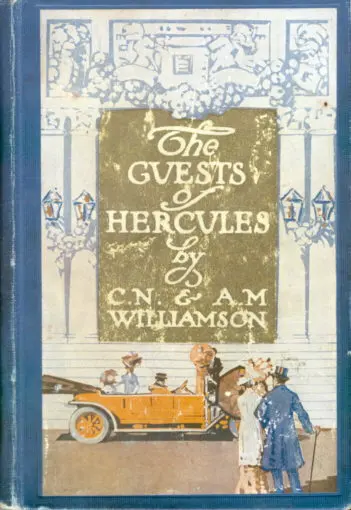
THE CLASSIC COLLECTION · 1912
"The Guests of Hercules" by C. N. Williamson and A. M. Williamson is a novel written in the early 20th century. The story begins with the character Mary Grant, a novice set to leave her convent home to embark on a new life outside its walls. The narrative explores themes of self-discovery, nostalgia, and the clash between sheltered innocence and the allure of the outside world, particularly the exciting yet daunting prospect of Monte Carlo. At the start of the novel, Mary is saying goodbye to the convent garden, reflecting on her years spent in the sheltered life of a novice. As she prepares for her departure, she grapples with feelings of nostalgia and homesickness, despite having chosen to leave the convent. Her friend, Peter Maxwell, encourages her to embrace her newfound freedom as Mary's mind swirls with thoughts of the vibrant world awaiting her, particularly her long-held dream of visiting Italy. The emotional weight of her decision to leave the convent is palpable and sets up a compelling exploration of her journey into adulthood, freedom, and the uncertainties that come with it.
Introduction adapted from the source catalogue; source summaries may be automatically generated.
Free to read · English · 159,020 words · No account needed
MAKE TIME FOR A GOOD BOOK
On by default. Untick to stop anonymous reading totals. Each page counts after 10 seconds in view. How this works.
Anonymous counting is on unless you have switched it off.
"I assure you it does, though, and it can run on land, too," said Carleton, eagerly. "Surely you must have read of Glenn Curtiss and his Triad, that made such a sensation in America? You can ask Jim. He saw my first successful experiment in the Hudson River six weeks ago."
"And one or two unsuccessful ones, too," laughed Jim. "But I really think, Miss Grant, that Carleton's got his pet dragon into pretty good training now, both as a land and water and air animal. I shouldn't wonder if we'd see something worth seeing nest week at Nice?--and it will be new on this coast, for there've been no hydro-aeroplanes tried here before."
"Next week?" echoed Mary. "Shan't I see anything now? I thought Mr. Carleton meant to go up in the air to-day."
"I hadn't thought of it, but I will if you like. That is, I'll try,"
said Carleton, modestly.
"I--oh, how I should love to go with you!" Mary exclaimed. "Can you
carry people?"
"One passenger at a time, yes. You wouldn't really like it, would you?" he asked, flushing under the compliment of her trust in him, and admiring her pluck. "You don't mean that you'd go up with me?"
"I would if you'd take me." Her eyes were shining once more. "It would be--like all one's most marvellous dreams come true."
"You wouldn't be afraid?"
"Oh, no, not with you."
This was delicious flattery. Carleton promptly fell in love with Mary. Not to have done so would have been base ingratitude. No woman had ever paid him so great a compliment. He had thought her bewilderingly pretty before. Now she was the most beautiful woman in the world.
"You're the bravest girl on earth!" he exclaimed, ardently.
"Better leave her on earth, then," Schuyler said dryly. "We need brave
women."
"There's no danger," Carleton protested with indignation. "Do you think I'd take her, if I thought there were?"
"Not if you thought there were. And I don't say there is. But Miss Grant's here without her people----"
"I have no people," Mary cut him short. "Because you can't count aunts, can you, especially if they dislike you very much?"
Both men laughed.
"I must be your passenger," she said. "Now I've seen the hydro-aeroplane, I shan't eat or sleep till I've been up in it."
Carleton looked at his host. "You know, at worst she could only get a wetting if I kept over the sea," he said. "And very likely the Flying Fish will be cranky and refuse to rise."
"Here's hoping!" mumbled Schuyler. He did not define the exact nature of his hope, but offered no further objections.
Your reading position is saved on this browser. Take it to another device with a library code. Reading pages adapt to text, rather than matching a printed edition.
C. N. (Charles Norris) Williamson & A. M. (Alice Muriel) Williamson
C. N. (Charles Norris) Williamson & A. M. (Alice Muriel) Williamson
C. N. (Charles Norris) Williamson & A. M. (Alice Muriel) Williamson
C. N. (Charles Norris) Williamson & A. M. (Alice Muriel) Williamson
BEHIND THE BOOK
This eBook is for the use of anyone anywhere in the United States and most other parts of the world at no cost and with almost no restrictions whatsoever. You may copy it, give it away or re-use it under the terms of the Project Gutenberg License included with this eBook or online at www.gutenberg.org. If you are not located in the United States, you will have to check the laws of the country where you are located before using this eBook. Read the source licence.
The original source file, including credits and licence, is retained by this library. Request an original-format copy at no charge. Please include the book title and Project Gutenberg identifier #19569.
KEEP YOUR CURIOSITY GOING
Coulson Kernahan

Maurice Baring
Frances Wright
Cécile Tormay

Frederic Jesup Stimson

W. H. P. (William Henry Pope) Jarvis