THE CLASSIC COLLECTION✦The Story of ScotchCLASSIC FREE BOOKS
The Story of Scotch
Enos A. Mills
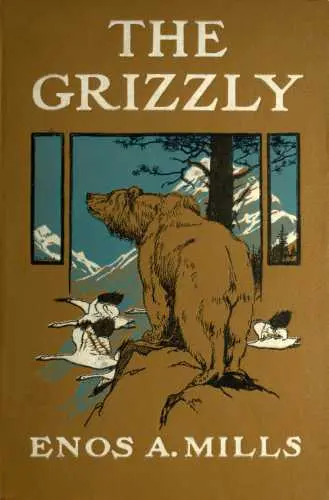
THE CLASSIC COLLECTION · 1902
"The Grizzly, Our Greatest Wild Animal" by Enos A. Mills is a natural history account written in the early 20th century. The book focuses on the grizzly bear, exploring its behavior, habitat, and interactions with its environment, all while advocating for the protection of this remarkable species. The author combines personal observations with broader insights into the life of grizzlies, positioning them as not only powerful animals but also intelligent and curious beings. The opening of the book introduces the reader to the intriguing concept of a grizzly bear's autobiography, suggesting that such a narrative would be filled with insights about its experiences with other animals and humans. Mills shares his own experiences studying grizzlies, emphasizing their intelligence, emotional depth, and remarkable adaptability. He recounts several encounters that illustrate the bear's curiosity and problem-solving skills, as well as its ability to evade hunters. Throughout these initial chapters, a respectful admiration for the grizzly's unique traits begins to develop, setting the stage for a deeper exploration of the species in the subsequent sections.
Introduction adapted from the source catalogue; source summaries may be automatically generated.
Free to read · English · 50,771 words · No account needed
MAKE TIME FOR A GOOD BOOK
On by default. Untick to stop anonymous reading totals. Each page counts after 10 seconds in view. How this works.
Anonymous counting is on unless you have switched it off.
Stikeenensis group: Ursus stikeenensis Merriam Tatletuey Lake, tributary to Finlay River, near head Skeena River, British Columbia. crassodon nobis Klappan Creek (= Third South Fork Stikine River), British Columbia. crassus nobis[2] Upper Macmillan River, Yukon. mirabilis Merriam[2] Admiralty Island, Alaska. absarokus Merriam[2] Little Bighorn River, northern Bighorn Mountains, Montana.
Alascensis group: Ursus alascensis Merriam Unalaklik River, Alaska. toklat Merriam Head of Toklat River, north base Alaska Range, near Mount McKinley, Alaska. latifrons Merriam Jasper House, Alberta.
Richardsoni group: Ursus richardsoni Swainson Shore of Arctic Ocean, west side Bathurst Inlet, near mouth of Hood River. russelli Merriam[2] West side Mackenzie River delta, Canada. phæonyx Merriam[2] Glacier Mountain, Tanana Mts., Alaska (about 2 miles below source of Comet Creek, near Forty-mile Creek, between Yukon and Tanana Rivers). internationalis Merriam Alaska-Yukon boundary, about 50 miles south of Arctic coast. ophrus Merriam Eastern British Columbia (exact locality unknown). washake Merriam North Fork Shoshone River, Absaroka Mts., western Wyoming.
Kidderi group: Ursus kidderi kidderi Merriam Chinitna Bay, Cook Inlet, Alaska. kidderi tundrensis Merriam Shaktolik River, Norton Sound, Alaska. eximius Merriam Head of Knik Arm, Cook Inlet, Alaska.
Innuitus group: Ursus innuitus Merriam Golofnin Bay, south side Seward Peninsula, northwestern Alaska. cressonus Merriam Lakina River, south slope Wrangell Range, Alaska. alexandræ Merriam[2] Kusilof Lake, Kenai Peninsula, Alaska.
Townsendi group: Ursus townsendi Merriam Mainland of Southeastern Alaska (exact locality uncertain).
Dalli group: Ursus dalli Merriam Yakutat Bay (northwest side), Alaska. hoots Merriam Clearwater Creek, a north branch of Stikine River, British Columbia. sitkensis Merriam Sitka Islands, Alaska. shirasi Merriam Pybus Bay, Admiralty Island, Alaska. nuchek Merriam[2] Head of Nuchek Bay, Hinchinbrook Island, Prince William Sound, Alaska. Gyas group: Ursus gyas Merriam Pavlof Bay, Alaska Peninsula. middendorffi Merriam Kodiak Island, Alaska.
Kenaiensis group: Ursus kenaiensis Merriam Cape Elizabeth, extreme west end Kenai Peninsula, Alaska. sheldoni Merriam Montague Island, Prince William Sound, Alaska.
Vetularctos genus nobis (pp. 131-133, 'North American Fauna, No. 41'): Vetularctos inopinatus nobis Rendezvous Lake, northeast of Fort Anderson, Mackenzie.
[Footnote 2: "Reference to group provisional."]
Will the Grizzly be Exterminated?
The grizzly bear is vanishing so rapidly that without protection he is likely to become extinct. If there is good reason--and there is--for the protection of deer, elk, and the bighorn, there is every good reason why we should protect the grizzly. He is a destroyer of pests, he helps sustain a hunting-industry, he encourages many individuals to take mental relaxation and healthful exercise in the outdoors, he carries more popular and sustained interest than any other animal, and, in most respects, he is the greatest wild animal in the world. It will benefit the human race to perpetuate the grizzly, and to do this will require a few years of legal protection.
Your reading position is saved on this browser. Take it to another device with a library code. Reading pages adapt to text, rather than matching a printed edition.
Enos A. Mills
Enos A. Mills
Enos A. Mills
Enos A. Mills
BEHIND THE BOOK
This eBook is for the use of anyone anywhere in the United States and most other parts of the world at no cost and with almost no restrictions whatsoever. You may copy it, give it away or re-use it under the terms of the Project Gutenberg License included with this eBook or online at www.gutenberg.org. If you are not located in the United States, you will have to check the laws of the country where you are located before using this eBook. Read the source licence.
The original source file, including credits and licence, is retained by this library. Request an original-format copy at no charge. Please include the book title and Project Gutenberg identifier #42277.
KEEP YOUR CURIOSITY GOING

Charles G. (Charles Griffith) Ross
Hannah Webster Foster

Emily Lawless
Edwin Hamlin Carr

Charles De Lano Hine
Andrew Ure