THE CLASSIC COLLECTION✦An outlaw’s diary: the CommuneCLASSIC FREE BOOKS
An outlaw’s diary: the Commune
Cécile Tormay
THE CLASSIC COLLECTION · 1924
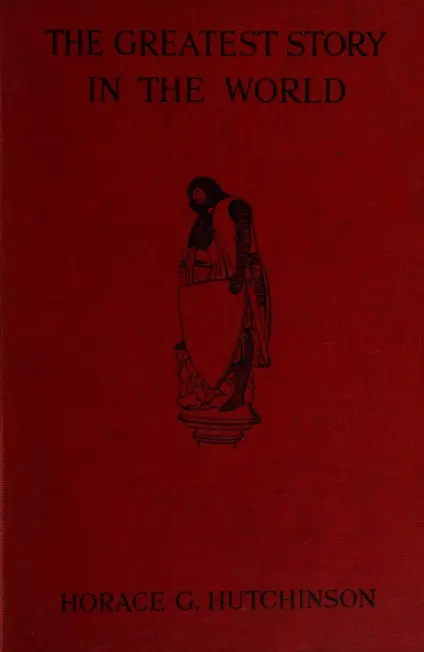
"The Greatest Story in the World, Period II: The Further Story of the Old World up to the Discovery of the New" by Horace G. Hutchinson is a historical narrative written in the early 20th century. This volume continues the exploration of history from AD 100 up to around 1500, focusing on the interplay of cultures, power dynamics, and significant events during the decline of the Roman Empire and the rise of various barbarian tribes in Europe. The opening of this volume sets the stage for the transition from a well-established Roman Empire to a landscape marked by upheaval and transformation as barbarian tribes invade and settle in European territories. Hutchinson introduces Britain, emphasizing its historical position in relation to the Roman Empire and documenting the character and societal structures of the native Brythons, who faced invasions from various groups. Key events include the initial invasions led by the Romans and the resulting socio-political changes as the Empire struggled to maintain its grip amidst dissent and external pressures, leading up to a significant transformation of early British society under the Anglo-Saxons. This introductory part lays the foundation for a more extensive account of the European historical tapestry that unfolds throughout the rest of the work.
Introduction adapted from the source catalogue; source summaries may be automatically generated.
Free to read · English · 70,995 words · No account needed
MAKE TIME FOR A GOOD BOOK
On by default. Untick to stop anonymous reading totals. Each page counts after 10 seconds in view. How this works.
Anonymous counting is on unless you have switched it off.
We have brought the story through some of the darkest times that mankind has known. Art and culture have nearly been destroyed under the barbarian invasions and the years of fighting. Now the Renaissance, the new birth of learning and of art, is at hand. Already we have seen hints of it and hopes of it, like flowers coming out in early spring, only to be nipped by late frost. There was that wonderful music of the troubadours of the Langue d'oc in the thirteenth century, with the ruder and less accomplished art of the trouvères in Northern France, of the minnesingers in Germany, and of the English minstrels.
But it is in Italy only that we can say that the Renaissance has arrived--in that land where the great painters have been at work, where Dante has sung his divine comedy, where Petrarch has written his sonnets, and where the despots of the cities have employed artists and architects to adorn the little States over which they tyrannised. Moreover, through nearly all Europe, and even in the gloom of the Dark Ages itself, there has been the most wonderful building of churches and cathedrals, of abbeys and ecclesiastical edifices, here and there of kings' palaces and of buildings for public use. Our England, too, has had her poets, of whom the chief is Chaucer rhyming his {234} "Canterbury Tales," his "Romaunt of the Rose," and other beautiful pieces.
But except in Italy, these early promises of art and of literature have not been followed up. They are only now, that we leave the story, on the very edge of larger fulfilment. The Dark Ages are dispelled. The dawn comes glimmering out of Italy, northwards. And the scene of the story is being expanded vastly. Columbus has touched America. Da Gama has circled the Cape of Good Hope. The world as known to Western men is about to spread itself to far more than double its former size. We have come to a new world-stage with new plays and new players.
Adrian, English Pope, 152
Adrianople, battles at, 28, 220
Africa, Count of, 34 et seq.
Agincourt, battle at, 199
Albigenses, the, 161, 172 et seq.
Alfred the Great, 118 et seq.
Alphonso VII., 179
Amerigo, 227
Angevins, the, 150
Angli, 38
Anglo-Saxons, the, 39 et passim
Angora, 218
Aragon, 179
Architecture, in Dark Ages, 230
Armour, changes in, 187
Attila at Chalons, 36
Augusti, the two, 24
Augustine, St., 61
Austria, 144, 214 et seq.
Avars, 143
Avebury, 98
Bagdad, Caliphs at, 74, 75
Baldwin, Eastern Emperor, 167
Bannockburn, battle at, 184
Barbarians, the, 8, 17 et seq.
Basques, the, 38
Belisarius, 44, 47, 49, 53
Berbers, 68, 73
Birmingham, 114
Black Death, the, 185
Boadicea, 38
Boccaccio, 192, 229
Bosworth Field, battle at, 202
Britain, 2 et passim
Bruce, Robert, 184
Brythons, 3
Burgundi, 49, 53
Burgundy, boundaries of, 160
Burgundy, Duke of, 160; murdered, 200
Byzantium, 2 et passim
Cade, Jack, 201
Cærleon, 11
Cæsar, Julius, 2
Your reading position is saved on this browser. Take it to another device with a library code. Reading pages adapt to text, rather than matching a printed edition.
BEHIND THE BOOK
This eBook is for the use of anyone anywhere in the United States and most other parts of the world at no cost and with almost no restrictions whatsoever. You may copy it, give it away or re-use it under the terms of the Project Gutenberg License included with this eBook or online at www.gutenberg.org. If you are not located in the United States, you will have to check the laws of the country where you are located before using this eBook. Read the source licence.
The original source file, including credits and licence, is retained by this library. Request an original-format copy at no charge. Please include the book title and Project Gutenberg identifier #74771.
KEEP YOUR CURIOSITY GOING
Cécile Tormay

Moritz Busch
John L. Ransom
Frances Wright
Cécile Tormay

Mabel Potter Daggett