THE CLASSIC COLLECTION✦An outlaw’s diary: the CommuneCLASSIC FREE BOOKS
An outlaw’s diary: the Commune
Cécile Tormay
THE CLASSIC COLLECTION · 1856
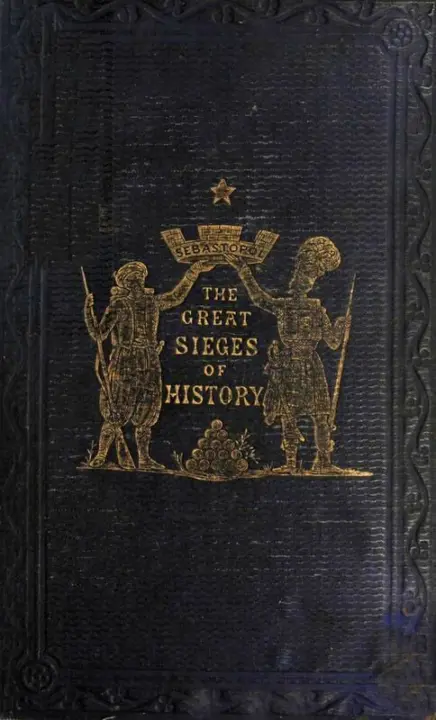
"The Great Sieges of History" by William Robson is a historical account written in the mid-19th century. This work explores significant sieges throughout history, delving into the circumstances, strategies, and human experiences associated with these protracted conflicts. The author appears to aim at illustrating the lessons of military conduct and the human spirit in times of siege and hardship. The opening portion introduces the book's thesis, stating that sieges present a unique context wherein human virtues such as courage, endurance, and fidelity are tested to their limits. Robson reflects on historical conflicts, emphasizing the drama of desperation experienced by both the besieged and the attackers. His discussion highlights that while technology and strategy have evolved, the core essence of human struggle during sieges remains constant. The early examples presented set the stage for a journey through notable sieges, demonstrating how these events serve as key moments in the broader narrative of human history.
Introduction adapted from the source catalogue; source summaries may be automatically generated.
Free to read · English · 241,016 words · No account needed
MAKE TIME FOR A GOOD BOOK
On by default. Untick to stop anonymous reading totals. Each page counts after 10 seconds in view. How this works.
Anonymous counting is on unless you have switched it off.
And this eulogy is written by a Frenchman! So pleased were we with it, that we abstained from calling in Shakespeare, who has immortalized this last scene of the gallant Talbot and his son. When will Frenchmen do equal justice to Nelson and Wellington? When perhaps they have been dead as long as Talbot has.
We offer this siege to our young readers as a sort of illustration of one of Sir Walter Scott’s best novels. Sir Walter has dealt freely with historical characters; he has made most of them effective, but has not always adhered quite faithfully either to men or events. But no novelist,--and we should have said no dramatist, if a bust of Shakespeare had not been looking down upon us,--ever sketched an historical character so happily as he has done that of Louis XI.;--it is Louis himself! with all his pettinesses, shrewdness, superstition, and duplicity.
Louis XI. had raised the Liégeois against their suzerain, the duke of Burgundy. In an over-cunning attempt at policy, Louis had placed himself in the hands of the bold Burgundian, who, irritated by the outbreak at Liége, compelled the imprudent monarch to hoist the cross of St. Andrew, the ensign of the house of Burgundy, and lead his army against the Liégeois, whose revolt he had excited. Made aware of the storm about to break over their ramparts, the inhabitants prepared for a vigorous defence. Although reduced to a feeble garrison of six hundred men, the burgesses determined to withstand with courage the efforts of an enemy who had sworn to ruin them. The duke of Burgundy opened the trenches, and took up his lodging in one of the faubourgs. The besieged, in a vigorous sortie, killed eight hundred Burgundians, and put the rest of their infantry to flight. Wild, provost of Liége, who had led on this attack, died of his wounds: the loss was irreparable,--no one could replace him. The duke of Burgundy and the king came up. They lodged in houses in the faubourgs, and ordered many useless attacks and assaults. Several days passed without any event of consequence. During this short repose, the Liégeois meditated carrying off the king and the duke by surprise. In the darkness and silence of night, the Liégeois marched, led by the owners of the houses in which the princes were lodged. A hollow way cut through a rock covered their march. They killed some sentinels, arrived at the lodgings without being discovered, and stopped at a pavilion in which dwelt the count du Perche, son of the duke d’Alençon. They missed the decisive moment. The two princes were awakened and put upon their guard. Three hundred men-at-arms were round them instantly. The tumult was horrible. The clash of arms, the uncertainty of the cause of the peril, the darkness, and the cries of the combatants, augmented the confusion of this frightful mêlée. The Liégeois, conscious of the smallness of their numbers, and feeling they must succumb, fought like lions at bay: they perished, but sold their lives dearly. The king and the duke of Burgundy met in the street, at the head of their guards; their presence removed mutual suspicions. They separated, after felicitating each other upon their good fortune and intrepidity upon so perilous an occasion. This fruitless attempt only increased the rage of the irritable duke: he ordered an assault for the 30th of October. At the given signal, towards daybreak, forty thousand men advanced to the foot of the battlements, to the sound of warlike instruments. Nobody appeared upon the walls to defend them; the inhabitants had fled; women, children, and old men awaited in consternation and silence the evils it would please their implacable conqueror to pour upon them. The Burgundians entered without resistance. The poor remains of the population took refuge in the churches from the fury of the soldiery. The duke triumphed: but what triumph could satisfy his brutal nature? Priests were immolated at the foot of the altar; sacred virgins, dragged from their asylums, were violated and then massacred; soldiers went from house to house with the lighted torch and naked sword in their hands; they vented their fury upon defenceless women and children; plunder was the least of their crimes. The unfortunate fugitives perished in the woods of hunger and destitution, or were pitilessly massacred; prisoners, too poor to pay their ransom, were precipitated into the waters of the Meuse. The city, when changed into a desert, presenting no animated creature upon which the barbarous conqueror could exercise his cruel vengeance, he directed his resentment against inanimate objects. Four thousand men of the country of Limbourg were commanded to set fire to the public edifices, and to demolish all that the flames had not devoured. Liége soon became one heap of melancholy ruins.
Your reading position is saved on this browser. Take it to another device with a library code. Reading pages adapt to text, rather than matching a printed edition.
BEHIND THE BOOK
This eBook is for the use of anyone anywhere in the United States and most other parts of the world at no cost and with almost no restrictions whatsoever. You may copy it, give it away or re-use it under the terms of the Project Gutenberg License included with this eBook or online at www.gutenberg.org. If you are not located in the United States, you will have to check the laws of the country where you are located before using this eBook. Read the source licence.
The original source file, including credits and licence, is retained by this library. Request an original-format copy at no charge. Please include the book title and Project Gutenberg identifier #59093.
KEEP YOUR CURIOSITY GOING
Cécile Tormay

Moritz Busch
John L. Ransom
Frances Wright
Cécile Tormay

Mabel Potter Daggett