THE CLASSIC COLLECTION✦An outlaw’s diary: the CommuneCLASSIC FREE BOOKS
An outlaw’s diary: the Commune
Cécile Tormay
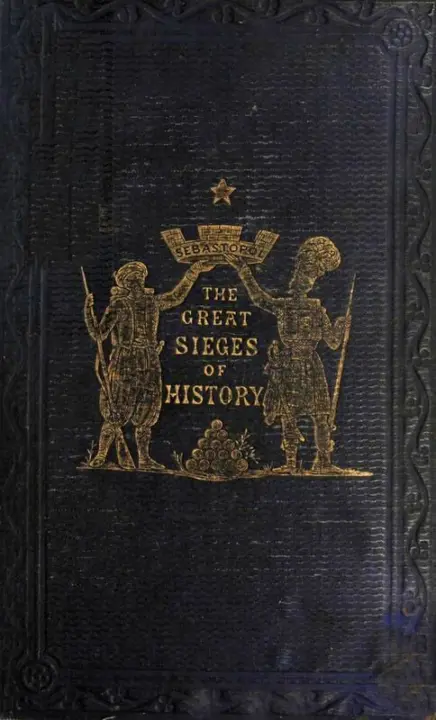
THE CLASSIC COLLECTION · 1856
"The Great Sieges of History" by William Robson is a historical account written in the mid-19th century. This work explores significant sieges throughout history, delving into the circumstances, strategies, and human experiences associated with these protracted conflicts. The author appears to aim at illustrating the lessons of military conduct and the human spirit in times of siege and hardship. The opening portion introduces the book's thesis, stating that sieges present a unique context wherein human virtues such as courage, endurance, and fidelity are tested to their limits. Robson reflects on historical conflicts, emphasizing the drama of desperation experienced by both the besieged and the attackers. His discussion highlights that while technology and strategy have evolved, the core essence of human struggle during sieges remains constant. The early examples presented set the stage for a journey through notable sieges, demonstrating how these events serve as key moments in the broader narrative of human history.
Introduction adapted from the source catalogue; source summaries may be automatically generated.
Free to read · English · 241,016 words · No account needed
MAKE TIME FOR A GOOD BOOK
On by default. Untick to stop anonymous reading totals. Each page counts after 10 seconds in view. How this works.
Anonymous counting is on unless you have switched it off.
“Many fugitives returned with us to the breach, which we found defended by a few brave Turks, whose most destructive missile weapons were heavy stones, which, striking the assailants on the head, overthrew the foremost down the slope and impeded the progress of the rest. A succession, however, ascended to the assault, the heap of ruins between the two parties serving as a breastwork to both; the muzzles of their muskets touching, and the spear-heads of their standards locked. Djezzar Pasha, hearing the English were on the breach, quitted his station, where, according to the ancient Turkish custom, he was sitting to reward such as should bring him the heads of the enemy, and distributing musket-cartridges with his own hand. The energetic old man, coming behind us, pulled us down with violence, saying, if any harm happened to his English friends, all was lost. This amicable contest as to who should defend the breach, occasioned a rush of Turks to the spot, and thus time was gained for the arrival of the first body of Hassan’s troops. I had now to combat the pasha’s repugnance to admitting any troops but his Albanians into the garden of his seraglio, which had become a very important place, as occupying the terreplein of the rampart. There were about two hundred of the original thousand Albanians left alive. This was no time for debate, and I overruled his objection by introducing the Chifflick regiment of one thousand men, armed with bayonets, disciplined after the European method under Sultan Selim’s own eye, and placed by his imperial majesty’s express command at my disposal. The garrison, animated by the appearance of such a reinforcement, was now all on foot; and there being consequently enough to defend the breach, I proposed to the pasha to get rid of the object of his jealousy, by opening his gates to let them make a sally and take the assailants in flank. He readily complied; and I gave directions to the colonel to get possession of the enemy’s third parallel or nearest trench, and there fortify himself by shifting the parapet outwards. This order being clearly understood, the gates were opened and the Turks rushed out; but they were not equal to such a movement, and were driven back to the town with loss. Mr. Bray, however, as usual, protected the town gate efficaciously with grape from the sixtyeight-pounders. The sortie had this good effect, that it obliged the enemy to expose themselves above their parapets, so that our flanking fires brought down numbers of them and drew their force from the breach, so that the small number remaining on the lodgment were killed or dispersed by our few remaining hand-grenades, thrown by Mr. Savage, midshipman of the Theseus. The enemy began a new breach, by an incessant fire directed to the southward of the lodgment, every shot knocking down whole sheets of wall, much less solid than that of the tower, on which they had expended so much time and ammunition. The group of generals and aides-de-camp, which the shells from the sixtyeight-pounders had frequently dispersed, was now reassembled on Richard Cœur de Lion’s Mount. Buonaparte was distinguishable in the centre of a semicircle; his gesticulations indicated a renewal of attack, and his despatching an aide-de-camp showed that he waited only for a reinforcement. I gave directions for Hassan Bey’s ships to take their station in the shoal water to the southward, and made the Tigre’s signal to weigh and join the Theseus to the northward. A little before sunset, a massive column appeared advancing to the breach with a solemn step. The pasha’s idea was not to defend the breach this time, but rather to let a certain number of the enemy in, and then close with them according to the Turkish mode of war. The column thus mounted the breach unmolested, and descended from the rampart into the pasha’s garden, where, in a very few minutes, the bravest and most advanced among them lay headless corpses; the sabre, with the addition of a dagger in the other hand, proving more than a match for the bayonet. The rest retreated precipitately; and the commanding officer, who was seen manfully encouraging his men to mount the breach, and whom we have since learnt to be General Lannes, was carried off wounded by a musket-shot. General Rombaud was killed. Much confusion arose in the town from the actual entry of the enemy, it having been impossible, nay impolitic, to give previous information to everybody of the mode of defence adopted, lest the enemy should come to a knowledge of it by means of their numerous spies.
Your reading position is saved on this browser. Take it to another device with a library code. Reading pages adapt to text, rather than matching a printed edition.
BEHIND THE BOOK
This eBook is for the use of anyone anywhere in the United States and most other parts of the world at no cost and with almost no restrictions whatsoever. You may copy it, give it away or re-use it under the terms of the Project Gutenberg License included with this eBook or online at www.gutenberg.org. If you are not located in the United States, you will have to check the laws of the country where you are located before using this eBook. Read the source licence.
The original source file, including credits and licence, is retained by this library. Request an original-format copy at no charge. Please include the book title and Project Gutenberg identifier #59093.
KEEP YOUR CURIOSITY GOING
Cécile Tormay

Moritz Busch
John L. Ransom
Frances Wright
Cécile Tormay

Mabel Potter Daggett