THE CLASSIC COLLECTION✦An outlaw’s diary: the CommuneCLASSIC FREE BOOKS
An outlaw’s diary: the Commune
Cécile Tormay
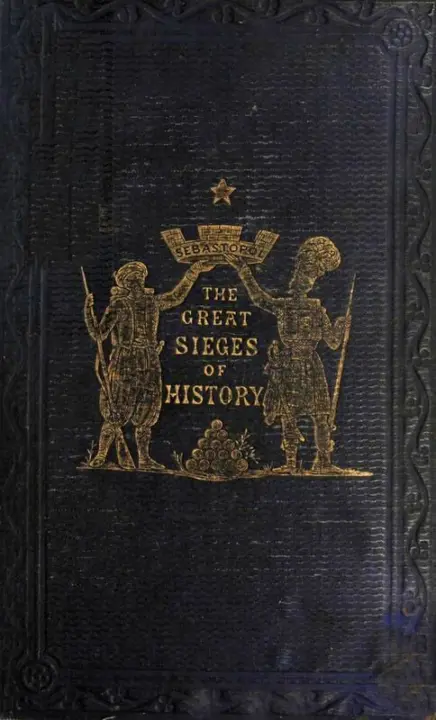
THE CLASSIC COLLECTION · 1856
"The Great Sieges of History" by William Robson is a historical account written in the mid-19th century. This work explores significant sieges throughout history, delving into the circumstances, strategies, and human experiences associated with these protracted conflicts. The author appears to aim at illustrating the lessons of military conduct and the human spirit in times of siege and hardship. The opening portion introduces the book's thesis, stating that sieges present a unique context wherein human virtues such as courage, endurance, and fidelity are tested to their limits. Robson reflects on historical conflicts, emphasizing the drama of desperation experienced by both the besieged and the attackers. His discussion highlights that while technology and strategy have evolved, the core essence of human struggle during sieges remains constant. The early examples presented set the stage for a journey through notable sieges, demonstrating how these events serve as key moments in the broader narrative of human history.
Introduction adapted from the source catalogue; source summaries may be automatically generated.
Free to read · English · 241,016 words · No account needed
MAKE TIME FOR A GOOD BOOK
On by default. Untick to stop anonymous reading totals. Each page counts after 10 seconds in view. How this works.
Anonymous counting is on unless you have switched it off.
The Turks, masters of the port, established batteries on the side next the sea, whilst the army pressed the city on the land side. They employed trenches, mines, and countermines. The besieged, who defended themselves with some spirit at first, repaired the breaches with incredible diligence. They even made some successful sorties. The hopes of being succoured by Huniades supported them for some time. Mahomet began to relax in his efforts; it is even said that he had thoughts of raising the siege. At length, however, he resolved to make one more attempt. Before he proceeded to the general assault, he proposed to Constantine to leave him the Peloponnesus, upon condition of his giving up the imperial city. He was anxious, he said, to prevent the destruction of Constantinople. The emperor replied he would rather be buried beneath the ruins of his capital. Both Christians and Mahometans prepared themselves, by fast and prayer, for the action of that morrow which was to decide the fate of the two empires. It was the 29th of May. On the evening before, Mahomet gave notice that he should abandon the plunder of the city to his soldiers, only strictly commanding that they should not set fire to any of the edifices.
The besieged from their walls contemplated with terror the numbers of the enemy about to assail them. The disproportion was so great, that every Christian calculated he should have to combat fifty or sixty Turks. The sultan commenced the attack about three o’clock in the morning, by sending to the assault thirty thousand of his worst troops, in order to fatigue the besieged, and that the heaped-up bodies of this multitude might fill the ditches, and render access to the parapets the more easy. The stick and the scimitar were necessary to compel this forlorn hope to march: they all perished. At sunrise Mahomet ordered the trumpets to sound a fresh signal; the artillery thundered from all quarters, and quickly drove away all who had appeared on the walls. The Janissaries rushed to the breach, uttering horrible cries. Mahomet rode behind his troops upon a superb charger, in order to make them march forward with the greater celerity. Never was greater courage exhibited: the first Janissary who mounted the walls of Constantinople was to be made a pacha, and be loaded with wealth. Some climbed over the ruins of the walls, through a shower of arrows, darts, stones, and fire-balls. Standing on the tops of their ladders, others fought with the besieged, who repulsed them with their pikes, whilst others raised themselves upon the shoulders of their comrades to get to the breach. The whole city was busied in succouring its brave defenders; women, children, and old men brought them stones, joists, and bars of red-hot iron to launch at the Turks. The cannons, directed to the points where the Turks were thickest, all at once opened their ranks, and the Ottomans, who already touched the summit of the walls, were hurled into the ditches. Tor two hours they fought thus, with a fury equal to the danger of the besieged and the value of the city to be conquered; a cloud of arrows, dust, and smoke shrouded the combatants. Thirty Janissaries at length succeeded in mounting the walls, and killed and overthrew all who came in their way: they were soon followed by a crowd of daring comrades, animated by their example. In an instant the air resounded with cries of victory: the Turks had penetrated to the port. Zagan Pacha, who commanded the attack there, reproached the sailors with being less brave than the land troops. Encouraged by the success of the Janissaries, they made one more furious charge upon the Greeks. The latter wavered in their resistance; the sailors gained possession of a tower, and hoisted the standard of the crescent, whilst other Turks hewed an opening with their axes at several of the city gates, through which the rest of the army poured in crowds. Constantine, accompanied by a few of his guards and some faithful servants, threw himself, sword in hand, into the thickest of the Ottoman battalions. Less afflicted by the loss of his crown than by the terror of being loaded with irons and led in triumph through Asia, he continued fighting bravely, when a Turk cut off the half of his face with a stroke of his scimitar, and gave him the death he was seeking. With him fell the empire of the East, which had existed eleven hundred and forty-three years. One Constantine had founded it; another of the same name, not less brave but less fortunate, saw it perish. Mahomet caused his body to be sought for, and rendered it all the honours due to the sovereign of a great empire. More than forty thousand men were killed in this day’s conflict, and more than sixty thousand loaded with chains. Neither age nor sex, nor object ever so holy, was respected during three days in this unfortunate city; palaces, cloisters, sacred edifices, and private houses, were stained with the blood of their wretched inhabitants, and disgraced by all the crimes that barbarism, cruelty, and lust could devise. At the end of three days, order and discipline succeeded to carnage. Mahomet restored liberty to many of his captives, sent them back to their houses, promised them his protection, and engaged them to continue to cultivate the arts and commerce in a city he had chosen as the capital of his empire. This great event happened in the year 768 of the Hegira, and in the year of Christ 1453; in the reign of Charles VII. of France, and of Henry VI. of England.
Your reading position is saved on this browser. Take it to another device with a library code. Reading pages adapt to text, rather than matching a printed edition.
BEHIND THE BOOK
This eBook is for the use of anyone anywhere in the United States and most other parts of the world at no cost and with almost no restrictions whatsoever. You may copy it, give it away or re-use it under the terms of the Project Gutenberg License included with this eBook or online at www.gutenberg.org. If you are not located in the United States, you will have to check the laws of the country where you are located before using this eBook. Read the source licence.
The original source file, including credits and licence, is retained by this library. Request an original-format copy at no charge. Please include the book title and Project Gutenberg identifier #59093.
KEEP YOUR CURIOSITY GOING
Cécile Tormay

Moritz Busch
John L. Ransom
Frances Wright
Cécile Tormay

Mabel Potter Daggett