THE CLASSIC COLLECTION✦An outlaw’s diary: the CommuneCLASSIC FREE BOOKS
An outlaw’s diary: the Commune
Cécile Tormay
THE CLASSIC COLLECTION · 1856
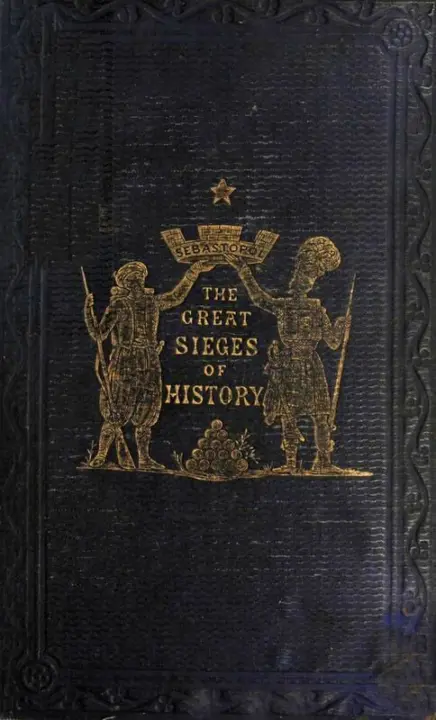
"The Great Sieges of History" by William Robson is a historical account written in the mid-19th century. This work explores significant sieges throughout history, delving into the circumstances, strategies, and human experiences associated with these protracted conflicts. The author appears to aim at illustrating the lessons of military conduct and the human spirit in times of siege and hardship. The opening portion introduces the book's thesis, stating that sieges present a unique context wherein human virtues such as courage, endurance, and fidelity are tested to their limits. Robson reflects on historical conflicts, emphasizing the drama of desperation experienced by both the besieged and the attackers. His discussion highlights that while technology and strategy have evolved, the core essence of human struggle during sieges remains constant. The early examples presented set the stage for a journey through notable sieges, demonstrating how these events serve as key moments in the broader narrative of human history.
Introduction adapted from the source catalogue; source summaries may be automatically generated.
Free to read · English · 241,016 words · No account needed
MAKE TIME FOR A GOOD BOOK
On by default. Untick to stop anonymous reading totals. Each page counts after 10 seconds in view. How this works.
Anonymous counting is on unless you have switched it off.
For a long time the council of the king of England, to assist in ruining the party of Charles VII., disinherited, as they said, by the treaty of Troyes, had fixed their eyes upon Orleans; but numberless considerations had retarded the siege of that city. At length, on the 8th of October, 1428, ten thousand English approached to reconnoitre the environs of the place, after having rapidly conquered Château-Neuf, Rambouillet, Bétancourt, Rochefort, and all the neighbouring places. Gaucourt, the governor of the city, made a vigorous sortie, and repulsed the enemy. They went and sacked some more places, and on the 12th of the same month reappeared before Orleans, on the side of the Sologne. The garrison was weak, but it had as leaders intrepid warriors, the Gaucourts, the Dunois, the Lahires, the Xaintrailles, a crowd of noblesse of that name and that merit, who all inspired the lowest soldiers with the heroic valour which animated them. The inhabitants even, resolved to bury themselves under the ruins of their city rather than submit to a foreign yoke, had become so many heroes. The women partook of this martial ardour, and devoted themselves enthusiastically to the service of their country.
The tête du pont, on the side of the Sologne, was defended by a fortress called Les Tourelles, in front of which a bulwark had been commenced. It was by this intrenchment the earl of Salisbury, the general of the English army, made his first attacks. The faubourgs, set fire to on the approach of the enemy, were not yet entirely consumed. This barrier stopped them at first, but they soon elevated a bastille upon the ruins of the convent of the Augustines, and erected batteries, which kept up a constant discharge against the walls of the city, the Tourelles, and the boulevard, of which they wished to make themselves masters. The cannon made a large breach, and it was resolved to mount it sword in hand. On the 21st of October, the trumpets sounded the signal, and, as if by one motion, the warriors planted their ladders at the foot of the ramparts. They sprang up with incredible intrepidity; but they were received with a firmness equal to it, and both sides fought with the same fury. National hatred and a desire for vengeance added to the natural desire to conquer. Whilst the besieged hurled their foes into the fosses, launched fire-pots, rolled stones of an enormous size upon them, encircled them with rings of red-hot iron, poured torrents of boiling oil, and burning ashes, the women of the city, not less active, in the words of a chronicler, “brought them everything that could assist in the defence; and to refresh their great labour, bread, wine, meats, fruits, and vinegar, with white towels to wipe them. Some were seen, during the assault, repulsing the English with lance-thrusts from the entrance to the boulevard, and beating them down into the fosses.” Such a furious resistance disconcerted Salisbury; he sounded a retreat, and ordered a mine to be instantly commenced. It was soon finished, and they were preparing to spring it. The besieged perceived it, and despairing of maintaining a post threatened on all sides, they set fire to it, in the sight of the English, and retired into the fortress of the Tourelles. To defend this for a short time, they raised a new boulevard on the bridge even, of which they destroyed two arches. Notwithstanding all this, they could not long withstand the multiplied efforts of the English. The fort of the Tourelles was carried, and that advantageous post offered the besiegers a commodious and redoubtable position. The Orléannais then directed all their batteries against that part of their city for which they had so boldly fought. The enemy, on their side, neglected no means to maintain it, and both exhausted, in attack or defence, all the resources the most heroic valour could furnish.
Your reading position is saved on this browser. Take it to another device with a library code. Reading pages adapt to text, rather than matching a printed edition.
BEHIND THE BOOK
This eBook is for the use of anyone anywhere in the United States and most other parts of the world at no cost and with almost no restrictions whatsoever. You may copy it, give it away or re-use it under the terms of the Project Gutenberg License included with this eBook or online at www.gutenberg.org. If you are not located in the United States, you will have to check the laws of the country where you are located before using this eBook. Read the source licence.
The original source file, including credits and licence, is retained by this library. Request an original-format copy at no charge. Please include the book title and Project Gutenberg identifier #59093.
KEEP YOUR CURIOSITY GOING
Cécile Tormay

Moritz Busch
John L. Ransom
Frances Wright
Cécile Tormay

Mabel Potter Daggett