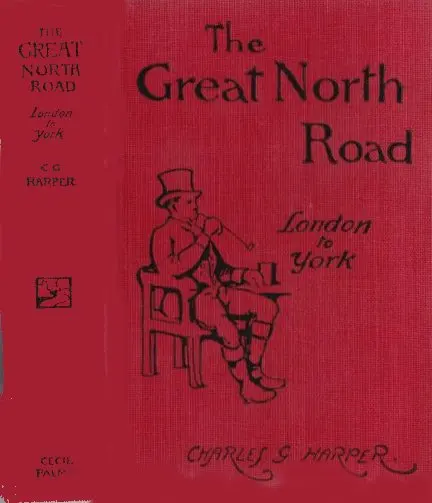
The Great North Road, the Old Mail Road to Scotland: London to York
Charles G. (Charles George) Harper
THE CLASSIC COLLECTION · 1901
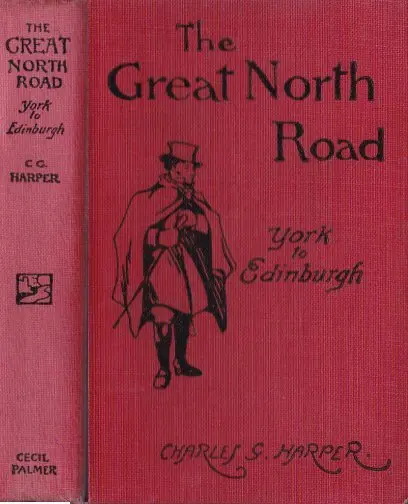
"The Great North Road, the Old Mail Road to Scotland: York to Edinburgh" by Charles G. Harper is a historical account written in the early 20th century. This work delves into the history, geography, and significance of the Great North Road, particularly focusing on the journey from York to Edinburgh, while also highlighting the towns and landmarks along the route. The narrative is rich in detail, weaving together snippets of history, culture, and anecdotes related to the regions along this historic mail road. The opening of the book establishes a vivid sense of place, starting with the historical significance of York as a significant urban center and a crucial waypoint on the northward journey. Harper discusses the city's evolution from its ancient roots, mentioning various historical epochs—from Roman occupation to medieval times. The text paints a picture of York's historic buildings and features, such as York Minster and the city's winding streets, setting the stage for the reader to explore the rich tapestry of history tied to the Great North Road and the influential figures, events, and architecture associated with it.
Introduction adapted from the source catalogue; source summaries may be automatically generated.
Free to read · English · 67,338 words · No account needed
MAKE TIME FOR A GOOD BOOK
On by default. Untick to stop anonymous reading totals. Each page counts after 10 seconds in view. How this works.
Anonymous counting is on unless you have switched it off.
Old Edinburgh life centred at the Market Cross, happily restored in 1885 by Mr. Gladstone. The Cross has had a troubled history. Reconstructed from a much older one in 1617, it remained here until 1756, when the “improving” fanatics of that time swept the historic structure away, without a thought of the associations belonging to it. They were associations of every kind. Kings had been proclaimed at it by heralds with fanfare of trumpet; patriots and traitors with equal contumely had been done to death beside it; and the continual round of punishments which gave the common hangman a busy time were inflicted here. In fact, were a rogue to be pilloried or a king’s birthday to be kept with becoming ceremony, the Cross was the place. Let us see what those punishments were like, from one example illustrative of the general run of them. Here is what they did in 1655 to “Mr. Patrik Maxwell, ane arrant decevar.” They brought him here “quhair a pillorie was erectit, gairdit and convoyed with a company of sodgeris; and their, eftir ane full houris standing on that pillorie, with his heid and handis lyand out and hoilis cuttit out for that end, his rycht lug was cuttit of; and thaireftir careyit over to the town of St. Johnnestoun, quhair ane uther pillorie wes erectit, on the quhilk the uther left lug wes cuttit af him. The caus heirof wes this; that he haid gevin out fals calumneis and leyis aganes Collonell Daniell, governour of Peirth. Bot the treuth is, he was ane notorious decevar and ane intelligencer, sumtyme for the Englesches, uther tymes for the Scottis, and decevand both of thame: besyde mony prankis quhilk wer tedious to writt.” Quite so; but if all deceivers had their ears cut off, how few would retain them! A ferocious folk, those old Scots, and petty delinquents supped sorrow at their hands with a big spoon. Sorry the lot of scandal-mongers and the like, seated on a wooden horse with hands and legs tied, and permission freely accorded to all for the throwing of missiles. Ferocity, however, should go hand in hand with courage—a quality apparently not possessed by the citizens of Edinburgh when Prince Charlie and his Highlanders came, in 1745. Incredulous of the wild clansmen ever daring to attack the town, they laughed at the very idea; but when they heard of his small force having eluded the force of Johnny Cope, sent to intercept them, and advancing in earnest, things took a very different colour. Those who were loyal to the House of Hanover were quaking in their shoes, and the Jacobites rejoicing. The city armed, even to the clergymen, who, on the Sunday before the surrender, preached in the churches with swords and daggers buckled on under their gowns. Bands of volunteers were raised, and on the report that the Pretender was near, were marched outside the walls to dispute his entry, despite their murmurs that they had volunteered to defend the city from the inside, and were not prepared to go out to be cut to pieces with the invaders’ claymores. Captain ex-Provost Drummond marched with his company down the West Bow towards the West Port. Looking round when he had reached it, he to his astonishment found himself alone. The volunteers had vanished down the back lanes or closes! But the dragoons were as bad. Coming near the enemy at Corstorphine, two miles out, they bolted without firing a shot, and so back into Edinburgh and through it and out at the other end. It was the ferocious appearance of the Highlanders that caused this terror. They were comparatively few; ill-armed, ragged, and ill-fed. But their strange dress, their wild looks, shaggy locks, and generally outlandish appearance, frightened the good Lowlanders, who knew almost as little of these Gaelic tribes as Londoners themselves. The old-time warfare of the Japanese and the Chinese, with their hideous masks; the dismal tom-toming of the African savage; the war-paint of the Red Indian, are justified of their existence, for the strange and hideous in warfare is very effective in striking a paralysing terror into an enemy. Accordingly, the tartans, the naked legs and arms, and the uncombed locks of the lairds’ uncivilised levies captured Edinburgh for Prince Charlie, who, a few days later, September 17, caused his father, the Old Pretender, to be proclaimed king, by the title of James the Third, at the Cross.
Your reading position is saved on this browser. Take it to another device with a library code. Reading pages adapt to text, rather than matching a printed edition.
Charles G. (Charles George) Harper
Charles G. (Charles George) Harper
Charles G. (Charles George) Harper
BEHIND THE BOOK
This eBook is for the use of anyone anywhere in the United States and most other parts of the world at no cost and with almost no restrictions whatsoever. You may copy it, give it away or re-use it under the terms of the Project Gutenberg License included with this eBook or online at www.gutenberg.org. If you are not located in the United States, you will have to check the laws of the country where you are located before using this eBook. Read the source licence.
The original source file, including credits and licence, is retained by this library. Request an original-format copy at no charge. Please include the book title and Project Gutenberg identifier #47239.
KEEP YOUR CURIOSITY GOING
Wilfrid Scawen Blunt
Wilfrid Scawen Blunt

E. W. (Edgar Watson) Howe
Cécile Tormay

Moritz Busch
John L. Ransom