THE CLASSIC COLLECTION✦The Star of IndiaCLASSIC FREE BOOKS
The Star of India
Edward Sylvester Ellis
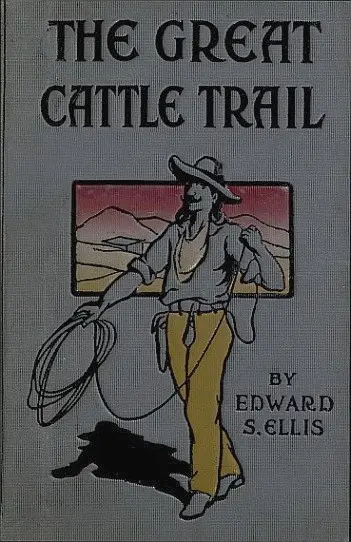
THE CLASSIC COLLECTION · 1894
"The Great Cattle Trail" by Edward Sylvester Ellis is a novel written in the late 19th century. The story centers around a young Texan named Avon Burnet, who is a skilled horseman and is set to accompany a cattle drive from Texas to Kansas along the famous Great Cattle Trail. Throughout the narrative, Avon faces numerous challenges, including threats from Comanche Indians, as he embarks on this adventurous journey that promises excitement, danger, and personal growth. The opening of the novel introduces Avon as he prepares to leave his home with his Uncle Captain Dohm Shirril for the cattle drive. Avon’s confidence in his abilities and the close relationship with his uncle and aunt are established, setting the stage for the uncertainties ahead. As tensions rise with the mention of Comanche activity in the area, the narrative is heightened when a sudden Indian attack breaks the calm, leading to a dramatic sequence where Avon steps in to save his uncle. The stage is set for Avon's perilous journey and the escalating confrontations with the Comanches, foreshadowing both action and adventure as the characters navigate the threats of the frontier.
Introduction adapted from the source catalogue; source summaries may be automatically generated.
Free to read · English · 53,452 words · No account needed
MAKE TIME FOR A GOOD BOOK
On by default. Untick to stop anonymous reading totals. Each page counts after 10 seconds in view. How this works.
Anonymous counting is on unless you have switched it off.
The misty rain shortened the view in every direction, but the horsemen who dashed hither and thither, when the cattle showed a disposition to stray off, reported no signs of their old enemies, who, however, might be keeping out of sight until darkness should settle over the earth.
Prudence required that the cattle should be treated considerately, especially at the beginning of the long journey, for it was to the interests of the owners that they should arrive at their destination in good condition. Like men in training for a pedestrian contest, particular care was needed at the start to prevent a general breakdown. After a few days the beasts, if well used, would be able to stand much more.
It, therefore, lacked considerable of night when the final halt was made, and the cattle were allowed to crop the grass until they became sated and chose to lie down.
The men in charge of the other herd were equally thoughtful, for they came to a pause about the same time, with nearly a mile separating the camps. It was hardly dark, indeed, when a horseman was seen approaching from the southward, on an easy gallop, and there was no doubt that he belonged to the other party.
"It's my old friend Sclevinger," said Captain Shirril, recognizing the visitor, as he saluted, and, checking his steed beside that of the old Texan, extended his hand, with the heartiest of salutations.
"I suspected it was you," said the new arrival, whose pleasant countenance was covered by as shaggy a growth as that of the captain, "and I concluded I would run over and shake hands."
"That's right, pard. I'm mighty glad to see you; you must take supper
with us."
"Thank you, I guess I will," replied Sclevinger, dismounting and accepting the invitation as readily as it was given; "I tried to run in my herd ahead of you this afternoon," he added, with a twinkle of his fine eyes, "but I couldn't quite make it."
"We saw what you were up to, and we had to bestir ourselves to head you off. How many have you, colonel?"
"Only about twelve hundred--that is, I had twelve hundred, when I started from the ranch two days ago, but we lost nearly a hundred yesterday."
"How was that?" asked the captain, as they reached the provision wagon, and paused while the cook made their meal ready.
"A confounded lot of Comanches cut out some of our cattle, and, despite all we could do, got off with them."
"They have been hanging round us, but didn't do anything. Seems to me, colonel, you shouldn't have allowed that."
Your reading position is saved on this browser. Take it to another device with a library code. Reading pages adapt to text, rather than matching a printed edition.
Edward Sylvester Ellis
Edward Sylvester Ellis
Edward Sylvester Ellis
Edward Sylvester Ellis
BEHIND THE BOOK
This eBook is for the use of anyone anywhere in the United States and most other parts of the world at no cost and with almost no restrictions whatsoever. You may copy it, give it away or re-use it under the terms of the Project Gutenberg License included with this eBook or online at www.gutenberg.org. If you are not located in the United States, you will have to check the laws of the country where you are located before using this eBook. Read the source licence.
The original source file, including credits and licence, is retained by this library. Request an original-format copy at no charge. Please include the book title and Project Gutenberg identifier #30212.
KEEP YOUR CURIOSITY GOING
Coulson Kernahan

Maurice Baring
Frances Wright
Cécile Tormay

Frederic Jesup Stimson

W. H. P. (William Henry Pope) Jarvis