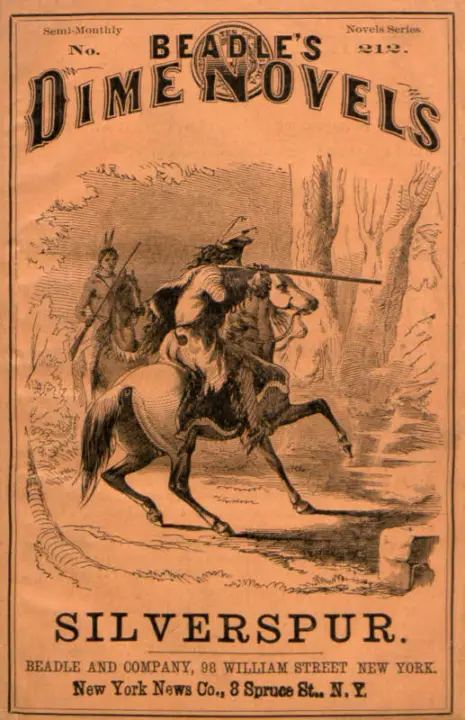
Silverspur; or, The Mountain Heroine: A Tale of the Arapaho Country
Edward Willett
THE CLASSIC COLLECTION · 1870
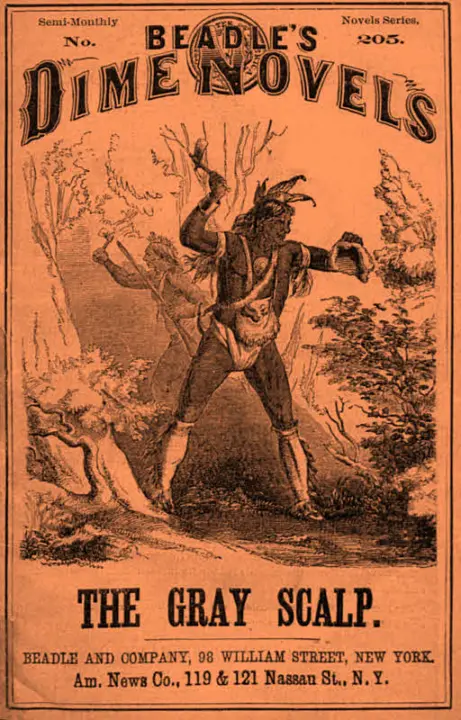
"The Gray Scalp; Or, The Blackfoot Brave" by Edward Willett is a novel written in the late 19th century. The story is set against the backdrop of the American West and features characters caught in the struggles between white settlers and Native American tribes, primarily the Blackfeet. The narrative begins with a chaotic attack on a group of trappers led by Captain Benning, during which Flora Robinette, the daughter of a fur trader, is kidnapped. This event sets off a chain of daring rescues, conflicts, and personal dilemmas as the main characters navigate the dangers of the wilderness and their own relationships. The opening of the book introduces the dire circumstances surrounding Captain Benning and his party, who are attacked at their camp and suffer losses to the Blackfeet. Amid the chaos, Flora Robinette goes missing, and her father is killed. The narrative presents various characters, including the young and passionate trapper George Benning, who is determined to rescue Flora, as well as the mysterious Fred Wilder, who appears to have his own agenda amidst the turmoil. The tension is heightened by the setting of the untamed frontier, the challenge of survival against the odds, and the intrigue of human relationships shaped by danger and desperation. The beginning effectively establishes the stakes and conflicts that are likely to evolve as the story progresses.
Introduction adapted from the source catalogue; source summaries may be automatically generated.
Free to read · English · 35,064 words · No account needed
MAKE TIME FOR A GOOD BOOK
On by default. Untick to stop anonymous reading totals. Each page counts after 10 seconds in view. How this works.
Anonymous counting is on unless you have switched it off.
The lapse of an hour found them in a narrow defile in the heart of the mountains. With difficulty they forced their horses up a steep incline, to the summit of the declivity, beyond which the trail was broad and easy. The Indian stopped and looked back, pointing down the defile.
“There are not enough warriors with Good Ax,” said he, “to take this pass, while it is defended by one brave man.”
“But they might surround us,” replied Wilder, “or they might starve us
out in time.”
“I shall not stay here long enough to get hungry; but we will gain time. I will defend the pass, while my white brother and sister ride on and get far from their enemies.”
“You will do no such thing, White Shield. We can not allow you to sacrifice yourself for us, or to fight the Blackfeet, who are your brothers.”
“I am no longer their brother.”
“But you must not fight them. I will defend the pass, while you ride forward with Miss Robinette. You need not object, for I am determined that it shall be so. Is there any way by which the Blackfeet can get behind me?”
“There is a way; but it would take them several hours to get behind
you.”
“Ride on, then, and I will keep them off as long as I can. Don’t be afraid, Miss Flora. You may safely trust yourself with my brother.”
The Indian reluctantly consented to this arrangement, and pointed to a white-topped peak, far to the westward.
“The trail is plain enough,” said he, “and it leads to that peak. If you do not find us there, you will find an arrow, to show you which way we have gone.”
Flora rode away with the Indian, after a few words of encouragement from Wilder, who then set himself at work to strengthen his position.
His first care was to collect a number of bowlders, as large as he could lift or roll. These he placed at the head of the declivity, blocking up the defile, until the pile was breast high.
This done, and the condition of his rifle and ammunition carefully examined, he sat down to fortify his inner man, while he calmly awaited the approach of the Blackfeet.
It was about noon when he heard them coming, and soon he saw them, and was able to count them, as they entered the defile. They were twenty in number, including the chief, who was conspicuous in the advance. All had led horses, so that they could change when the animals they rode became weary, which accounted for the rapidity with which they had followed in pursuit.
Your reading position is saved on this browser. Take it to another device with a library code. Reading pages adapt to text, rather than matching a printed edition.
BEHIND THE BOOK
This eBook is for the use of anyone anywhere in the United States and most other parts of the world at no cost and with almost no restrictions whatsoever. You may copy it, give it away or re-use it under the terms of the Project Gutenberg License included with this eBook or online at www.gutenberg.org. If you are not located in the United States, you will have to check the laws of the country where you are located before using this eBook. Read the source licence.
The original source file, including credits and licence, is retained by this library. Request an original-format copy at no charge. Please include the book title and Project Gutenberg identifier #56175.
KEEP YOUR CURIOSITY GOING
Coulson Kernahan

Maurice Baring
Frances Wright
Cécile Tormay

Frederic Jesup Stimson

W. H. P. (William Henry Pope) Jarvis