THE CLASSIC COLLECTION✦The WesternersCLASSIC FREE BOOKS
The Westerners
Stewart Edward White
THE CLASSIC COLLECTION · 1915
"The Gray Dawn" by Stewart Edward White is a novel written in the mid-20th century. Set in San Francisco during the tumultuous Gold Rush era around 1852, the story revolves around the lives of several characters, primarily focusing on Milton Keith, a young lawyer from Baltimore, and his wife Nan, as they navigate the challenges and social dynamics of their new environment. At the start of the narrative, readers are introduced to John Sherwood, a charismatic gambler, as he interacts with members of the local elite on the veranda of the Bella Union Hotel. The initial scenes establish a lively social atmosphere, where drinking, camaraderie, and playful banter abound. The arrival of Milton and Nan Keith adds a fresh perspective to this vibrant setting. Milton's enthusiasm for the city's potential is quickly contrasted with Nan's cautious demeanor, hinting at the struggles they will face in adapting to their new lives. The opening portion vividly illustrates the colorful and chaotic life in San Francisco at the height of the Gold Rush, teeming with eclectic characters and moral complexities.
Introduction adapted from the source catalogue; source summaries may be automatically generated.
Free to read · English · 117,358 words · No account needed
MAKE TIME FOR A GOOD BOOK
On by default. Untick to stop anonymous reading totals. Each page counts after 10 seconds in view. How this works.
Anonymous counting is on unless you have switched it off.
At the first some of the cooler heads thought it might be well to
reason with him.
"The man has run a muck," said old Judge Girvin, "and while I am far from denying that In many--perhaps in most--cases his facts are correct, still his methods make for lawlessness among the masses. It might be well to meet him reasonably, and to expostulate."
"I'd expostulate--with a blacksnake," growled the fiery Terry.
A number waited on King. Keith was among them. They found his office in a small ramshackle frame building, situated in the middle instead of alongside one of the back streets. It had probably been one of the early small dwelling-houses, marooned by a resurvey of the streets, and never since moved. King sat in his shirtsleeves before a small flat table. He looked up at them uncompromisingly from his wide-apart steady eyes.
"Gentlemen," he greeted them tentatively.
Judge Girvin seated himself impressively, his fat legs well apart, his beaver hat and cane poised in his left hand; the others, grouped themselves back of him. The judge stated the moderate case well. "We do not deny any man the right to his opinion," he concluded, "but have you reflected on the effect such an expression often has on the minds of those not trained to control?"
King listened to him in silence.
"It seems to me, sir," he answered, when Judge Girvin had quite finished, "that if abuses exist they should be exposed until they are remedied; and that the remedy should come from the law."
"What is your impelling motive?" asked the judge. "Why have you so suddenly taken up this form of activity? Do you feel aggrieved in any way--personally?"
"My motive in starting a newspaper, if that is what you mean, is the plain one of making an honest if modest living. And, incidentally, while doing so, I have some small idea of being of public use. I have no personal grievance; but I am aggrieved, as every decent man must be, at the way the lawyers, the big financial operators, and the other blackguards have robbed the city," stated King plainly.
Judge Girvin, flushing, arose with dignity,
"I wish you good-day, sir," he said coldly, and at once withdrew.
Keith had been watching King with the keenly critical, detached, analytical speculation of the lawyer. He carried away with him the impression of a man inspired.
At the engine house, to which the discomfited delegation withdrew,
there was more discussion.
"The man is within his legal rights so far," stated Judge Girvin. "If any of his statements are libellous, it is the duty of the man so libelled to institute action in the courts."
Your reading position is saved on this browser. Take it to another device with a library code. Reading pages adapt to text, rather than matching a printed edition.
Stewart Edward White
Stewart Edward White
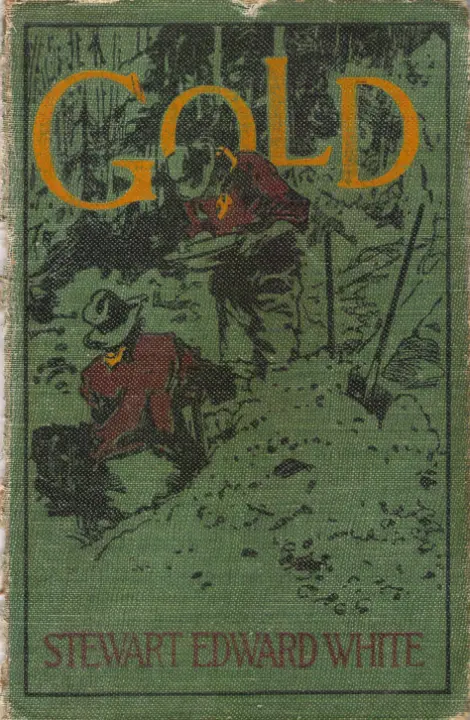
Stewart Edward White
Stewart Edward White
BEHIND THE BOOK
This eBook is for the use of anyone anywhere in the United States and most other parts of the world at no cost and with almost no restrictions whatsoever. You may copy it, give it away or re-use it under the terms of the Project Gutenberg License included with this eBook or online at www.gutenberg.org. If you are not located in the United States, you will have to check the laws of the country where you are located before using this eBook. Read the source licence.
The original source file, including credits and licence, is retained by this library. Request an original-format copy at no charge. Please include the book title and Project Gutenberg identifier #9149.
KEEP YOUR CURIOSITY GOING
Cécile Tormay

Moritz Busch
Coulson Kernahan
John L. Ransom

Maurice Baring
Frances Wright